

How glass railings boost property value and appeal
Most homeowners pour renovation budgets into kitchens and bathrooms, assuming those are the only rooms that move the needle on resale value. That assumption leaves money on the table. Glass railings are one of the most visually striking upgrades you can make to a deck, balcony, staircase, or pool area, and buyers notice them instantly. They signal modernity, safety, and quality craftsmanship before a prospective buyer even steps inside. This guide walks you through exactly how glass railings contribute to property value, how they compare to other popular upgrades, and what you need to know before installation.
Table of Contents
- Why curb appeal and modern aesthetics matter
- Comparing glass railings to other value-adding upgrades
- How glass railing enhances safety and usability
- Design flexibility and regulatory compliance
- The overlooked impact of glass railings on property value
- Explore glass railing solutions for your next project
- Frequently asked questions
Key Takeaways
| Point | Details |
|---|---|
| Curb appeal boost | Glass railings add modern visual impact, improving first impressions and buyer interest. |
| Safety and usability | Properly installed glass railings offer durable safety, maximizing usability for decks and balconies. |
| Design flexibility | Customizable options allow glass railings to adapt to various property needs and architectural styles. |
| Compliance critical | Meeting local codes ensures both resale value and insurance requirements for glass railing upgrades. |
Why curb appeal and modern aesthetics matter
First impressions in real estate happen fast. Studies consistently show that buyers form opinions about a property within seconds of arrival, and the exterior sets the entire emotional tone for the showing. A property with clean lines, modern finishes, and unobstructed sightlines communicates one thing immediately: this home has been cared for and updated.
Glass railings sit at the intersection of safety and visual appeal in a way that few other upgrades can. A wood railing weathers, warps, and needs repainting every few years. An aluminum railing looks utilitarian. Glass, by contrast, looks expensive and intentional. It opens up the view from a deck rather than boxing it in. It reflects light. It creates the kind of open, airy feel that buyers associate with premium properties.
“Buyers and realtors reward visible aesthetic improvements and durable, long-lasting results, with glass railings enhancing curb appeal and modernization signals.”
When you boost curb appeal with glass railings, the effect compounds. A property that looks updated from the outside generates more showing requests, more competitive offers, and a stronger negotiating position. That is the mechanics of curb appeal working in your favor.
Here is what makes glass railings particularly effective as a curb appeal driver:
- They are immediately visible from the street or approach, unlike interior upgrades
- They require minimal maintenance, which signals quality rather than burden to buyers
- Frameless glass designs communicate a contemporary aesthetic that reads as premium
- They preserve views from outdoor living spaces, increasing the perceived usability of those areas
- Tempered glass safety and design properties make them both durable and visually refined
The maintenance angle matters more than people realize. A buyer walking a property is mentally calculating what they will have to fix or replace in the first five years. Glass railings made from tempered safety glass and marine-grade stainless steel hardware communicate longevity. That reduces perceived future cost, which directly influences offer price.
Comparing glass railings to other value-adding upgrades
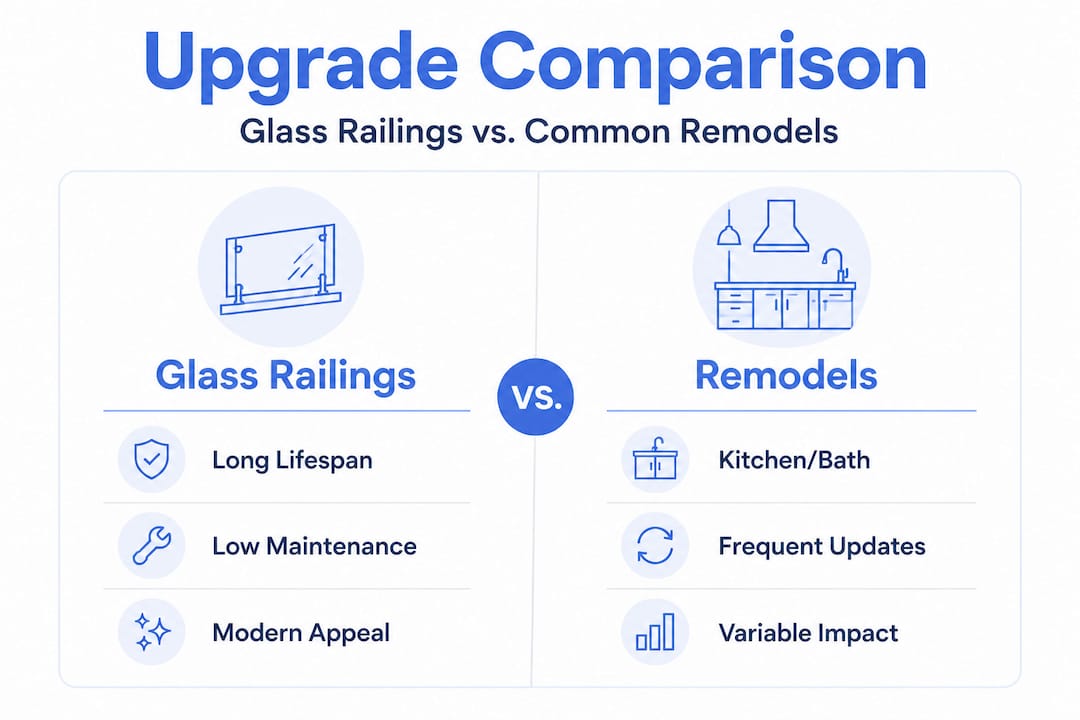
Let us put glass railings in context alongside the upgrades homeowners most commonly consider. Kitchen and bathroom remodels dominate renovation conversations because the return on investment data is explicit and widely cited. But that framing misses how glass railings actually deliver value: not as a standalone room remodel, but as a visible, exterior signal of overall property quality.
Glass railing durability means that unlike many remodels, the upgrade does not degrade noticeably over time. Kitchens go out of style. Bathroom fixtures get replaced. A well-installed frameless glass railing system looks contemporary for decades.
| Upgrade type | Avg. cost recovery | Buyer impact | Longevity |
|---|---|---|---|
| Minor kitchen remodel | 77 to 85% | High for interior buyers | 10 to 15 years before dating |
| Bathroom remodel | 60 to 70% | High for interior buyers | 10 to 12 years before dating |
| Deck addition | 65 to 80% | High for outdoor living | 15 to 25 years |
| Glass railing system | Not isolated in benchmarks | High for visual/exterior buyers | 20 to 30 years |
| Landscaping upgrades | 100% in some markets | Moderate, street-level impact | Variable |
Note: NAR remodeling data shows glass railings are not isolated as a top-return category in major ROI benchmarks, but they contribute powerfully through curb appeal and modernization signals that raise the overall perceived value of a property.
The distinction here is important. Glass railings are not typically measured as a standalone ROI category because they are often installed as part of a deck build, balcony upgrade, or exterior renovation. Their value gets absorbed into the broader project return. That does not mean the value is not there; it means it is harder to isolate in aggregate data.
What sets glass railings apart from most other upgrades:
- Visible from the exterior before a buyer enters the home
- Communicates safety without sacrificing sightlines or outdoor aesthetics
- Complements other upgrades such as a new deck, pool area, or landscaping
- Low ongoing maintenance compared to wood, iron, or aluminum alternatives
- Resale neutral or positive because they appeal broadly rather than to a niche taste
How glass railing enhances safety and usability
Safety is not just a moral consideration during property upgrades. It is a financial one. Buyers with children, buyers who entertain outdoors, and buyers with aging family members all put safety features high on their evaluation checklist. A glass railing that clearly meets code and is professionally installed communicates that the property is safe for all users.
The usability argument is equally strong. On a deck overlooking a yard, a lake, or a city skyline, a wood or aluminum railing cuts the view in half. Glass preserves the entire sightline. The outdoor space feels larger, more connected to the surroundings, and more valuable as a living area. That translates directly into how buyers describe and price properties.

Durable, long-lasting upgrades like glass railings are explicitly valued by buyers and property professionals, and a properly installed system demonstrates both safety compliance and high-quality construction.
Here is a practical look at the core safety features of a quality glass railing system:
- Tempered glass panels shatter into small, rounded fragments rather than dangerous shards if broken
- Minimum panel thickness of 3/8 inch for standard residential applications, with thicker options for higher-load areas
- Marine-grade stainless steel hardware resists corrosion outdoors and maintains structural integrity over years of exposure
- Top rail systems distribute weight and load along the entire run rather than at individual attachment points
- Proper post spacing and base mounting prevent flex and movement that could compromise the railing under lateral pressure
The safe glass thickness for railings is one of the most important decisions in the planning phase. Thicker panels cost more but handle greater load and provide more confidence for buyers inspecting the system.
Pro Tip: Before purchasing, map out every section of railing by linear footage and note any sections that may need extra load capacity, such as areas near stairs or elevated decks. Getting this right upfront prevents costly replacement later.
Here is a quick comparison of common glass thicknesses and their typical use cases:
| Glass thickness | Common application | Load capacity |
|---|---|---|
| 3/8 inch (10mm) | Standard deck and balcony railings | Moderate |
| 1/2 inch (12mm) | Elevated decks and stair railings | High |
| 5/8 inch (16mm) | Commercial or high-traffic areas | Very high |
Avoiding common errors during installation is just as important as choosing the right materials. The most frequent glass railing installation mistakes include improper post spacing, under-torqued hardware connections, and using interior-rated glass panels in exterior applications. Each of those errors not only creates a safety risk but can also create legal liability during a property sale.
Design flexibility and regulatory compliance
One of the most common hesitations homeowners have about glass railings is the assumption that they are one-size-fits-all or too modern for a traditional property. That is not accurate. Today’s glass railing systems offer remarkable design flexibility, and the right style can complement anything from a contemporary urban condo to a traditional craftsman home.
Frameless glass railings offer a seamless look that works well on modern homes or properties with significant views. Semi-frameless systems use minimal posts and connectors to frame the glass without fully enclosing it. Framed systems provide more visual structure and can be matched to existing trim or siding colors. Custom panels can include tinted, frosted, or patterned glass for properties where full transparency is not preferred.
Durable, visible improvements are rewarded in the market, but they must comply with modern building codes to protect both your investment and your safety.
Key design and compliance considerations include:
- Railing height requirements: Most jurisdictions require a minimum of 36 inches for residential applications and 42 inches for commercial use or elevated residential decks
- Baluster spacing equivalents: Glass panels must be installed so that a 4-inch sphere cannot pass through any opening
- Load testing requirements: Railings must withstand a minimum 200-pound load applied at the top rail, per most building codes
- Glass type mandates: Most jurisdictions require tempered or laminated safety glass for railing applications
- Hardware corrosion ratings: Exterior installations typically require hardware rated for outdoor exposure
Pro Tip: Glass railing building codes vary significantly by state and municipality. Always check your local requirements before ordering materials. For example, the Georgia glass railing code has specific requirements around glass thickness, post embedment depth, and top rail requirements that differ from neighboring states. Ordering without confirming local code can mean expensive adjustments after installation.
Compliance is not just about safety inspections. When you sell a property, buyers’ inspectors look at railings. Non-compliant installations can delay closings, reduce offers, or require correction before sale. Getting it right the first time protects both your safety and your sale.
The overlooked impact of glass railings on property value
Here is something that standard ROI reports will not tell you: the value of a glass railing is not just in what appraisers can measure. It is in what buyers feel when they walk onto a deck and see clean, frameless glass instead of a chunky wood frame blocking the horizon.
The real estate industry relies heavily on comparable sales data. If no homes in your neighborhood have glass railings, the appraiser has no direct comparison to add value to the line item. But the buyer standing on your deck, looking out at the view with nothing interrupting the sightline, feels that value instantly. That emotional response shapes their offer more than any spreadsheet does.
Homeowners’ joy with visible upgrades often exceeds measured cost recovery, and glass railings consistently create lasting first impressions that influence buyer psychology in ways the data cannot fully capture.
In competitive listing markets, differentiation matters enormously. When buyers are choosing between two similar properties at similar price points, the one with glass railings on the deck wins the emotional comparison almost every time. That buyer remembers standing on the deck with the unobstructed view. They remember feeling like the space was premium. They write a stronger offer.
The conventional wisdom in home improvement is to fix what is broken, then upgrade the kitchen and bathrooms. We think that is incomplete advice. Glass railing curb appeal works on a different psychological lever: it makes buyers want to live on that deck, in that yard, on that balcony. And buyers pay for the life they imagine living in a property, not just for the square footage.
Explore glass railing solutions for your next project
Ready to make the upgrade that buyers will notice before they even reach the front door? At Glass Railing Store, we make it straightforward to find the right system for your property, whether you are planning a DIY installation or working with a contractor.

Our platform includes glass railing engineering testing documentation so you can verify that the products you choose meet structural and safety requirements for your application. If your property has a non-standard layout, our custom glass railing options let you order panels and hardware tailored to exact dimensions. And if you want professional installation, our network of certified glass railing installers connects you with experienced professionals who know local codes and installation best practices. We offer free shipping on orders over $3,000, wholesale pricing, and full customer support from planning through completion.
FAQs
1. Do glass railings increase the resale value of my property?
Glass railings contribute to curb appeal and modernize properties, which positively influences buyer perceptions and can support higher resale values. While they are not isolated as a top-return benchmark in ROI studies, their impact on buyer emotion and first impressions is well documented.
2. Are glass railings durable enough for outdoor use?
Tempered glass railings paired with marine-grade stainless steel hardware are engineered for weather resistance and long-term durability outdoors. Durable, long-lasting upgrades like glass railings are recognized by buyers and property professionals as high-quality investments.
3. What factors should I consider before installing glass railings?
Always check local building codes for height, glass type, and hardware requirements, and confirm compliance with modern codes before purchasing materials. Glass thickness selection and post spacing are also critical decisions that affect both safety and long-term performance.
4. Can glass railings be customized for unique property layouts?
Glass railings offer extensive design flexibility, including custom panels, tinted or frosted glass options, and hardware in multiple finishes tailored to specific layouts. Modern upgrades like glass railings support broad customization, which adds to their market appeal across a wide range of property styles.
Recommended
- Boost curb appeal and value with glass railings – The Glass Railing Store
- Tempered glass advantages: enhance safety and design outdoors – The Glass Railing Store
- Glass railing durability: Build it right, build it to last – The Glass Railing Store
- Choosing safe and stylish glass thickness for railings – The Glass Railing Store