

How glass fencing elevates modern landscaping design
Most homeowners think of fencing as a necessary eyesore: something that keeps kids safe or marks a property line but quietly ruins the view. Glass fencing turns that assumption completely upside down. Instead of boxing in your outdoor space, a well-placed glass fence opens it up, keeps sight lines clean, and adds a layer of sophistication that timber or metal simply cannot match. Whether you are redesigning a pool area, finishing a deck, or giving a landscaped garden a polished edge, glass fencing does something rare: it solves a safety problem while making your yard look better in the process.
Table of Contents
- What sets glass fencing apart in modern landscaping?
- Comparing glass fencing to traditional fencing materials
- Safety, compliance, and approval: What you need to know
- Design and maintenance considerations for lasting beauty
- A realistic perspective: Is glass fencing always the right choice?
- Bringing your glass fencing project to life
- Frequently asked questions
Key Takeaways
| Point | Details |
|---|---|
| Modern, open design | Glass fencing offers an unobtrusive barrier that enhances outdoor aesthetics without blocking views. |
| Increased safety | When properly installed and code-compliant, glass fencing improves safety for pools and balconies. |
| Maintenance matters | Glass fencing requires diligent cleaning compared to other options, impacting long-term satisfaction. |
| Regional code compliance | Always verify local building codes to ensure your glass fencing project meets safety standards. |
| Balanced investment | Weigh the look, safety, and upkeep of glass fencing against costs and alternatives before deciding. |
What sets glass fencing apart in modern landscaping?
Traditional fencing materials like timber, wrought iron, or chain link all share the same core problem: they interrupt the visual flow of your outdoor space. A glass fence, by contrast, nearly disappears into the landscape. You get a boundary without the visual weight.
The transparency factor is the single biggest reason glass fencing has become a go-to material for modern landscape design. When you can see through your fence, your yard looks larger, your garden views stay intact, and your property feels more open. Pair that with the fact that glass can boost curb appeal with glass railings in a way that translates directly into measurable property value, and the case for glass fencing becomes very strong.
There are three main types of glass fencing to know before you commit to a design:
- Frameless glass fencing: Panels are mounted directly into the ground or onto a surface using spigots or channels, with no visible frame around the glass. This creates the cleanest, most minimal look and maximizes transparency.
- Semi-frameless glass fencing: Panels are supported by posts at the sides, but the top and bottom edges remain exposed. It offers a good balance of visual openness and structural rigidity.
- Framed glass fencing: The glass sits inside a full metal or aluminum frame. It is the most affordable option but sacrifices some of the sleek, open look that makes glass fencing special.
“Glass fencing design choices (frameless vs semi-frameless vs framed) affect structural support strategy and how the system behaves under site conditions.” This is critical to understand because choosing the wrong system for your soil type, wind exposure, or load requirements is a costly mistake.
Beyond aesthetics, durability is a real strength. Tempered safety glass panels resist wind loads, UV exposure, and temperature swings far better than most people expect. Pool enclosures especially benefit because the glass does not rust, rot, warp, or splinter the way that timber and metal fencing alternatives can over time. If you are comparing options at the planning stage, timber and colorbond fencing alternatives still serve a purpose in certain landscapes, but they come with ongoing maintenance demands that glass largely avoids.
Comparing glass fencing to traditional fencing materials
With a sense of what makes glass fencing unique, let’s see how it measures up to the most common alternatives side by side.
| Feature | Glass fencing | Timber fencing | Metal/wrought iron | Mesh fencing |
|---|---|---|---|---|
| Visual transparency | High | None | Low to medium | Medium |
| Maintenance level | Medium (cleaning) | High (painting, sealing) | Medium (rust prevention) | Low |
| Lifespan | 20+ years | 10 to 15 years | 15 to 25 years | 10 to 20 years |
| Upfront cost | Higher | Lower | Medium to high | Lower |
| Aesthetic appeal | Modern, premium | Rustic, natural | Classic, ornate | Utilitarian |
| Weather resistance | Excellent | Poor to medium | Medium | Good |
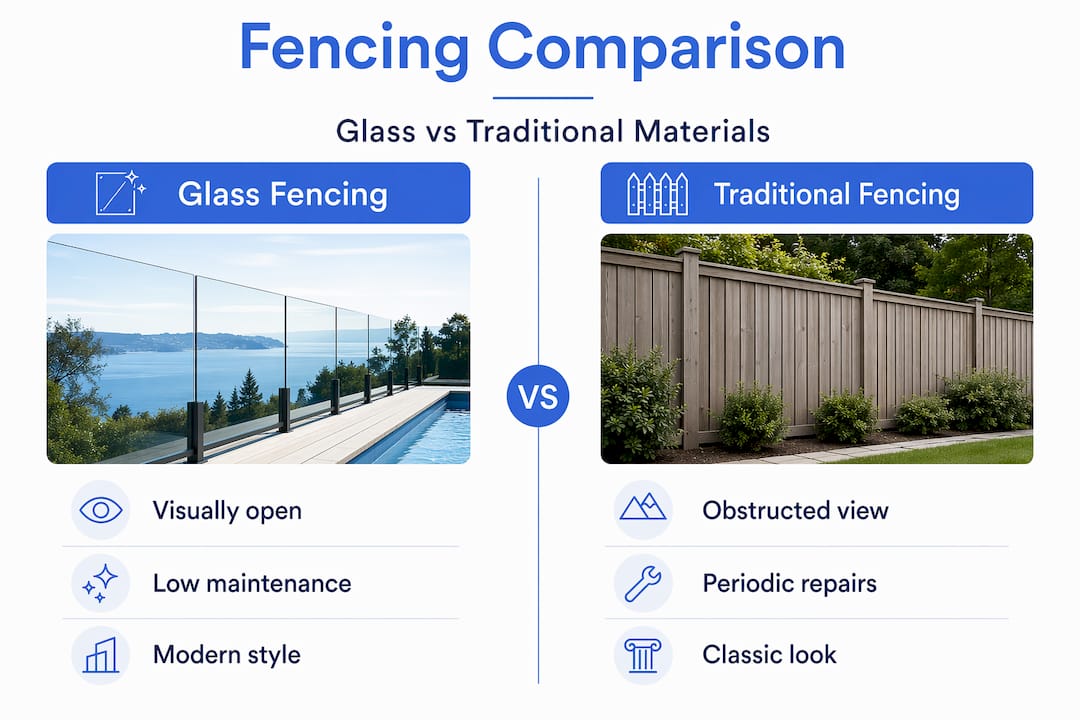
The comparison above tells most of the story, but a few points deserve a closer look.
Visual impact and privacy: Timber fencing for privacy is effective, and for areas where you genuinely want to screen neighbors or block street noise, timber fencing for privacy remains a practical choice. However, around pools and entertainment areas, privacy is rarely the goal. You want to watch children in the water, enjoy the garden view, or simply keep the space feeling open. In those scenarios, glass wins outright.
Maintenance realities: Here is the honest trade-off with glass fencing. It looks better than any other material when it is clean. The problem? Glass shows fingerprints and water spots more readily than opaque materials, which means it requires more frequent cleaning to stay aesthetically sharp. Around pools, splash zones and hard water deposits will build up on the panels faster than you might expect. This is not a deal-breaker, but it is a commitment.
Cost over time: While glass fencing costs more upfront than timber or mesh, the math shifts over a 10 to 20 year horizon. Timber requires painting or sealing every two to five years, and full replacement is common within 15 years in wet or humid climates. Glass panels, when properly installed, rarely need replacement. The hardware may need attention over time, but the glass itself is remarkably tough.
Pro Tip: For pool and entertainment areas, budget for a monthly cleaning routine rather than a quarterly one. A mild detergent and a soft squeegee take about 20 minutes and keep the panels looking brand new. That small investment in time protects the visual premium you paid for at installation.
The glass vs. other railing choices debate ultimately comes down to what you prioritize. If open views and a modern look are non-negotiable, glass is the clear answer. If low maintenance and budget are the dominant concerns, mesh or cable systems deserve consideration.
Safety, compliance, and approval: What you need to know
Aesthetics are only part of the story. Before you order a single panel, you need to understand the safety and regulatory requirements that govern glass fencing in your region.
The most important standard in the United States is ASTM E2358, the performance specification for glass railing systems. Under California’s 2025 CBC interpretation, approval of glass panel railings can be based on testing demonstrating compliance with ASTM E2358. This is the benchmark that confirms your panels can handle the loads, impacts, and environmental conditions they will face over their lifespan. California is one of the most rigorous states for building code compliance, and its standards often set the tone for how other states interpret similar requirements.
The table below gives a snapshot of how different regions approach glass fencing code:
| Region | Key code reference | Permit required | Notes |
|---|---|---|---|
| California | 2025 CBC, ASTM E2358 | Yes | DSA testing documentation required |
| Tennessee | IBC, IRC | Yes | Specific post spacing and glass thickness rules apply |
| Georgia | Georgia State Minimum Standard Codes | Yes | Local amendments may add requirements |
| Florida | FBC | Yes | Wind load calculations critical in coastal zones |
| General U.S. | IBC, IRC | Usually | Local authority has final say |
Here is a step-by-step checklist for a safe and compliant glass fencing installation:
- Check your local building codes using resources like the building code compliance guide before you design anything.
- Confirm glass thickness and type requirements. Most codes specify tempered or laminated tempered glass at a minimum. For pools, the requirements are often stricter.
- Review state-specific regulations. For example, Tennessee building code requirements and Georgia glass railing code each carry their own nuances around post spacing and load ratings.
- Obtain engineering documentation. Many jurisdictions require stamped engineering drawings before issuing a permit, especially for pool fencing and elevated decks.
- Pull a permit before installation begins. This protects your investment and ensures your home insurance remains valid if something goes wrong.
- Schedule a final inspection. Many homeowners skip this step and later discover issues during a home sale. A passed inspection creates a documented record that the installation meets code.
It is worth noting that pool fencing codes are often significantly stricter than general landscape fencing codes because they relate directly to drowning prevention. In states with year-round outdoor swimming, expect detailed requirements around gate latches, fence height, and the gap between panels and the ground.
Design and maintenance considerations for lasting beauty
Before installation, it pays to know how to keep your glass fence looking flawless year after year. Design decisions made at the planning stage have a direct impact on how much work your fence will need later.
Placement and exposure matter more than most guides acknowledge. Glass panels positioned directly in the splash zone of a pool will accumulate calcium and mineral deposits significantly faster than panels placed even a few feet back. If your design allows, offsetting the fence line slightly from high-splash areas reduces cleaning frequency without compromising the view.
Design tips that reduce long-term maintenance:
- Use channels at the base rather than exposed spigots in areas with heavy foot traffic. Channels are harder to knock and create fewer dirt-trap points.
- Specify low-iron glass (sometimes called ultra-clear glass) for panels that face north or get indirect light. Standard glass has a slight green tint that becomes noticeable in certain lighting conditions.
- Choose marine-grade stainless steel hardware for any coastal installation. Standard stainless can still develop surface rust within a few years in salt-air environments.
- Position fence lines to maximize natural views. A frameless panel facing a garden or water feature frames the scene the way a picture window does inside a home.
Cleaning routine for glass fencing:
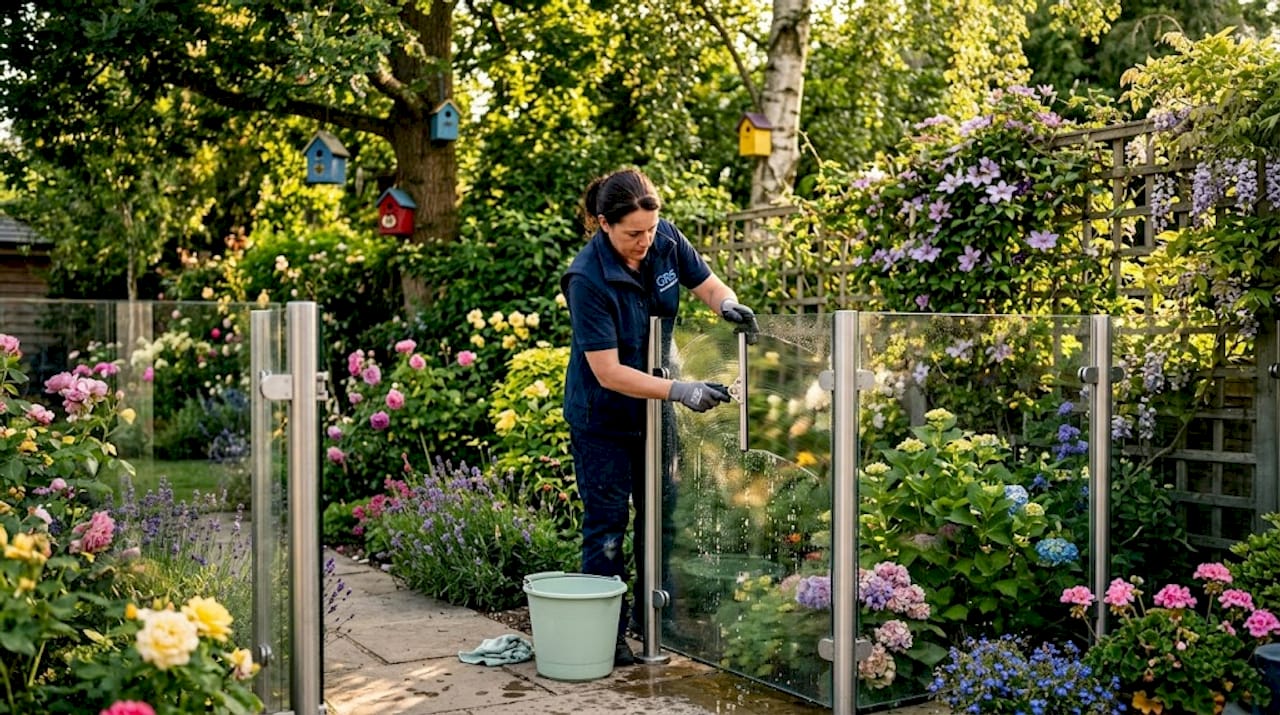
The practical reality is that glass shows fingerprints and water spots far more readily than any opaque material. Around pools, expect to clean panels every two to four weeks during peak use seasons. The good news: the process is simple. A bucket of warm water with a few drops of dish soap, a soft cloth or squeegee, and a streak-free finish rinse is all you need. Avoid abrasive cleaners that can scratch the glass surface and always rinse from top to bottom.
If your property has landscaping elements like retaining walls near the fence line, plan for soil and debris management as well. Retaining wall services for landscaping can help stabilize the ground around glass fence posts, especially on sloped properties where soil movement could compromise post integrity over time.
Pro Tip: Apply a hydrophobic glass treatment (similar to car windshield treatments) to your panels once or twice a year. It causes water to bead and roll off instead of sitting on the surface, which dramatically reduces water spot buildup and cuts your regular cleaning time in half.
Weather and glass selection: In regions with heavy snowfall or frequent freeze-thaw cycles, hardware expansion and contraction becomes a concern. Ensure your installer uses hardware rated for thermal movement. Tempered glass itself handles temperature changes extremely well, but the mounting systems need to accommodate the physics of repeated expansion cycles without loosening over time.
A realistic perspective: Is glass fencing always the right choice?
Glass fencing generates a lot of enthusiasm, and most of that enthusiasm is well-founded. But it would not be honest to recommend it without acknowledging where it falls short.
The higher upfront cost and stricter compliance requirements are genuine trade-offs against the clear-view aesthetic. Some industry voices actively recommend lower-maintenance alternatives like mesh or cable railings for homeowners who want open views without the cleaning commitment or the premium price tag.
Here is how we think about it: glass fencing delivers its best value in high-visibility, high-use areas where the aesthetic premium justifies the cost. A pool fence that your family sees every day and that guests notice immediately is worth the investment. A back-corner boundary fence that nobody looks at? Probably not.
The most interesting design outcome we see is the hybrid approach: frameless glass fencing in the focal areas of a property (pool perimeter, entertainment deck, front-facing balcony) combined with lower-cost materials elsewhere. This concentrates the visual and financial investment where it generates the most return, while keeping total project costs in check.
Glass fencing that enhances property value most effectively is always glass fencing that was chosen thoughtfully, not installed everywhere just because it looks good in a showroom. Match the material to the purpose, the location, and your realistic maintenance capacity.
Bringing your glass fencing project to life
Ready to transform your outdoor space? The right support makes all the difference between a glass fence that looks stunning for decades and one that creates headaches from day one.

At Glass Railing Store, we make it straightforward to move from planning to installation. Start with the glass railing engineering and testing resources to confirm your design will meet load and safety requirements. Use the building codes for glass railings page to understand exactly what your region requires before you pull a permit. When you’re ready to move forward, connect with certified glass railing installers who know how to deliver a result that is both beautiful and compliant. Our team can support you from quote to final inspection, so your project stays on track.
FAQs
1. Does glass fencing require more maintenance than wood or metal?
Yes, glass fencing typically needs more frequent cleaning because it shows water spots and fingerprints more readily than opaque materials, especially in pool environments or high-traffic areas.
2. Can glass fencing be used in all weather conditions?
Properly engineered glass fencing handles a wide range of climates, but the structural support strategy changes depending on whether you choose frameless, semi-frameless, or framed systems for your specific site conditions.
3. Is glass fencing safe for pools or balconies?
When installed per code using safety-rated materials, glass fences meet or exceed safety requirements; compliance with ASTM E2358 testing confirms the system can handle the required loads for pools and elevated applications.
4. How do I know if glass fencing is code-compliant in my area?
Check local building codes and confirm with an installer, and look specifically for compliance with ASTM E2358 or the equivalent recognized safety standard in your jurisdiction.
5. Are there affordable alternatives to glass fencing for modern landscaping?
Yes, as some industry sources note, the higher cost of glass makes alternatives like mesh or cable railings worth considering when open views matter but budget and low maintenance are the primary concerns.