

Glass Railing for Podium Deck Design: 2026 Guide
Glass railing for podium deck design is a transparent safety barrier system using engineered tempered or laminated glass panels, custom-fabricated to meet building codes and designed for elevated outdoor decks. These systems combine fall protection with unobstructed sightlines, making them the preferred choice for modern residential and commercial podium spaces. Glassrailingstore supplies the full range of glass panels, hardware, and connectors needed to build code-compliant, visually clean barriers for any podium configuration. Getting the design right requires understanding load requirements, glass types, and proper installation from the start.
What Are the Building Code Requirements for Glass Railings on Podium Decks?
Building codes for glass railings set the legal floor for every podium deck project. Skipping this step means failed inspections, costly rework, and real safety risk.
The minimum guard height for podium deck railings is 1,050–1,070 mm, measured from the deck surface to the top of the railing. That height is not a suggestion. It is the threshold below which no inspector will sign off on a residential or commercial installation.
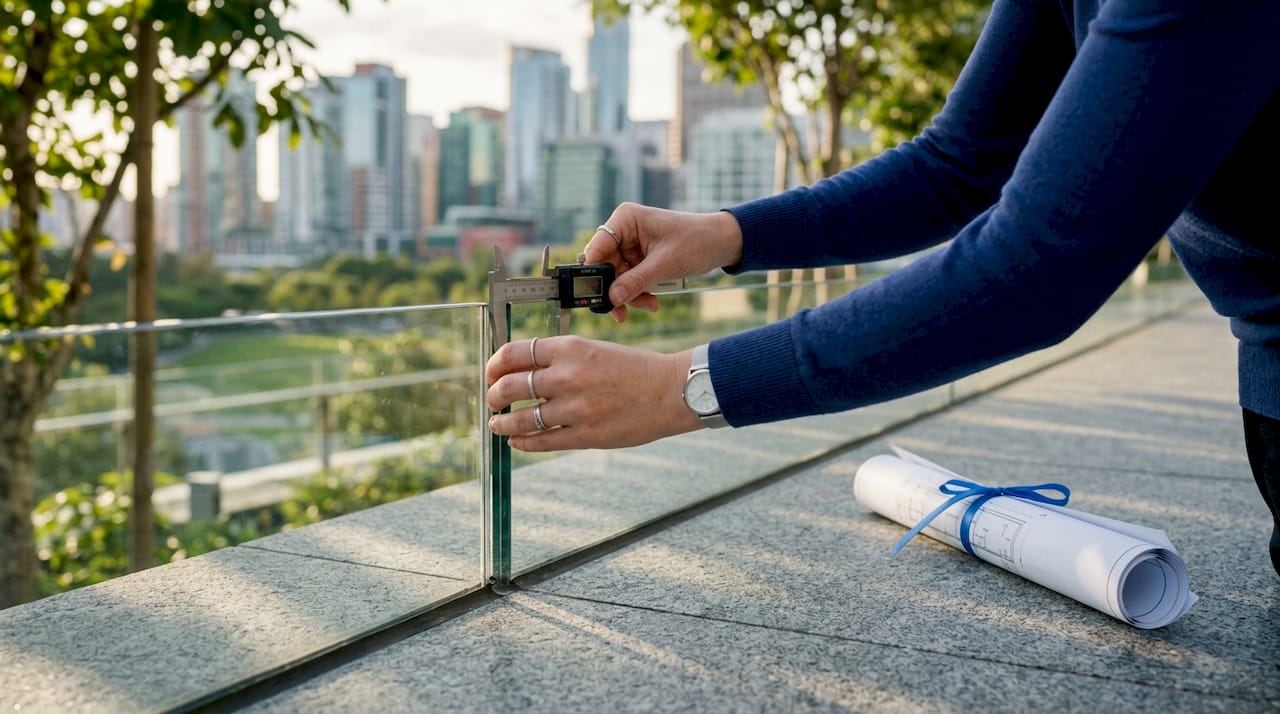
Load-bearing requirements split by occupancy type. Residential podium decks require a minimum lateral load resistance of 0.75 kN/m. Commercial podiums must handle at least 1.5 kN/m. That difference matters because a rooftop restaurant terrace and a private condo balcony face completely different crowd pressures.
| Requirement | Residential | Commercial |
|---|---|---|
| Minimum guard height | 1,050–1,070 mm | 1,050–1,070 mm |
| Lateral load resistance | 0.75 kN/m | 1.5 kN/m |
| Glass type | Tempered or laminated | Laminated preferred |
| Hardware standard | Corrosion-resistant | Marine-grade stainless |
Compliance also protects you financially. A railing system that passes engineering review and inspection carries documented proof of safety, which matters for insurance claims and resale value alike.
Pro Tip: Print the local building code section on guards and bring it to your glass supplier before ordering. Fabricators who see the spec sheet upfront cut fewer panels twice.
Why Is Custom-Fabricated Glass Critical for Podium Deck Railings?
Off-the-shelf glass panels are built to fixed dimensions. Podium decks are not. Custom fabrication is the only reliable way to match site-specific substrate conditions, irregular perimeter shapes, and precise wind-load calculations.
The fabrication process for a podium project follows a clear sequence:
- Site measurement: Every run is measured to the millimeter, accounting for post spacing, corner angles, and any step changes in deck elevation.
- Wind-load calculation: Structural engineers calculate the lateral force the glass must resist based on building height, location, and exposure category.
- Cutting and tempering: Panels are cut to exact dimensions before tempering. Tempered glass cannot be cut after the heat treatment process without shattering.
- Laminating (where required): A polyvinyl butyral (PVB) or SentryGlas interlayer bonds two glass plies together, creating a panel that holds its shape even when cracked.
- Quality inspection: Each panel is checked for optical clarity, edge finish, and dimensional accuracy before shipping.
Fixed-size panels create gaps, require field cutting of framing, and often fail to meet the exact load path the engineer specified. The result is a railing that looks improvised and may not pass inspection.
Pro Tip: Ask your fabricator for a shop drawing showing panel dimensions, hole locations, and edge clearances before production starts. Reviewing that drawing takes 20 minutes and prevents weeks of delays.
What Materials and Glass Types Are Best for Podium Deck Railings?
The two primary glass types for podium deck barriers are tempered glass and laminated glass. Each has a distinct safety profile and a different cost point.
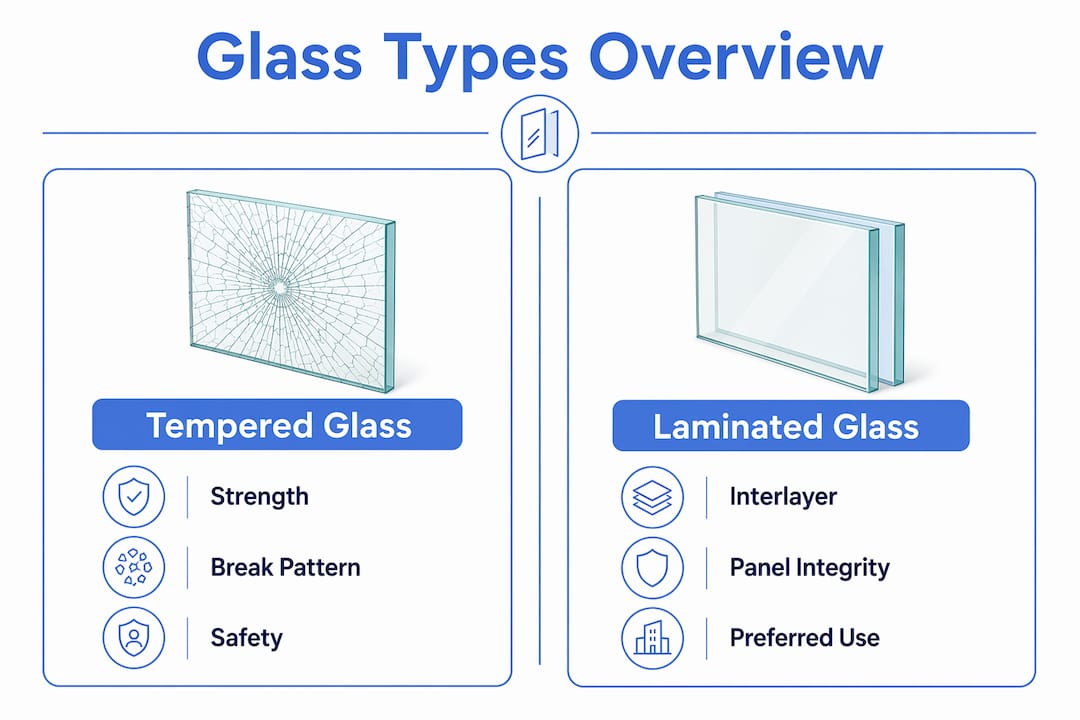
Tempered glass is heat-treated to be roughly four times stronger than standard float glass. When it breaks, it fractures into small, blunt pieces rather than sharp shards. Glass thickness for exterior podium decks typically runs from 10 mm to 21.5 mm depending on panel height, post spacing, and wind exposure.
Laminated glass adds a bonded interlayer between two glass plies. The interlayer keeps the panel intact if the glass is struck or cracked, preventing debris from falling to lower levels. That property makes laminated glass the preferred or required choice for overhead and elevated applications where falling glass poses a risk to people below.
| Feature | Tempered glass | Laminated glass |
|---|---|---|
| Break pattern | Small blunt fragments | Panel stays intact |
| Overhead safety | Not recommended | Preferred or required |
| Thickness range | 10–19 mm | 13.5–21.5 mm |
| Cost | Lower | Higher |
| Best use | Ground-level decks | Elevated podium decks |
Framing and hardware materials matter just as much as the glass itself. Marine-grade stainless steel and anodized aluminum resist the corrosion that salt air, humidity, and pooling water cause on exterior podium surfaces. Standard steel hardware corrodes within a few seasons in coastal or high-humidity environments. Choosing the wrong metal means replacing the entire mounting system long before the glass needs attention.
For a deeper look at how glass material choices affect outdoor safety, the Glassrailingstore guide on outdoor glass safety covers the full picture.
How Do Modern Glass Railings Enhance Safety and Aesthetics in Podium Deck Design?
Frameless glass railings deliver unobstructed sightlines that no wood or metal baluster system can match. That transparency is not just a style preference. It changes how a space feels and functions.
The design and safety benefits of podium deck glass barriers include:
- Unobstructed views: Transparent panels preserve the view corridor from inside the building to the outdoor environment, which is the primary reason architects specify glass on high-rise podium terraces.
- Natural light penetration: Glass does not cast the shadow patterns that solid or closely spaced balusters create. Spaces below and adjacent to the railing stay brighter.
- Perceived space expansion: A transparent perimeter makes a podium deck feel larger than its actual footprint. This effect is especially valuable on compact urban terraces.
- Fall protection: A properly engineered glass panel absorbs lateral loads without deflecting beyond safe limits, providing the same physical barrier as any code-compliant railing system.
- Contemporary styling: Clean, minimal framing with clear or low-iron glass panels reads as modern in any architectural context, from residential rooftop gardens to commercial hospitality terraces.
The safety and aesthetic functions reinforce each other. A railing that looks light and open still performs as a structural guard when it is built to the correct load specification. That combination is what makes glass the dominant material choice for new podium deck construction.
What Installation Considerations Ensure Effective Glass Railing Performance?
Proper installation starts before a single panel is lifted into place. Substrate evaluation, hardware selection, and wind-load verification all happen in the planning phase.
-
Evaluate the substrate: Concrete podium slabs, steel framing, and wood decking each require a different anchor system. The substrate determines the fastener type, embedment depth, and base plate size. A mismatch here is the most common cause of railing failure at inspection.
-
Calculate wind loads: Building height, geographic location, and exposure category feed into the wind-load calculation. The result sets the minimum glass thickness and post spacing for the run. Skipping this step and guessing at panel thickness is a code violation on any commercial podium.
-
Select the right mounting system: Base shoe channels, standoff point-fix systems, and structural post systems each suit different design intents. Base shoe channels give a clean, continuous look along the deck perimeter. Standoff systems work well for feature sections where the glass appears to float. Post systems handle longer unsupported spans.
-
Use corrosion-resistant hardware throughout: Every bolt, washer, and connector that contacts the glass or the substrate should be marine-grade stainless steel or anodized aluminum. Mixing hardware grades creates galvanic corrosion at contact points.
-
Inspect and maintain annually: Check sealant joints, hardware torque, and glass surface condition each year. Reseal any gaps where water can reach the base shoe or anchor points. Catching a loose fastener early costs far less than replacing a panel after water infiltration has damaged the substrate.
For wood deck substrates specifically, the Glassrailingstore guide on wood deck attachment covers anchor selection and load path details in depth.
Key Takeaways
Glass railing for podium deck design requires custom-fabricated, code-compliant panels in tempered or laminated glass, mounted with corrosion-resistant hardware to meet load and height standards.
| Point | Details |
|---|---|
| Code compliance is non-negotiable | Guard heights of 1,050–1,070 mm and load ratings up to 1.5 kN/m apply to all podium decks. |
| Custom fabrication beats off-the-shelf | Site-specific dimensions and wind loads require panels cut and tempered to exact specifications. |
| Laminated glass is safer at height | The interlayer keeps cracked panels intact, preventing debris from falling to lower levels. |
| Hardware material determines longevity | Marine-grade stainless steel or anodized aluminum resists corrosion in exterior environments. |
| Substrate evaluation comes first | Anchor system selection depends entirely on the deck material and structural capacity. |
What I’ve learned from podium deck glass railing projects
Most homeowners and designers come to podium deck projects with one of two misconceptions. The first is that any tempered glass panel will do the job. The second is that custom fabrication is only for large commercial builds.
Both are wrong, and the second one costs people money. I’ve seen compact residential rooftop terraces with irregular perimeters where a standard panel size left gaps that required custom filler pieces anyway. The total cost ended up higher than a fully custom order would have been from the start.
The trend I find most interesting right now is the move toward low-iron glass on premium podium projects. Standard clear glass has a green tint that becomes visible on thicker panels. Low-iron glass is optically neutral, which matters when the panel is 19 mm thick and the view behind it is a skyline or a water feature. The price premium is real, but on a high-end terrace, the visual difference is obvious.
My practical advice for anyone planning a podium installation: get the engineering done before you pick the glass. The wind-load calculation tells you the minimum thickness and the maximum unsupported span. Those two numbers determine your panel dimensions, your post spacing, and ultimately your budget. Starting with a glass catalog and working backward from a panel you like is how projects end up over budget and under-engineered.
— Fuanne
Glassrailingstore supplies custom-engineered glass railing systems built for the specific demands of podium deck installations. Every project starts with the right glass specification and the hardware to match.

The glass railing engineering testing service at Glassrailingstore verifies that each assembly meets or exceeds the load and height requirements for your specific site conditions. Whether you need tempered glass panels for a residential terrace or a fully laminated system for a commercial podium, the catalog covers the full range of thicknesses and configurations. Free shipping applies on orders over $3,000, and the team provides quotes and planning support for both DIY and contractor-led installations.
FAQs
1. What is the minimum height for a podium deck glass railing?
Building codes require a minimum guard height of 1,050–1,070 mm for podium deck railings. This measurement is taken from the deck surface to the top of the railing.
2. Is tempered or laminated glass better for elevated podium decks?
Laminated glass is the preferred choice for elevated podium decks because its interlayer holds the panel intact if broken, preventing glass from falling to lower levels.
3. What glass thickness is standard for podium deck railings?
Glass thickness for exterior podium decks typically ranges from 10 mm to 21.5 mm, depending on panel height, post spacing, and wind-load requirements.
4. Why does custom fabrication matter for podium deck glass railings?
Podium decks have site-specific dimensions, substrate conditions, and wind-load requirements that fixed-size panels cannot reliably accommodate. Custom fabrication ensures precise fit, correct load performance, and code compliance.
5. What hardware should be used for exterior glass railing installations?
Marine-grade stainless steel and anodized aluminum are the correct hardware materials for exterior podium deck railings. Both resist the corrosion caused by moisture, salt air, and pooling water.