

The Role of Glass in Outdoor Safety Explained
Most homeowners assume glass is the risky choice for outdoor railings and barriers. That instinct makes sense until you understand the role of glass in outdoor safety and how far the material has come. Modern engineered glass for decks, balconies, and pool fences is nothing like the window pane that shatters on impact. Laminated and tempered safety glass is purpose-built to protect people, maintain structural integrity under load, and comply with strict building codes. This guide breaks down the types, the rules, and the real-world performance that makes glass one of the most reliable materials you can choose for outdoor protection.
Table of Contents
- Key takeaways
- The role of glass in outdoor safety
- Types of safety glass and their outdoor properties
- Building code requirements for outdoor safety glass
- Engineering principles behind glass safety barriers
- Material innovations expanding glass’s safety role
- Practical guidance for homeowners
- My take on glass as a safety material
- Upgrade your outdoor safety with Glassrailingstore
- FAQ
Key takeaways
| Point | Details |
|---|---|
| Laminated glass is required for guards | Only laminated glass maintains the barrier after one ply breaks, which is why codes mandate it for balustrades. |
| IBC sets minimum performance standards | The International Building Code requires specific thickness, lamination, and impact ratings for all outdoor safety glazing. |
| Post-breakage behavior is the real test | How glass performs after impact matters more than its strength before impact for structural safety. |
| Decorative glass can still be safe glass | Properly certified decorative laminated glass meets the same safety standards as plain panels. |
| Interlayer choice changes everything | The type of interlayer (PVB vs. ionoplast) directly affects how well a laminated panel holds up structurally. |
The role of glass in outdoor safety
Glass used outdoors in railings, balustrades, and pool fences serves a fundamentally different role than glass in a window. A window stops wind and rain. A balustrade panel has to stop a person from falling. That structural responsibility changes everything about how the glass must be made, tested, and installed.
Ordinary annealed glass, the kind in old single-pane windows, breaks into long sharp shards when it fails. That behavior is dangerous everywhere, but it is catastrophic in a railing that someone is leaning on twelve feet above a patio. Engineered safety glass is designed so that when it breaks, it either holds together through a bonded interlayer or fractures into small blunt fragments instead of jagged blades.
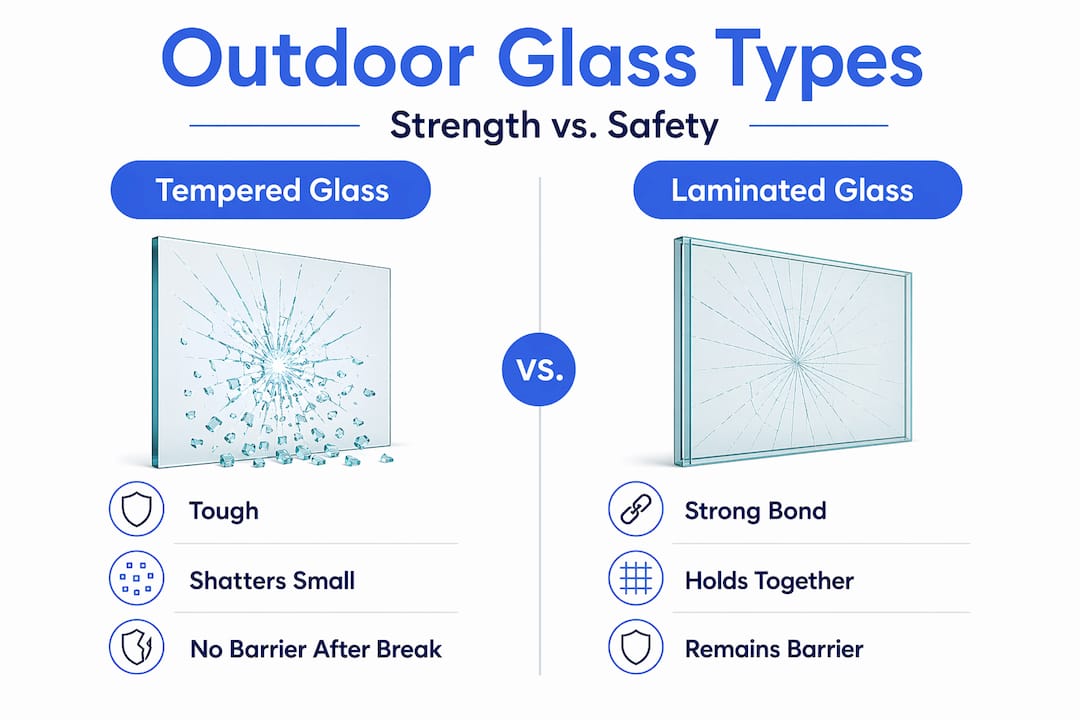
The two main categories you need to know are tempered glass and laminated glass. Tempered glass is heat-treated to be roughly four times stronger than standard glass. If it does break, it shatters into small, relatively blunt pieces rather than large knife-like shards. Laminated glass bonds two or more glass plies together with a plastic interlayer. If one ply breaks, the interlayer holds the fragments in place and the panel stays in the frame. For outdoor railing applications, that distinction matters enormously.
Types of safety glass and their outdoor properties
Understanding glass types is the foundation of any good outdoor safety decision. The three main categories used in outdoor applications are laminated, fully tempered, and heat-strengthened glass. Each has distinct performance characteristics.
Laminated glass
Laminated glass consists of two or more glass plies bonded together with an interlayer, typically polyvinyl butyral (PVB) or ionoplast. The interlayer holds broken glass pieces together after impact, which is why laminated glass maintains barrier function even when one ply fails. That post-breakage performance is the reason building codes require it for guards and balustrades.
Fully tempered glass
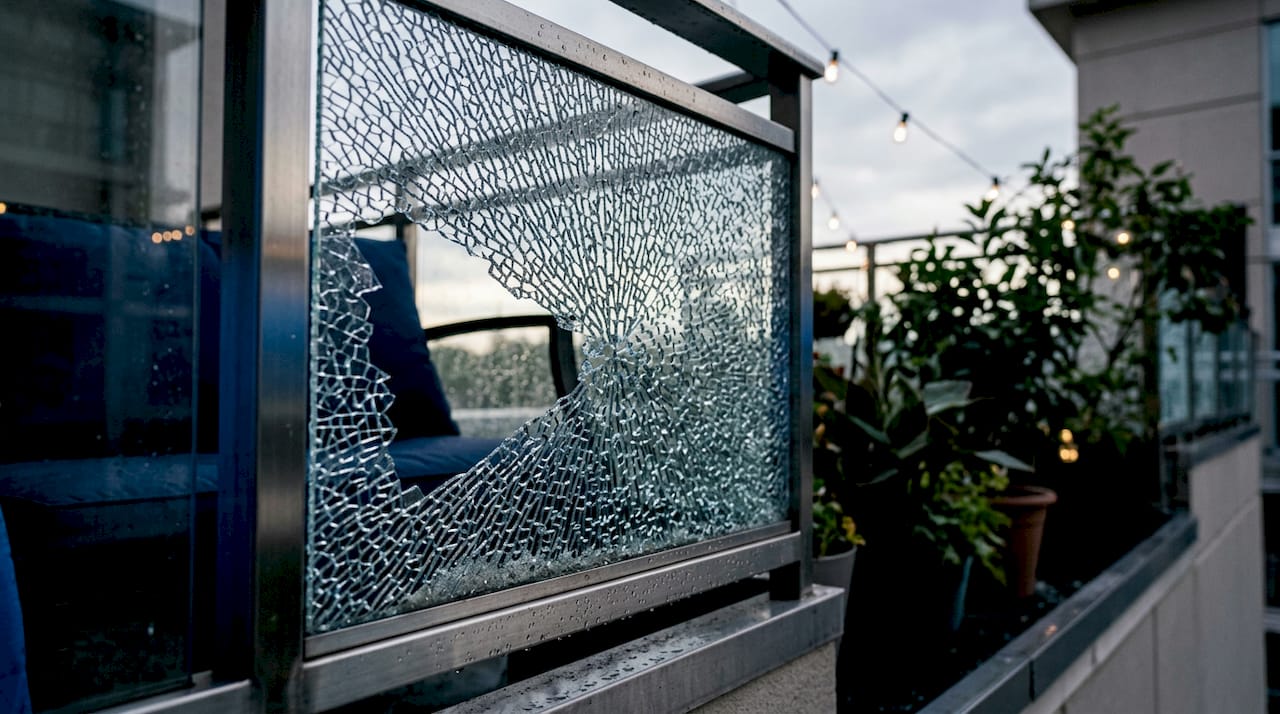
Fully tempered glass is strong under normal conditions, but when it breaks it disintegrates into thousands of small fragments. That’s actually great for shower doors and table tops where the goal is to avoid cutting hazards. For structural balustrades, though, full temper creates a problem. The moment the panel breaks, the barrier disappears completely. There is no residual capacity and no protection until someone replaces the panel.
Heat-strengthened laminated glass
This is where the engineering gets interesting. Heat-strengthened laminated glass forms large interlocking fragments after breakage, and those fragments stay attached to the interlayer. The result is a broken panel that still carries load and still functions as a barrier. For any application where structural performance after breakage is required, heat-strengthened laminated glass outperforms its fully tempered counterpart.
| Glass type | Post-breakage behavior | Code-compliant for balustrades | Best outdoor use |
|---|---|---|---|
| Annealed | Large sharp shards, no retention | No | None |
| Fully tempered | Fine fragments, barrier lost | Limited | Infill only, not structural |
| Laminated (PVB) | Fragments held by interlayer | Yes | Railings, balustrades |
| Heat-strengthened laminated | Large shards held intact, load-carrying | Yes (preferred) | Structural guards, pool fences |
- Laminated glass is the code-required choice for guardrails and balustrades in most jurisdictions.
- Fully tempered glass alone should never be used as the primary structural element in a balustrade.
- The interlayer type affects both stiffness during service and how well the panel holds together after damage.
- Ionoplast interlayers outperform standard PVB in structural balustrades where load-carrying post-breakage capacity is critical.
Pro Tip: If you are comparing glass panels for a deck railing, ask specifically whether the laminate uses PVB or ionoplast. Ionoplast costs more but provides meaningfully better structural retention after breakage and handles thermal stress better in outdoor conditions.
Building code requirements for outdoor safety glass
Safety glazing is defined by performance, not by a product name. The International Building Code (IBC) and the Consumer Product Safety Commission (CPSC) set specific impact resistance and fragment retention criteria that glass must meet to qualify. Understanding those criteria protects you from choosing the wrong product.
The IBC mandates safety glazing in seven hazardous locations, including doors, sidelites, stairways, guardrails, and pool areas. For each of those locations, the glass must pass standardized impact tests and display permanent certification markings.
For handrails and guards specifically, the requirements go further. The IBC requires laminated glass meeting CPSC 16 CFR Part 1201 Category II, with a minimum thickness of 1/4 inch. That standard reflects the higher energy impact load a railing panel can receive compared to a window or door.
Key requirements homeowners and contractors should know:
- Glass must display a permanent etched or printed certification mark identifying the manufacturer and the standard it meets.
- Minimum thickness for guard applications is 1/4 inch, but many designs require thicker panels depending on height and span.
- Both ANSI Z97.1 and CPSC 16 CFR Part 1201 are accepted testing standards, and current codes focus on performance outcomes rather than specific product types.
- State and local amendments to the IBC can add stricter requirements. California, for example, has additional provisions you can review through California glass railing codes.
- Installers who substitute uncertified glass to save money expose homeowners to liability and potential permit rejection.
A common mistake is assuming that any tempered glass panel sold at a home improvement store will pass code for balustrade use. It will not unless it also carries the lamination and certification requirements for guardrail applications. Always verify the certification markings before purchasing.
Engineering principles behind glass safety barriers
When you install a glass railing on a deck or balcony, that panel becomes a primary structural element. It is not decorative. It has to resist the same loads that any other guardrail system would face, including people leaning on it, pressing against it, or falling into it at speed.
The load calculations for glass guardrails follow the same requirements as other guardrail materials. Panels must resist a concentrated point load of 200 pounds applied at any point along the top rail, as well as distributed loads along the panel surface. The glass thickness, panel height, and support hardware all factor into whether a design meets those numbers.
Post-breakage performance is where glass balustrades must sustain loads even after one ply breaks. The engineering goal is to keep the barrier intact and functional until the damaged panel can be replaced. Here is how that works in practice:
- A laminated panel takes an impact and one ply fractures.
- The interlayer bonds the fragments to the remaining ply.
- The panel stays in place and continues to prevent falls.
- The system is inspected and the panel is scheduled for replacement during normal maintenance.
That four-step sequence is only possible with laminated glass. A monolithic tempered panel skips directly from step one to failure, with no barrier remaining.
Pro Tip: Thermal stress is an underappreciated cause of outdoor glass failure. Shade patterns from nearby structures or solar reflections off adjacent windows can create temperature differentials across a single panel. Heat-strengthened glass manages thermal stress better than fully tempered glass, making it the smarter choice for panels that get uneven sun exposure.
Testing protocols like EN 12600 and ASTM E2353 simulate human body impact against glass panels. Panels that pass these tests demonstrate they can absorb and distribute impact energy without creating dangerous shard penetration or sudden barrier failure. Ask your supplier whether their panels have been tested under these protocols before you buy.
Material innovations expanding glass’s safety role
The role of glass in outdoor design has expanded significantly in recent years, and not just because of structural engineering advances. Fabrication improvements now allow glass to meet safety requirements while also serving aesthetic and functional goals that would have required a tradeoff just a decade ago.
Decorative laminated glass can qualify as safety glazing when it is designed and tested to ANSI Z97.1 or CPSC 16 CFR 1201 standards. That means frosted panels, tinted glass, and printed designs can all meet the same impact standards as clear safety glass. For homeowners who want privacy screening on a balcony without sacrificing code compliance, this is a genuine option.
Beyond aesthetics, material science has improved glass performance in harsh outdoor conditions. Tempered glass outperforms polycarbonate outdoors in several key areas. Polycarbonate yellows with UV exposure, scratches easily, and loses clarity over time. Tempered glass retains its optical clarity, resists chemical exposure, and holds up against the abrasion of outdoor cleaning without surface degradation.
- Ionoplast interlayers provide higher edge stability and better moisture resistance than standard PVB, making them preferable for coastal and high-humidity environments.
- EVA (ethylene vinyl acetate) interlayers are used in applications where flexibility and adhesion to specialty substrates matter more than maximum structural stiffness.
- UV-blocking interlayers protect both the glass assembly and the space behind the railing from solar degradation.
- Low-emissivity coatings and radiative cooling glass are emerging in commercial applications and will likely reach residential products within the next few years.
The bottom line for homeowners: the glass market has evolved to the point where choosing safety-compliant glass does not mean choosing plain or industrial-looking panels. The aesthetic options and the safety standards can coexist in the same product.
Practical guidance for homeowners
Choosing the right glass for an outdoor safety application comes down to three things: matching the right glass type to the application, verifying code compliance, and maintaining the installation over time.
- Match glass type to the structural role. For balustrades and guards, specify laminated glass, not monolithic tempered. For infill panels in a framed system where the frame bears the load, tempered glass may be acceptable, but confirm this with your local building department.
- Check certification markings. Every safety-glazing panel sold for code-required locations must carry a permanent mark showing the manufacturer, the product standard (CPSC 1201 or ANSI Z97.1), and the safety category. No mark means no verification.
- Understand local code variations. National standards set the floor, not the ceiling. Review the American building codes for glass railings for a thorough overview, and consult your local building department if you are in a state with additional requirements.
- Inspect regularly. Look for edge chips, delamination, and surface scratches twice a year. Edge damage on laminated glass can compromise the interlayer bond and reduce residual strength after impact.
- Use qualified hardware. The glass panel is only as safe as the system that holds it. Marine-grade stainless steel hardware resists corrosion in outdoor environments and maintains clamping force over time.
Pro Tip: Never use sealants or adhesives that are not specifically rated for glass-to-metal contact. Incompatible materials can cause chemical stress at the glass edge and lead to spontaneous breakage months after installation.
My take on glass as a safety material
I’ve seen the same pattern repeat itself with homeowners considering glass railings: they start skeptical, do some research, and end up wishing they had chosen glass from the beginning. The misconception that glass is fragile comes from everyday experience with windows and tableware. But architectural laminated glass operates in a completely different category of performance.
What surprises most people is not that laminated glass is strong. It’s that a broken laminated panel is still a working safety barrier. That property does not exist in wood, aluminum, or cable railing systems. When those systems fail, they fail completely. Glass, done right, fails gracefully.
The bigger challenge I see is code literacy. Most homeowners do not know what CPSC 1201 Category II means or why it matters, and some contractors are not forthcoming about it either. The result is that cost-cutting substitutions happen, uncertified products get installed, and inspectors catch it after the fact. Spending fifteen minutes reviewing glass railing building codes before you order panels can prevent weeks of headaches later.
The material innovations happening right now, particularly in ionoplast interlayers and thermally treated laminated glass, are making the engineering case for glass stronger every year. My honest view is that homeowners who choose certified laminated glass for their outdoor railings are making a genuinely better safety decision than most of the alternatives. Not just an aesthetic one.
— Fuanne
Upgrade your outdoor safety with Glassrailingstore
Glassrailingstore offers tempered glass panels for railings engineered specifically to meet IBC and CPSC safety standards for outdoor guard applications. Every panel in the catalog is manufactured to comply with code requirements, and the team provides detailed specification support so you are not guessing on materials or dimensions. If you want confidence that your deck, balcony, or pool fence installation will pass inspection and perform structurally over the long term, start with the engineering testing standards behind the products. Glassrailingstore also offers free shipping on orders over $3,000 and direct consultation for custom configurations. Getting the safety right from the start is always less expensive than fixing it after the fact.
FAQ
1. What type of glass is required for outdoor railings?
Building codes require laminated glass for balustrades and guards because it maintains barrier function after one ply breaks. Monolithic tempered glass alone does not meet this requirement for structural railing applications.
2. How does safety glazing get certified?
Safety glazing is certified through testing to standards like CPSC 16 CFR Part 1201 or ANSI Z97.1, and panels must display a permanent certification mark. The mark identifies the manufacturer, the product standard, and the safety rating category.
3. Can decorative glass panels meet outdoor safety codes?
Yes. Decorative glass qualifies as safety glazing when it is tested and certified to recognized impact standards. Frosted, tinted, and patterned glass can all comply if the product meets the required performance criteria.
4. What is the minimum thickness for glass guardrails?
The IBC requires a minimum thickness of 1/4 inch for laminated glass used in handrails and guards, though many designs use thicker panels depending on the height, span, and load requirements of the specific installation.
5. Is tempered glass better than polycarbonate for outdoor use?
For long-term outdoor performance, tempered glass outperforms polycarbonate because it retains clarity, resists scratching, and does not degrade under UV exposure the way polycarbonate does over time.
Recommended
- Why glass barriers beat wood and metal for outdoor safety – The Glass Railing Store
- Tempered glass advantages: enhance safety and design outdoors – The Glass Railing Store
- Balcony Glass Systems Explained: Safety, Design, and Compliance – The Glass Railing Store
- How glass fencing elevates modern landscaping design – The Glass Railing Store