

Defining premium glass railing systems: a homeowner's guide
Not all tempered glass is created equal, and that misconception costs homeowners more than they realize. When defining premium glass railing systems, most people focus on the glass itself and stop there. But a truly premium system is the sum of its parts: the glass type, framing style, hardware quality, coating standards, and installation precision all work together. Get any one of these wrong and you’ve bought an expensive-looking railing that may fail a code inspection, look dated in five years, or, in a worst-case scenario, compromise the safety of everyone on your deck or balcony.
Table of Contents
- What defines premium glass railing systems
- Understanding types of glass and their safety roles
- Framed, semi-frameless, and frameless systems: styles and structural differences
- High-performance coatings and hardware: durability and finish standards
- Precision installation: measurement, tolerances, and site challenges
- Navigating building codes and compliance for premium glass railings
- The feature nobody talks about: why “premium” is a systems problem
- Explore premium glass railing systems at Glass Railing Store
- Frequently asked questions
What defines premium glass railing systems
The phrase “premium glass railing” gets thrown around loosely. Retailers use it to describe anything with clear panels and metal posts. But the distinction between a high-end glass railing and a standard one runs much deeper than aesthetics.
Premium means the system has been engineered for both performance and longevity. It means the glass was specified with post-breakage behavior in mind, not just tensile strength. It means the hardware carries a finish that won’t pit or corrode after two coastal winters. And it means the system was measured, fabricated, and installed with tolerances tight enough to satisfy not just your eye, but your local building inspector.
Every section below breaks down one layer of that definition, so by the time you finish reading, you’ll know exactly what questions to ask and what to look for.
Understanding types of glass and their safety roles
Here’s where most buyers get the first thing wrong. Tempered glass is strong, sometimes four to five times stronger than standard annealed glass under normal loads. But when it fails, it fails completely. It fragments into hundreds of small pieces, the whole panel disappears, and the barrier is gone. For a guardrail, that’s a serious problem.
Laminated glass works differently. Two or more layers of glass are bonded with a PVB (polyvinyl butyral) or SGP (SentryGlas Plus) interlayer. When it breaks, the shards stay bonded to the interlayer. The panel may crack, but it holds its position. Laminated glass is increasingly preferred by engineers for exactly this reason: post-breakage retention prevents the barrier from collapsing entirely.
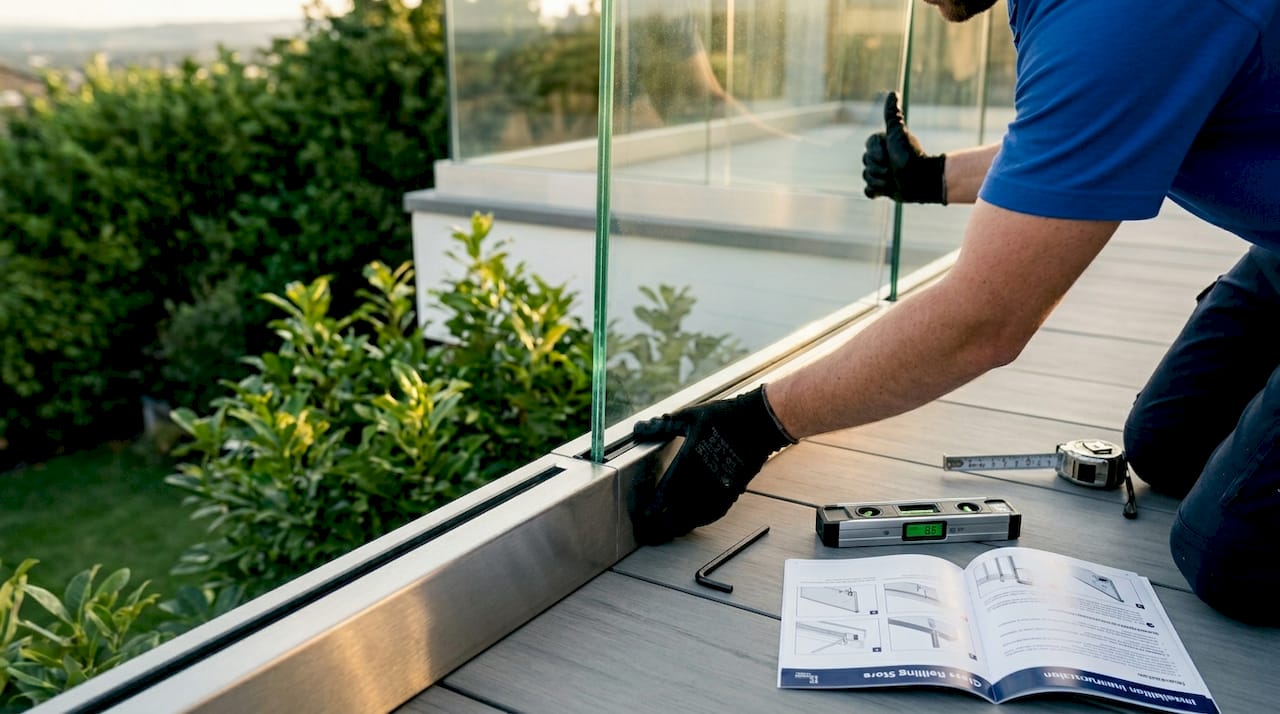
The best glass railing systems use laminated tempered glass. You get the load resistance of tempered combined with the shatter retention of laminated. That’s the gold standard for premium railing materials in any application where a fall is the consequence of failure.
Key glass types compared:
- Tempered glass: High strength, fully fragments on breakage, lower cost
- Laminated glass: Holds shards after breakage, better post-failure safety, heavier
- Laminated tempered glass: Strongest option with post-breakage retention, required by many codes
Pro Tip: When reviewing product specs, look for safe glass thickness callouts alongside the glass construction type. Thickness and lamination work together, not independently.
Codes in many jurisdictions are catching up to what structural engineers have known for years: tempered-only glass is being phased out of guardrail applications. If your contractor quotes tempered-only for an exterior guardrail, that’s a red flag worth addressing.
Framed, semi-frameless, and frameless systems: styles and structural differences
With a clear understanding of glass types, the next variable is how that glass is supported. The framing system isn’t just an aesthetic choice. It directly affects structural behavior, installation requirements, and overall cost.
Framed systems use continuous metal channels or posts that surround the glass on multiple sides. The metal carries a significant share of the load, which means the glass panels themselves can be thinner and less expensive. These systems are cost-effective, forgiving of minor site imperfections, and well suited for utilitarian applications where unobstructed views are less important.
Semi-frameless systems sit in the middle. Glass panels are secured between or behind vertical posts, with a top rail running the length of the system. The posts carry lateral loads while the glass fills the visual space. You get a cleaner look than fully framed, without the complexity of frameless fabrication.
Frameless systems are where modern glass balustrades earn their reputation. Thick laminated glass panels are held by base shoes or patch fittings, with minimal visible hardware. As frameless glass railings provide unobstructed views, they require thicker laminated glass and superior installation discipline. A frameless system with 1/2-inch laminated tempered glass and polished stainless patch fittings creates a visual effect that no framed system can match.
| System type | Glass thickness | View quality | Installation complexity | Relative cost |
|---|---|---|---|---|
| Framed | 3/8 inch typical | Partially obstructed | Moderate | Lower |
| Semi-frameless | 3/8 to 1/2 inch | Mostly open | Moderate | Mid-range |
| Frameless | 1/2 to 5/8 inch | Fully unobstructed | High | Higher |
What to consider before choosing a system type:
- View priority: If preserving sightlines over a pool or landscape is the goal, frameless wins
- Budget constraints: Frameless costs more in glass, hardware, and labor
- Site conditions: Unlevel substrates are easier to accommodate in framed or semi-frameless designs
- Code requirements: Some jurisdictions have specific structural requirements that influence system type selection
Pro Tip: Review common glass railing mistakes before committing to a frameless design. Many of the most expensive errors happen at the planning stage, not during installation.
High-performance coatings and hardware: durability and finish standards
The glass gets most of the attention. The hardware finishes its last. That’s backwards.
In outdoor environments, especially coastal or high-UV settings, the hardware and coating quality determine how a system looks and functions in year five and year ten, not just year one. Powder coatings are the finish standard for most aluminum and steel components in premium glass railing systems, but not all powder coatings perform the same.
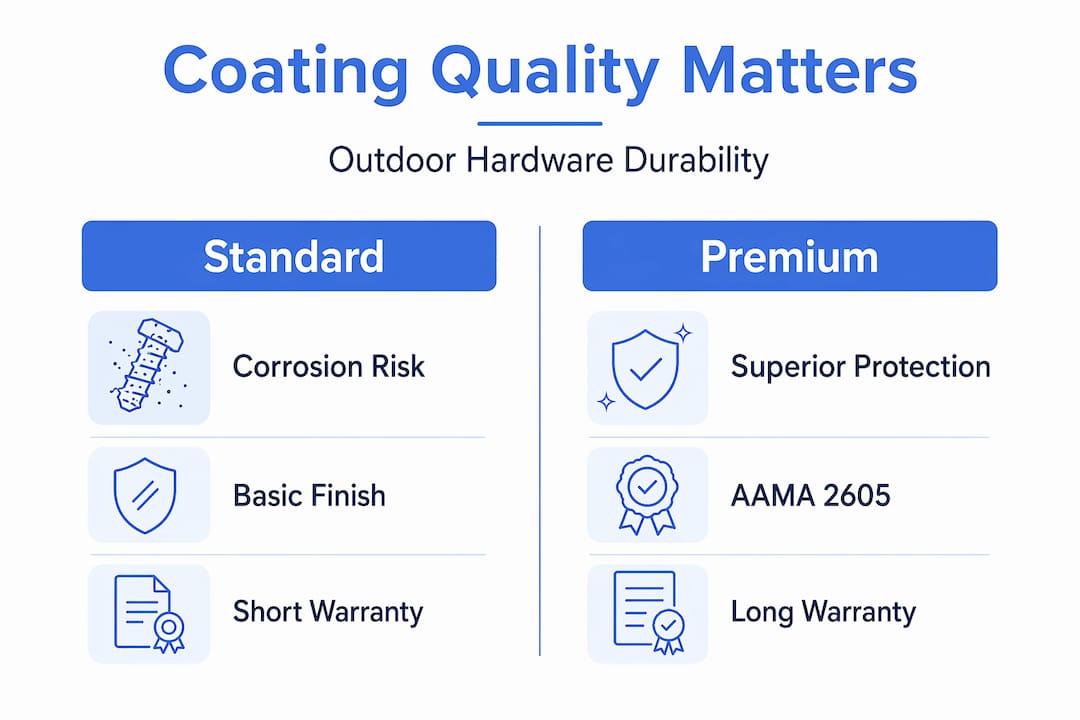
AAMA 2605 is the highest industry standard for architectural powder coatings. AAMA 2605 certification offers superior resistance to fading, scratching, and corrosion for outdoor glass railing components. A finish meeting AAMA 2605 typically carries a 10 to 20-year warranty against chalking and fading, which matters on a $15,000 deck railing investment.
What to look for in premium hardware and coatings:
- AAMA 2605 rated powder coating on all aluminum components
- 316-grade stainless steel for fittings in coastal or pool-adjacent environments (316 grade resists chloride corrosion; 304 grade does not)
- Marine-grade hardware for any application within a few miles of saltwater
- Anodized aluminum as an alternative to powder coating where color consistency over time is critical
- Full warranty documentation from the coating manufacturer, not just the railing supplier
Hardware failure in a glass railing system typically shows up as corroded base shoe anchors or deteriorating patch fittings. Either one compromises the structural behavior of the entire panel. Understanding glass railing building codes will also help you recognize whether the hardware spec in front of you actually meets the structural requirements for your jurisdiction.
Precision installation: measurement, tolerances, and site challenges
This is where most glass railing projects go wrong. Not in the product selection. In the measurement.
Tempered glass cannot be cut, trimmed, or reworked after the tempering process. The panel that arrives on site is the panel you install. If it doesn’t fit, you’re ordering again, waiting again, and paying again. A few millimeters of error can prevent glass panels from fitting, leading to costly re-fabrication since tempered glass cannot be altered after tempering.
For frameless and semi-frameless systems in particular, the installation sequence matters as much as the measurement itself.
Steps that define a properly managed installation:
- Complete all structural work first. Measure after the deck, stairs, or balcony is fully built. Blueprints introduce too many variables.
- Use a certified glass railing installer or a contractor with documented experience in glass systems. Generic deck contractors rarely have the calibrated tools or training needed for tight-tolerance frameless work.
- Account for site imperfections. No deck is perfectly level. Measure multiple points along each run and document the variation.
- Confirm anchor point locations against post or base shoe spacing requirements before fabrication.
- Order with lead time built in. Custom glass panels typically carry a 3 to 4-week lead time. Re-orders take just as long.
Pro Tip: Ask your installer whether they measure with a digital level and laser distance tool. Hand tape measures introduce enough error to cause problems in a frameless system with 1/8-inch tolerances. Working with certified glass railing installers removes this risk entirely.
Navigating building codes and compliance for premium glass railings
The installation of glass railings is regulated by building codes that most homeowners have never read. That’s fine. But knowing the basics protects you legally and ensures your system is genuinely safe.
Modern codes require laminated safety glazing, structural top rails under certain conditions, and minimum nominal thicknesses generally starting at 1/4 inch depending on local amendments. In practice, most exterior guardrail applications land at 3/8 inch or thicker once load requirements are calculated.
| Code requirement | Typical standard |
|---|---|
| Minimum guardrail height | 36 inches (42 inches for commercial or high decks) |
| Glass type for occupied spaces | Laminated safety glass |
| Minimum glass thickness | 1/4 inch (6.4 mm), usually 3/8 inch in practice |
| Post-breakage retention | Required in many jurisdictions for guardrails |
| Top rail requirement | Varies by design and local amendment |
Compliance isn’t just bureaucratic box-checking. It’s how you confirm that the system in front of you was actually engineered for the loads it will face. An uncertified assembly that looks identical to a compliant one may fail under lateral impact or high wind loading when it matters most. Full compliance details are available through the glass railing building codes resource, which covers IBC, IRC, and state-specific amendments in detail.
The feature nobody talks about: why “premium” is a systems problem
Most articles about high-end glass railings focus on the visual payoff. Clean lines, unobstructed views, luxury railing options that photograph beautifully for listing photos. That framing is not wrong, but it’s incomplete.
The honest truth about premium glass railing systems is that their value is almost entirely invisible. You don’t see the laminated interlayer holding shards in place. You don’t see the AAMA 2605 coating resisting UV degradation under 95-degree sun. You don’t see the 1/16-inch tolerances that made the frameless panels align perfectly.
What you do see, eventually, is the failure of a system that skipped one of those layers. Corroded posts three years in. A panel that shifted because the base shoe wasn’t anchored to structural framing. A re-fabrication order because someone measured off a blueprint instead of the finished deck.
Investing in premium glass railings means paying for the things you won’t notice, because they’re working exactly as designed. That’s actually the better return. The cost difference between a mid-grade system and a genuine premium system is modest compared to the cost of a re-do, a failed inspection, or a liability exposure.
Explore premium glass railing systems at Glass Railing Store
Ready to move from understanding to building? At Glass Railing Store, we specialize in the exact components that define a premium system: laminated tempered glass panels, marine-grade stainless hardware, AAMA 2605-rated aluminum base shoes, and everything needed for both DIY and professional installation of glass railings. Every product in our catalog is selected for outdoor durability and code compliance.
Whether you’re planning a frameless deck railing, a pool fence, or a stair balustrade, our team can provide a custom quote and guide you through measurement, product selection, and code requirements for your specific project. We offer free shipping on orders over $3,000 and hands-on support from people who understand glass railing systems at every level. Browse our full glass railing catalog and start your project with confidence.
FAQs
1. Is laminated glass safer than tempered glass for railings?
Yes, laminated glass is safer because it holds broken shards in place through a bonded interlayer, maintaining the barrier after breakage and significantly reducing fall risks compared to tempered-only glass.
2. What are the main differences between framed and frameless glass railings?
Framed railings use metal supports around the glass for structure and lower cost, while frameless railings rely on thick laminated glass panels with minimal hardware for a clean, fully open view but require more precise installation and higher-quality fabrication.
3. Why is precise measurement important for glass railing installation?
Because tempered glass cannot be cut or reworked after fabrication, even small measurement errors force complete panel re-orders, adding weeks of delay and significant extra cost to any project.
4. What coating standards ensure durability for outdoor glass railing systems?
AAMA 2605 certified powder coatings provide the highest level of resistance to fading, scratching, and corrosion, making them the right choice for coastal, poolside, or high-UV outdoor railing environments.
5. Are premium glass railings compliant with building codes?
Yes, premium glass railing systems are engineered to meet or exceed applicable codes. Modern codes require laminated safety glazing and tested assemblies for guardrails, and genuine premium systems are designed with those mandates built into every component specification.
Recommended
- DIY glass stair railing: A complete homeowner’s guide – The Glass Railing Store
- Glass railing durability: Build it right, build it to last – The Glass Railing Store
- Avoid these glass railing mistakes for a safe, stylish home – The Glass Railing Store
- Boost curb appeal and value with glass railings – The Glass Railing Store