

Outdoor Staircase Glass Ideas That Combine Style and Safety
Glass railings on outdoor staircases are defined by one non-negotiable requirement: the glass must retain its fragments after breakage to prevent falling hazards. The industry term for this is “post-breakage retention,” and it separates safe glass railing designs from dangerous ones. The best outdoor staircase glass ideas pair laminated tempered or heat-strengthened glass with thoughtfully chosen handrail materials, whether timber, aluminum, or stainless steel, to deliver both visual impact and code-compliant safety. This article walks you through every decision, from glass type to installation, so your outdoor stairs look exceptional and hold up to real-world use.
1. What Glass Types are Safest for Outdoor Staircases?
Laminated tempered and laminated heat-strengthened glass are the safest choices for outdoor stair guardrails because they retain glass fragments after breakage. That retention property is what prevents a shattered panel from becoming a falling hazard to anyone below. Both glass types bond multiple plies together with an interlayer, so even after impact, the panel holds its shape.
Code pathways like IBC 2407 and ASTM E2353 explicitly favor laminated glass for guard infill because of this post-breakage performance. The 2024 IBC goes further, mandating laminated glass for guards in windborne debris regions, which covers most coastal and storm-prone areas of the United States. If you live near the ocean or in a hurricane zone, laminated glass is not optional.
Monolithic fully tempered glass is only acceptable under limited conditions, specifically where no walking surface exists below or where permanent protection from falling glass is in place. Single-pane tempered panels pose a real falling-glass risk, and cities like Chicago restrict their use in guardrail applications. The takeaway is simple: start with a laminated system and you eliminate the most common code compliance problems before they start.
The safest glass solution balances post-breakage visibility with barrier integrity, favoring multi-ply laminated glazing over single-pane tempered glass for outdoor guards.
Key thickness considerations:
- 3/8-inch laminated: Suitable for shorter spans with standard loading
- 1/2-inch laminated: The most common choice for residential outdoor guardrails
- 5/8-inch laminated: Recommended for longer unsupported spans or high-traffic commercial stairs
2. What Handrail Materials Best Complement Glass Railings?
A well-designed outdoor handrail is integral to both safety and the architectural finish of stairs, not merely a secondary add-on. The material you choose affects maintenance schedules, visual tone, and how well the railing holds up to your local climate. Three materials dominate residential outdoor stair projects: timber, aluminum, and stainless steel.
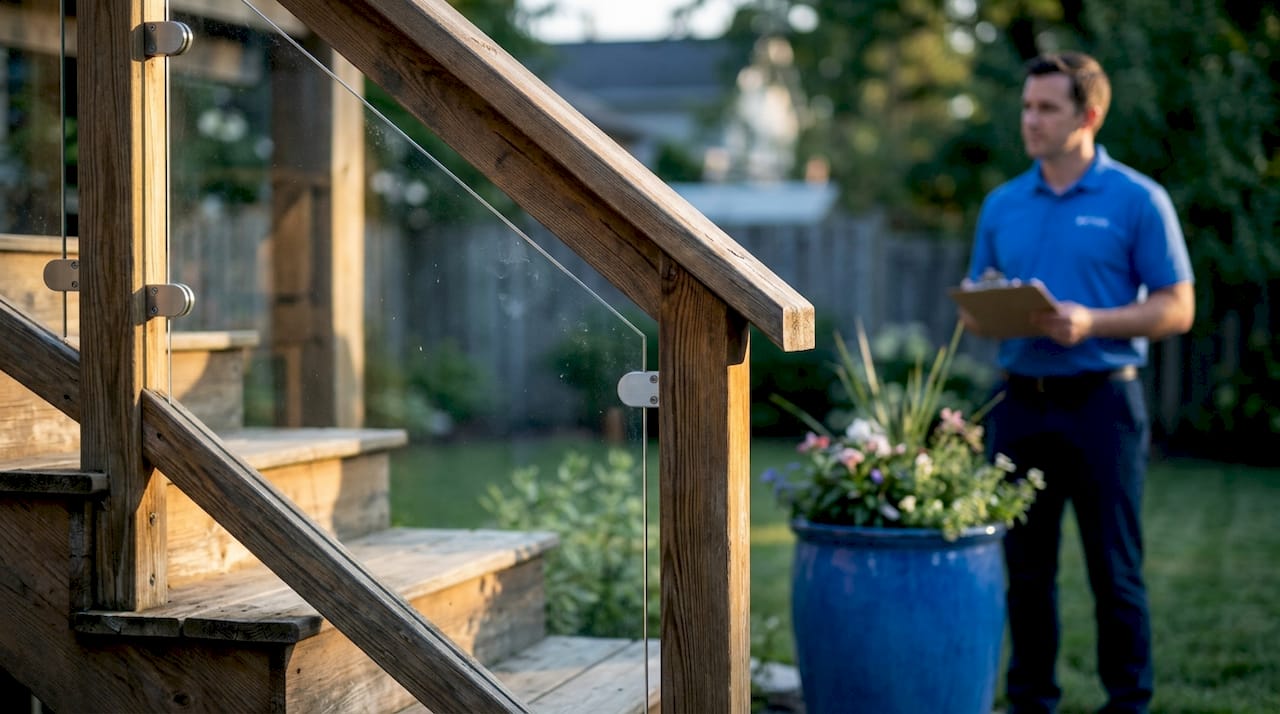
Timber delivers a premium appearance and warm tactile feel that no metal replicates. The trade-off is maintenance. UV exposure and moisture degrade coatings and wood fibers over time, so you need to reseal or repaint every one to three years depending on your climate. Timber pairs especially well with hardwood decks and pergolas, creating a unified outdoor aesthetic. Hardwood species like Ipe, Teak, and Cumaru outperform softwoods significantly in outdoor conditions.
Aluminum provides a clean, modern look with relatively low maintenance. Powder-coated aluminum resists weathering well and can be color-matched to your home’s exterior palette. It suits contemporary architectural styles and works particularly well alongside frameless glass panels because neither material competes visually.
Stainless steel offers strong corrosion resistance, especially in coastal areas, but grade and finish selection matter enormously. Grade 316 stainless steel outperforms Grade 304 in salt-air environments. Brushed finishes hide fingerprints and minor scratches better than mirror-polished surfaces.
Pro Tip: Match your handrail material to your maintenance willingness, not just your design preference. A timber rail that goes unsealed for two seasons will cost more to restore than the savings you made choosing it over aluminum.
3. Top outdoor staircase glass railing design ideas
The most compelling glass staircase designs work because they treat the railing as architecture, not just a safety barrier. Here are the configurations that consistently deliver both visual impact and structural reliability.
Frameless Glass Railings
Frameless glass railings create seamless, minimalist visuals that make outdoor spaces feel larger and more open. The key requirement is that they must be specified as part of a tested structural assembly, including an adequate top rail. A frameless panel without a proper top rail is not code-compliant, regardless of how good it looks. When done correctly, frameless systems are the gold standard for modern outdoor steps on decks, hillside homes, and pool surrounds.
Frosted and Textured Glass Panels
Frosted glass maintains light transmission while adding privacy, making it ideal for street-facing staircases or shared outdoor spaces. Acid-etched and sandblasted finishes both achieve the frosted effect, with acid-etched being more durable outdoors. Patterned glass, including geometric and fluted designs, adds an artistic dimension without sacrificing the structural integrity of the panel.
Glass with Black-Frame or Stainless Steel Combinations
Pairing clear glass panels with black powder-coated aluminum frames or stainless steel balusters creates a high-contrast look that photographs exceptionally well and ages gracefully. This combination suits industrial, farmhouse, and transitional architectural styles. The frame also provides additional structural support, which can reduce the glass thickness requirement for a given span.
Floating Glass Steps with Frameless Railings
Floating glass steps combined with minimalistic metal or stainless steel supports maximize light flow and create a modern aesthetic ideal for contemporary outdoor stairs. These designs deliver an open, almost weightless feel while maintaining structural reliability when installed properly. Pairing floating treads with a frameless laminated glass railing on each side produces the most visually striking outdoor staircase available in residential design today.
| Design Style | Best For | Glass Type | Handrail Material |
|---|---|---|---|
| Frameless clear glass | Open views, minimalist homes | Laminated tempered | Stainless steel or aluminum |
| Frosted glass panels | Privacy, street-facing stairs | Laminated heat-strengthened | Aluminum or timber |
| Black-frame glass | Industrial or farmhouse style | Laminated tempered | Black powder-coated aluminum |
| Floating steps + frameless | Contemporary luxury homes | Laminated tempered | Stainless steel |
| Patterned or textured glass | Artistic or boutique spaces | Laminated heat-strengthened | Timber or stainless steel |
4. How to Choose and Install the Right Glass Railing System
Selecting the right system starts with assessing your site conditions. Note the stair width, height, span between posts, exposure to wind and salt air, and whether the stairs are attached to a structure or freestanding. Each variable affects glass thickness, post spacing, and hardware selection.
Follow these steps when planning your installation:
-
Confirm local code requirements. Check your municipality’s adopted building code. Most U.S. jurisdictions follow the IBC, but local amendments apply. The American building code requirements for glass railings cover guardrail height, infill load resistance, and glass type specifications.
-
Select laminated glass as your baseline. For any guarded stair application outdoors, laminated tempered glass is the correct starting point. Monolithic tempered glass creates compliance risk and post-breakage hazard.
-
Choose corrosion-resistant hardware. Proper installation requires attention to fixing, corrosion resistance, drainage, and post alignment. Weak fixing points compromise both safety and appearance. Use marine-grade stainless steel fasteners for any coastal or high-humidity environment.
-
Decide between DIY and professional installation. Frameless systems require precise post placement and torque specifications that punish small errors. Framed systems with pre-engineered kits are more forgiving for experienced DIYers. The DIY glass stair railing guide from Glassrailingstore covers measurement, hardware selection, and installation sequence in detail.
- Plan for maintenance access. Glass panels need periodic cleaning with non-abrasive cleaners. Hardware fasteners should be inspected annually for corrosion or loosening, especially in coastal zones.
Pro Tip: Order one extra glass panel beyond your calculated quantity. Breakage during installation happens even to experienced contractors, and lead times on custom-cut laminated panels can run two to four weeks.
5. Comparing Popular Glass Railing Systems by Situation
Not every glass railing system suits every outdoor environment. The table below maps the most common situations to the right combination of glass type, frame style, and handrail material.
| Situation | Recommended Glass | Frame Style | Best Handrail |
|---|---|---|---|
| Coastal or hurricane zone | Laminated tempered (1/2") | Frameless or framed | Grade 316 stainless steel |
| Urban rooftop or deck | Laminated heat-strengthened | Frameless | Aluminum or stainless steel |
| Private backyard, wooded setting | Laminated tempered | Frameless | Timber or aluminum |
| Street-facing entry stair | Laminated heat-strengthened | Framed with frosted panels | Aluminum |
| Budget-conscious renovation | Laminated tempered (3/8") | Framed kit system | Powder-coated aluminum |
| Premium contemporary build | Laminated tempered (1/2") | Fully frameless | Brushed stainless steel |
For coastal environments, the combination of laminated tempered glass and Grade 316 stainless steel hardware is the only configuration that reliably resists long-term corrosion. For budget-conscious projects, framed kit systems with 3/8-inch laminated panels and powder-coated aluminum rails deliver code compliance at a lower cost than custom frameless installations. Code-compliant balcony and stair repairs, such as those offered by SB-721 compliant contractors in California, follow similar material selection logic for exterior glass barriers.
Key Takeaways
The most durable and visually striking outdoor staircase glass ideas combine laminated tempered glass with corrosion-resistant hardware and a handrail material matched to your climate and maintenance capacity.
| Point | Details |
|---|---|
| Laminated glass is non-negotiable | IBC 2407 and ASTM E2353 require laminated glass for outdoor guardrail infill to prevent falling-glass hazards. |
| Handrail material drives maintenance | Timber looks premium but needs resealing; aluminum and stainless steel require far less upkeep outdoors. |
| Frameless systems need tested assemblies | A frameless glass panel without a structural top rail is not code-compliant, regardless of aesthetics. |
| Match system to environment | Coastal sites require Grade 316 stainless hardware; inland and urban sites have more material flexibility. |
| DIY is viable with the right kit | Framed laminated systems with pre-engineered hardware are manageable for experienced homeowners with proper guides. |
Why I Think Most Homeowners Get this Decision Backwards
I’ve reviewed dozens of outdoor stair projects where the homeowner started with a design image from social media and worked backwards to find glass that matched the picture. That approach almost always produces a compliance problem or a system that fails within five years. The correct sequence is the opposite: start with your code requirements and site conditions, then find a design that works within those constraints.
The good news is that laminated vs tempered glass in a frameless system with brushed stainless steel hardware is genuinely beautiful. You don’t have to sacrifice aesthetics to build something safe. What you do have to sacrifice is the impulse to buy the cheapest panel that looks right in a photo. Monolithic tempered glass is cheaper and widely available, but its post-breakage behavior makes it the wrong choice for any guarded stair where someone could be below.
The other thing I’d push back on is the idea that timber handrails are too much work. If your home has a hardwood deck or natural wood siding, a timber rail ties the whole exterior together in a way that no aluminum profile replicates. The maintenance is real, but it’s one afternoon every two years, not a full renovation. Choose it with open eyes and it rewards you with a warmth that metal simply cannot match.
— Fuanne
Find the Right Glass Railing System at Glassrailingstore

Glassrailingstore carries a full range of laminated tempered glass panels, marine-grade stainless steel hardware, connectors, and frameless railing accessories built for outdoor stair applications. Every product is designed to meet current building code requirements, and the team offers glass railing engineering and testing services to verify your system before installation. If you’re starting from scratch or upgrading an existing stair, you can explore building codes for glass railings directly on the site, or request a frameless glass railing quote tailored to your project dimensions and local code requirements. Premium materials, expert guidance, and free shipping on orders over $3,000 make Glassrailingstore the practical starting point for any serious outdoor stair project.
FAQs
1. What is the safest glass for outdoor stair railings?
Laminated tempered glass is the safest choice for outdoor stair guardrails because it retains fragments after breakage, preventing falling glass hazards. IBC 2407 and ASTM E2353 both favor laminated glass for guard infill applications.
2. Can I use tempered glass without lamination on outdoor stairs?
Monolithic fully tempered glass is only permitted under limited conditions, such as where no walking surface exists below the railing. Most U.S. building codes restrict its use in guardrail infill due to the falling-glass risk after breakage.
3. What handrail material lasts longest outdoors?
Grade 316 stainless steel and powder-coated aluminum both offer strong long-term durability outdoors. Stainless steel is the better choice in coastal or high-humidity environments; aluminum suits most inland and urban settings with minimal maintenance.
4. Do frameless glass railings meet building codes?
Frameless glass railings meet building codes when specified as part of a tested structural assembly that includes an adequate top rail and laminated glass panels. A frameless panel installed without a proper top rail does not meet IBC requirements.
5. How do I start planning a glass railing for my outdoor stairs?
Start by confirming your local building code requirements for guardrail height, glass type, and infill load resistance. Then assess your site conditions, including span, wind exposure, and proximity to saltwater, before selecting glass thickness and hardware grade.
Recommended
- The Role of Glass in Outdoor Safety Explained – The Glass Railing Store
- Tempered glass advantages: enhance safety and design outdoors – The Glass Railing Store
- Why glass barriers beat wood and metal for outdoor safety – The Glass Railing Store
- Avoid these glass railing mistakes for a safe, stylish home – The Glass Railing Store