

Glass Railing Buyer Appeal Factors: 2026 Guide
Glass railing buyer appeal factors are the specific qualities that make glass railings a preferred choice for homeowners and property managers who want to enhance outdoor spaces, increase property value, and attract buyers. These factors span aesthetics, safety, durability, and cost. Understanding them helps you make a confident purchase decision and position your property competitively in the market. Glassrailingstore identifies the core drivers as view preservation, code-compliant safety, long-term durability, and perceived luxury. Each factor carries different weight depending on your property type, location, and target buyer.
What Are the Primary Aesthetic Factors That Drive Glass Railing Appeal?
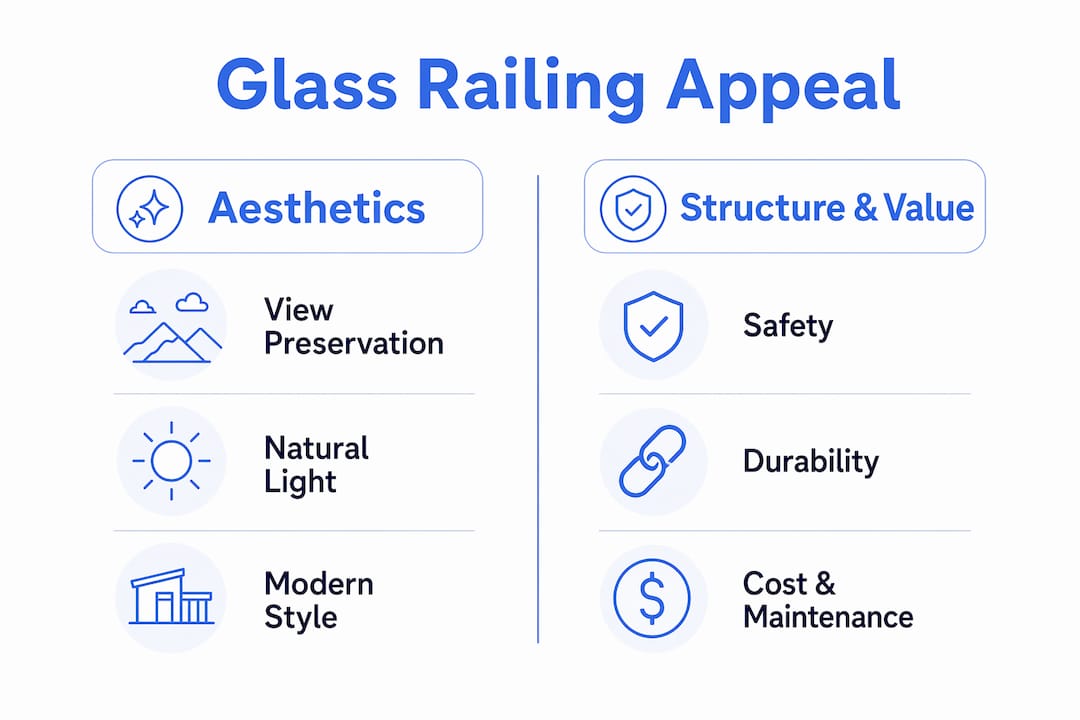
Glass railings preserve views and maximize natural light, which makes them one of the most visually compelling railing options available. That single quality explains why waterfront homes, hillside properties, and rooftop terraces almost always feature glass over wood or metal. Buyers associate unobstructed sightlines with luxury, and that perception translates directly into perceived property value.
Glass type shapes the visual result more than most buyers realize. Standard clear glass has a slight green tint from iron content in the raw material. Low-iron glass eliminates that tint and delivers a crystal-clear appearance that reads as more premium. The difference is subtle in small panels but becomes obvious across a full deck or balcony run.
System style also matters. Framed systems use aluminum or steel posts to hold each panel, creating a more structured look that suits traditional architecture. Semi-frameless systems use posts at intervals with open spans between, blending structure and openness. Frameless systems use base-mounted clamps or channels with no visible vertical posts, creating the cleanest, most modern look available. Each style suits a different architectural context, and choosing the wrong one for your home’s style reduces the visual payoff.
- Framed systems: Best for traditional or colonial-style homes where defined lines match the architecture.
- Semi-frameless systems: Work well with transitional designs that blend classic and modern elements.
- Frameless systems: Ideal for contemporary, minimalist, or view-focused properties where the glass should disappear visually.
- Low-iron glass: Recommended for any installation where color accuracy and premium appearance matter.
- Clear tempered glass: A practical, cost-effective choice for most residential applications.
Pro Tip: If your property overlooks a water feature, mountain range, or city skyline, specify low-iron glass. The color clarity amplifies the view and signals quality to any buyer who walks onto the deck.
How Do Safety and Structural Factors Influence Buyer Appeal?
Safety is the second most important glass railing buyer appeal factor, and it directly affects buyer confidence. A railing that looks fragile or feels unstable during a walkthrough will undermine every aesthetic advantage the glass provides. Buyers notice movement, gaps, and hardware quality immediately.
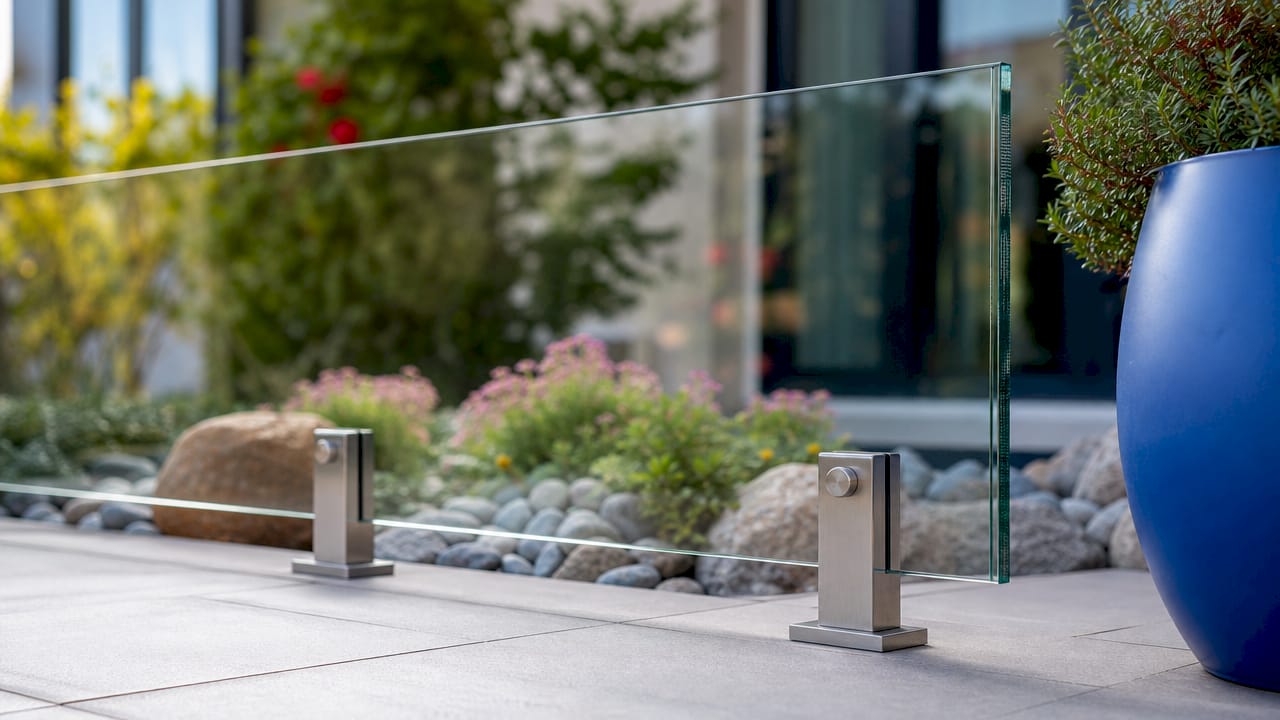
Tempered glass is the industry standard for railing applications. Tempered glass breaks into small, blunt pieces rather than sharp shards, which dramatically reduces injury risk compared to annealed glass. Annealed glass is not permitted in railing applications under most building codes. Laminated glass adds a plastic interlayer that holds broken pieces together, which is particularly valuable in overhead or high-traffic applications.
Glass thickness determines structural performance. The standard residential thickness is 12mm, which balances cost and load-bearing capacity for most framed and semi-frameless systems. Frameless systems require 19mm glass because the glass itself carries all structural forces without a supporting frame. Using undersized glass in a frameless system creates a genuine safety risk and will fail code inspection.
Properly installed glass railings meet rigorous building codes and can outperform traditional baluster railings for child safety. The solid glass panel eliminates the gaps that allow small children to climb or get their heads stuck. That specific benefit resonates strongly with buyers who have young children or plan to market the property to families.
- Tempered glass: Required for all railing applications; breaks safely and meets code.
- Laminated glass: Adds a secondary safety layer; preferred for commercial or high-traffic settings.
- 12mm thickness: The standard for framed and semi-frameless residential systems.
- 19mm thickness: Required for frameless systems to maintain structural integrity.
- Code compliance: Always verify local building code requirements before specifying glass type or thickness.
Correctly specified and installed systems show minimal movement and high rigidity. That rigidity is what buyers feel when they put their hand on the railing. A solid, unmoving panel communicates quality and safety in a way that no specification sheet can replicate.
What Durability and Maintenance Factors Affect Long-Term Buyer Appeal?
Glass railings last 25–30 years with minimal upkeep in outdoor environments, which is a significant advantage over wood or untreated metal. Wood railings require regular sanding, staining, and sealing. Metal railings without proper coating rust and pit over time. Glass does neither.
The maintenance routine for glass railings is straightforward. Cleaning with a standard glass cleaner and a soft cloth removes fingerprints, water spots, and environmental residue. The hardware requires periodic inspection for tightening and, in coastal areas, rinsing to remove salt buildup. That is the full maintenance picture for most installations.
Hardware grade determines long-term performance in demanding environments. Coastal installations require marine-grade 316 stainless steel hardware to resist the corrosion that salt air accelerates. Standard 304 stainless steel is adequate for inland locations but will show surface rust within a few years near the ocean. Choosing the wrong grade is one of the most common and costly mistakes in glass railing installations.
- Assess your environment first. Coastal, poolside, and high-humidity locations need 316-grade hardware. Inland and sheltered locations can use 304-grade.
- Inspect hardware annually. Check all clamps, posts, and connectors for loosening or surface corrosion, and address issues before they compound.
- Clean glass quarterly. A simple cleaning schedule prevents mineral buildup that etches the surface over time and reduces clarity.
- Review your long-term maintenance plan before installation to budget accurately for upkeep over the life of the system.
Pro Tip: Ask your supplier to specify the hardware grade in writing before purchase. “Stainless steel” without a grade number is not a sufficient guarantee for coastal or poolside installations.
How Do Cost and Value Perceptions Shape the Decision to Buy Glass Railings?
Glass railings cost more upfront than most alternatives, and that gap is real. Over a 20-year period for a standard 25-foot installation, glass railings cost $10,000–$15,000 more than steel options when you factor in purchase and maintenance. That number sounds significant until you consider what the glass delivers in return.
Glass railing appeal is polarizing by market segment. Luxury buyers and view-property owners see the premium as justified because the aesthetic and perceived value gains outweigh the cost delta. Budget-conscious buyers in standard residential markets may not share that view. Knowing your buyer profile before you specify the system is the most important financial decision you can make.
| Factor | Glass railings | Standard metal railings |
|---|---|---|
| Upfront cost | Higher | Lower |
| Maintenance over 20 years | Minimal | Moderate to high |
| Aesthetic premium | Significant | Limited |
| Buyer appeal in luxury market | Strong | Moderate |
| Longevity | 25–30 years | Varies by material and coating |
The value case for glass railings is strongest on properties where the view is a selling point. A deck railing that blocks a mountain or ocean view actively reduces the property’s appeal. Glass removes that obstacle and lets the view do the selling. For properties without a compelling view, the cost premium is harder to justify on financial grounds alone.
Practical budgeting means accounting for glass type, system style, hardware grade, and installation labor as separate line items. Frameless systems cost more than framed systems because they require thicker glass and more precise installation. Low-iron glass costs more than standard clear glass. Marine-grade hardware costs more than standard stainless. Each upgrade adds value, but only if it matches the property’s market position.
What Purchasing Tips Help You Choose Glass Railings That Maximize Appeal?
Selecting the right system starts with matching the system style to the property’s architecture and the buyer profile you are targeting. Frameless systems deliver the highest visual impact but require the most precise installation and the highest budget. Framed systems are more forgiving during installation and cost less, but they deliver a more structured look that may not suit every property.
Glass thickness is not optional. Specify 12mm for framed and semi-frameless systems, and 19mm for frameless systems. Going thinner to save money on a frameless system creates a safety issue and a code violation. Going thicker than necessary on a framed system adds cost without adding value.
- Match system style to architecture. Frameless for contemporary homes, framed for traditional designs.
- Specify glass thickness by system type. 12mm for framed, 19mm for frameless.
- Choose hardware grade by location. 316 stainless for coastal and poolside, 304 for inland.
- Verify local codes before ordering. Requirements vary by state and municipality. The 2025 compliance guide covers the key standards.
- Factor installation quality into the budget. A correctly installed system improves both safety and buyer confidence.
Working with a supplier who provides detailed product specifications, installation guides, and code references reduces the risk of costly errors. Glassrailingstore offers all three, along with quote and planning services for homeowners and property managers who want to get the specification right before ordering.
Key Takeaways
Glass railing buyer appeal depends on matching aesthetics, safety specifications, and hardware grade to the property’s market position and environment.
| Point | Details |
|---|---|
| Aesthetics drive first impressions | Frameless and low-iron glass systems signal luxury and preserve views most effectively. |
| Safety specs are non-negotiable | Use tempered glass at 12mm for framed systems and 19mm for frameless to meet code and buyer expectations. |
| Hardware grade determines longevity | Specify 316 stainless steel for coastal and poolside locations to prevent corrosion over the system’s life. |
| Cost premium requires market alignment | The $10,000–$15,000 upfront premium over steel is justified in luxury and view-property markets, not all segments. |
| Installation quality closes the deal | A rigid, well-installed system communicates quality to buyers more effectively than any product specification. |
What I’ve Learned About Glass Railings That Most Buyers Overlook
Most buyers focus on the glass and forget the hardware. I have seen beautiful frameless installations fail within three years because the installer used 304 stainless steel hardware 50 feet from the ocean. The glass was perfect. The clamps were rusting. The whole system had to come out.
The other thing buyers consistently underestimate is the importance of installation precision in frameless systems. The glass carries all the load in a frameless design. If the base channels are not perfectly level and the glass is not seated correctly, the system will flex under load. That flex is invisible to the eye but obvious to anyone who puts their hand on the railing. Buyers notice it immediately, and it kills confidence in the entire installation.
My honest recommendation is to treat the hardware specification and the installation contractor as equal priorities to the glass itself. A mediocre glass panel in a well-installed, correctly specified system will outperform premium glass in a poorly executed one every time. The full system design matters more than any single component.
— Fuanne
Glassrailingstore Products Built for Buyer-Ready Installations
Glassrailingstore carries the full range of components you need to build a glass railing system that meets code, holds up over time, and impresses buyers from the first walkthrough.
The 46" tempered glass panel is the core product for residential deck and balcony installations, engineered to meet safety standards and deliver the clean, unobstructed look that buyers respond to. Pair it with the 90-degree connector hardware for corner transitions, or the wall connector for flush-to-structure mounting. Every product ships with detailed installation specs. Orders over $3,000 qualify for free shipping, and the planning team is available to help you get the specification right before you order.
FAQs
1. What makes glass railings more appealing than wood or metal?
Glass railings preserve views, maximize natural light, and signal a modern aesthetic that buyers associate with premium properties. They also last 25–30 years with minimal maintenance, which wood and untreated metal cannot match.
2. What glass thickness do I need for a frameless railing system?
Frameless systems require 19mm tempered glass because the glass carries all structural loads without a supporting frame. Using thinner glass in a frameless system creates a safety risk and will not pass code inspection.
3. Are glass railings safe for homes with young children?
Tempered glass railings are safer than traditional baluster railings for child safety because the solid panel eliminates the gaps children can climb through or get stuck in. Tempered glass also breaks into small, blunt pieces rather than sharp shards if it fails.
4. What hardware grade should I specify for a coastal property?
Coastal installations require marine-grade 316 stainless steel hardware to resist salt-air corrosion. Standard 304 stainless steel will show surface rust within a few years in coastal environments.
5. Do glass railings add measurable value to a property?
Glass railings add the most value on view properties and in luxury market segments, where the aesthetic premium justifies the higher upfront cost. On standard residential properties without a compelling view, the value case is less clear-cut.
Recommended
- Why Architects Choose Glass Railings: Expert Insights And Trends – The Glass Railing Store
- Modern Handrail Material Examples for 2026 Builds – The Glass Railing Store
- Glass Railing Edge Treatments List: 2026 Guide – The Glass Railing Store
- Why Choose Glass Railing? A comprehensive guide – The Glass Railing Store