

Modern Handrail Material Examples for 2026 Builds
Modern handrail materials are defined by their ability to meet structural safety standards while delivering the clean lines architects and homeowners expect from contemporary design. The leading material choices include aluminum, stainless steel, glass, cable systems, and select wood species, each serving distinct performance and aesthetic roles. Per 2026 building standards, handrails must support a continuous load of 50 lb/ft or a concentrated load of 200 lb at any single point. That load requirement shapes every material decision before aesthetics even enter the conversation. This guide covers the most relevant modern handrail material examples across residential and commercial applications, with cost ranges, maintenance realities, and code compliance built in.
1. Aluminum: the workhorse of modern handrail designs
Aluminum is the most widely specified material in contemporary railing projects. Architects favor aluminum for its ideal balance of corrosion resistance, light weight, and design flexibility. It does not rust, accepts powder coating in virtually any color, and weighs far less than steel, which simplifies installation on elevated decks and balconies.
Aluminum extrusions can be shaped into square, round, or custom profiles, making them compatible with both frameless glass infill panels and cable wire systems. The material holds up in coastal climates without the surface maintenance that steel demands. For builders working across multiple projects, aluminum’s consistent dimensional tolerances also reduce field fitting time.
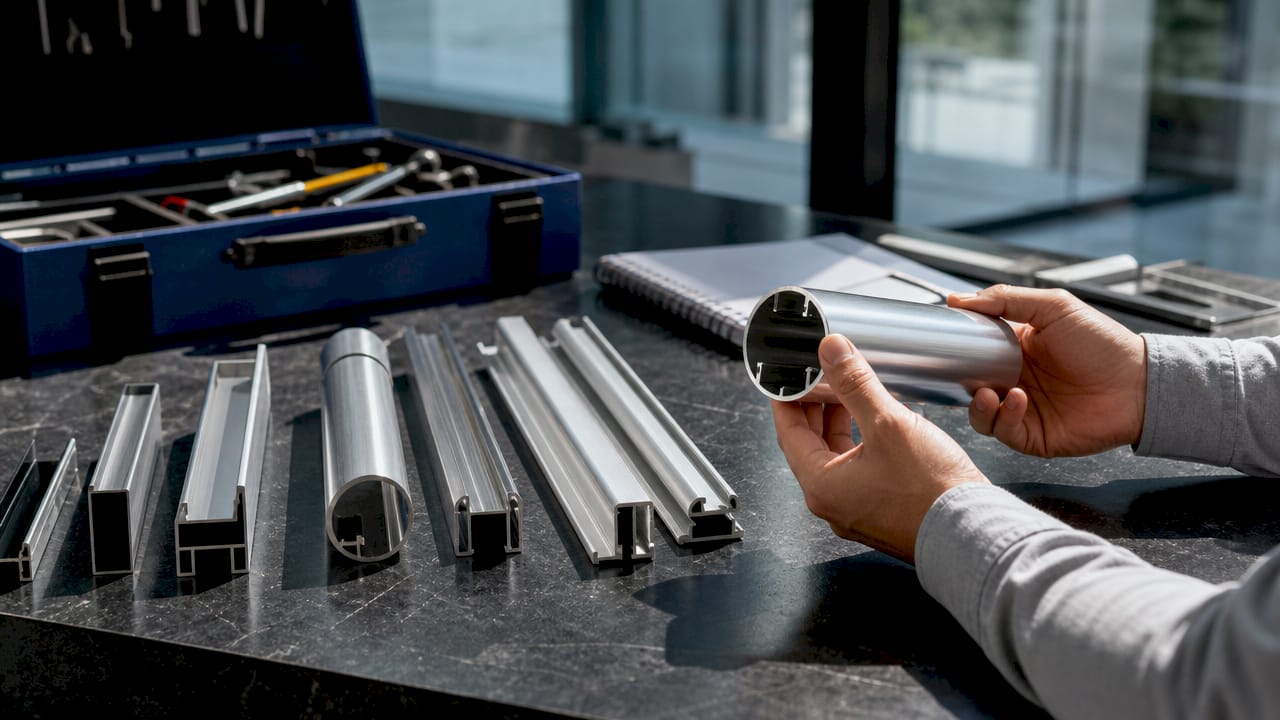
Pro Tip: Choose a 6063-T5 or 6061-T6 aluminum alloy for structural handrail applications. These grades offer the strength-to-weight ratio needed to meet 200 lb concentrated load requirements without oversizing the profile.
2. Stainless Steel: Premium Strength with a Polished Look
Stainless steel delivers the sharpest visual finish of any metal handrail material. Its mirror or brushed surface reads as high-end in both residential staircases and commercial lobbies. Stainless steel resists corrosion effectively, especially in marine environments, but it does require periodic cleaning to prevent tea staining, a surface discoloration caused by mineral deposits and oxidation.
Grade 316 stainless steel is the correct specification for outdoor and coastal installations. Grade 304 works well indoors where salt exposure is minimal. Stainless steel pairs naturally with glass railing systems, where its slim profile avoids blocking sightlines while providing the structural backbone the system needs.
3. Glass panels: open views with engineered safety
Glass panel handrails cost approximately $150–$600+ per linear foot, positioning them as a premium choice for projects where unobstructed views are the design priority. Tempered safety glass is the standard for all structural railing applications. It fractures into small, blunt pieces rather than sharp shards, which is the property that makes it code-compliant for occupied spaces.
Glass infill panels are almost always paired with aluminum or stainless steel top rails and base channels. The combination delivers the open, floating aesthetic that defines the best modern handrail designs while keeping the system within load compliance. Glassrailingstore specializes in this exact configuration, offering tempered panels sized for decks, balconies, stairs, and pool fences. Builders can review American building code requirements for glass railing systems before specifying panel thickness and post spacing.
4. Cable Railing Systems: Minimalist Lines, Maximum View
Cable railing systems run horizontal or vertical stainless steel wire between posts, creating a nearly invisible barrier. Cable systems cost $100–$300 per linear foot, making them more accessible than full glass panels while still delivering a clean, modern profile. The wire tensioning hardware is the most critical component. Improperly tensioned cables can deflect beyond code-allowed limits under lateral load.
Cable systems work best on straight runs. Corners require special end fittings and post reinforcement, which adds cost and complexity. The material is a strong fit for mountain or coastal homes where the view is the focal point and the railing should disappear visually.
5. Wood: Warmth and Character in Modern Contexts
Wood handrails such as oak, hemlock, pine, and primed birch or poplar provide warm natural aesthetics but require regular maintenance due to susceptibility to rot and warping. Oak and hemlock are the strongest choices for high-traffic stairs. Pine and primed poplar work well for painted interior applications where cost control matters.
Wood is rarely used as a standalone outdoor handrail material in 2026 projects. When it appears outdoors, it is typically a capped wood top rail over a metal substructure, sealed with exterior-grade stain or paint. Interior wood handrails remain popular in residential settings because they are warm to the touch and visually soften spaces dominated by concrete or steel.
6. Powder-Coated Steel and Wrought Iron: Durability with a Design Cost
Steel and wrought iron are among the strongest handrail materials available. Both require protective coatings like powder coating to prevent rust, especially in outdoor or high-humidity environments. Wrought iron allows for ornate, custom shapes that no other material can replicate at the same cost, but its weight and maintenance demands make it a less common choice in purely modern projects.
Powder-coated steel is a practical middle ground. The coating adds a durable color layer that resists chipping and UV degradation better than standard paint. For coastal or high-humidity climates, powder coating on steel is not optional. It is the minimum protection needed to prevent premature failure.
7. Composite and Engineered Materials: Low Maintenance, Modern Profile
Composite handrail materials combine wood fiber and PVC or polyethylene to produce a product that looks like wood but resists moisture, insects, and UV fading. These materials do not require staining or sealing, which makes them attractive for homeowners who want a natural look without the upkeep. Composite profiles are available in square and round cross-sections that suit contemporary design.
The trade-off is thermal expansion. Composite materials expand and contract more than metal in temperature swings, which requires larger gap allowances at joints. In climates with wide seasonal temperature ranges, this can affect the finished appearance of the installation if not accounted for in the design.
8. Mixed-Material Designs: Combining Wood, Metal, and Glass
Mixed-material handrail systems are one of the most visible trends in current residential architecture. A typical configuration pairs a wood top rail with stainless steel or aluminum posts and glass or cable infill. The wood provides grip comfort and visual warmth. The metal and glass deliver structural performance and the open aesthetic that defines modern railing material choices.
These systems require careful sourcing. Two visually similar systems can have very different structural ratings, fastening patterns, and temperature tolerances. Mixing components from different manufacturers without verifying compatibility is a common installation error that creates both safety and code compliance problems.
9. LED-Integrated and Illuminated Handrails: Function Meets Atmosphere
LED-integrated handrails embed lighting directly into the rail profile, typically along the underside of a cap rail or within a translucent acrylic insert. The effect serves both safety and atmosphere, marking stair edges at night without requiring separate step lighting. This option appears most often in commercial hospitality projects and high-end residential outdoor staircases.
The rail profile must be designed from the start to accommodate the LED channel and wiring. Retrofitting lighting into a standard rail is possible but rarely clean. Builders planning this feature should specify it at the design stage and confirm that the electrical components meet local code for exterior or wet-location use.
10. Budget-Friendly Modernization: Hardware Upgrades Without Full Replacement
Replacing existing hardware such as brackets and end caps with modern metal components updates the look of existing staircases affordably without a full renovation. This approach works well when the structural rail is sound but the visible hardware reads as dated. Swapping wood rosettes for flat stainless steel wall flanges, for example, shifts the visual register of an entire staircase for a fraction of the cost of new rail.
Pro Tip: Before ordering replacement hardware, measure the existing wall bracket spacing and rail diameter precisely. Hardware dimensions are not standardized across manufacturers, and a mismatch will require additional drilling or patching.
How Modern Handrail Materials Compare on Durability and Maintenance
The table below summarizes the key performance factors across the primary types of handrail materials covered in this article.
| Material | Corrosion resistance | Maintenance level | Typical cost per linear foot | Best application |
|---|---|---|---|---|
| Aluminum | Excellent | Low | Moderate | Outdoor decks, balconies |
| Stainless steel (316) | Excellent | Low to medium | High | Coastal outdoor, commercial |
| Glass panels | N/A (frame dependent) | Low | $150–$600+ | Decks, balconies, pools |
| Cable railing | Excellent (SS wire) | Low | $100–$300 | Open-view exterior runs |
| Wood (oak, hemlock) | Poor to moderate | High | Low to moderate | Interior stairs |
| Composite | Excellent | Very low | Moderate | Exterior residential |
| Powder-coated steel | Good (coating dependent) | Medium | Moderate | Custom exterior designs |
Stainless steel and aluminum lead on corrosion resistance for outdoor use. Wood scores lowest on weather durability but highest on interior warmth and grip comfort. Glass systems depend entirely on the quality of the metal frame and connectors for their structural performance. For commercial pool environments, safety regulations for handrail systems add another layer of specification requirements beyond standard residential codes.
Outdoor installations require protective coatings or inherently corrosion-resistant materials. Outdoor metal handrails exposed to moisture, salt, and freeze-thaw cycles will fail prematurely without adequate surface treatment. Interior installations have far more flexibility because they face no weather exposure, which is why wood and uncoated steel remain viable indoors even when they would be impractical outside.
Builders can also review low-maintenance railing materials for a detailed breakdown of upkeep requirements across material categories before finalizing a specification.
Outdoor Versus Indoor Material Suitability
Material selection changes significantly based on whether the installation is exterior or interior.
Outdoor priorities:
- Corrosion resistance from moisture, salt air, and UV exposure
- Powder coating or anodizing on aluminum and steel to extend service life
- Tempered glass panels rated for wind load in addition to standard handrail loads
- Stainless steel grade 316 hardware at all connection points
- Drainage design at post bases to prevent standing water
Indoor priorities:
- Grip comfort, especially on residential stairs used by children or older adults
- Visual warmth and compatibility with interior finishes
- Acoustic performance (glass and metal can amplify sound; wood absorbs it)
- Dimensional accuracy for tight architectural tolerances
Powder-coated aluminum is the most practical outdoor material for most residential projects. It meets load requirements, resists corrosion without ongoing maintenance, and accepts any color. Glass panels with stainless steel hardware are the premium outdoor option, particularly for deck and balcony applications where preserving the view is the primary design goal.
Key Takeaways
The most durable and code-compliant modern handrail systems combine corrosion-resistant materials like aluminum or stainless steel with tempered glass or cable infill, specified to meet the 50 lb/ft continuous or 200 lb concentrated load standard.
| Point | Details |
|---|---|
| Load compliance is non-negotiable | All materials must support 50 lb/ft continuous or 200 lb concentrated load per 2026 standards. |
| Aluminum leads for outdoor versatility | Corrosion resistance, light weight, and powder-coat compatibility make aluminum the top outdoor choice. |
| Glass costs more but adds value | Glass panel systems run $150–$600+ per linear foot and significantly boost property appeal. |
| Outdoor metal needs protective coating | Steel without powder coating or anodizing will corrode prematurely in moisture-exposed environments. |
| Component compatibility is a safety issue | Mixing hardware from different manufacturers without verifying ratings creates structural and code risks. |
What I Have Learned Specifying Modern Handrails Across Dozens of Projects
The biggest mistake I see on handrail projects is treating material selection as a purely visual decision. Architects and homeowners pick a finish they like, then work backward to find a product that matches. That sequence creates problems. The structural rating, the fastening method, and the thermal behavior of the material all need to be resolved before the aesthetic conversation starts.
The second pattern I have noticed is underestimating component compatibility. Handrail replacements require attention to structural load capacity, fastening methods, temperature resistance, and manufacturer specifications. Two systems that look identical in a catalog photo can have completely different post spacing requirements, which means one will pass inspection and the other will not.
My honest recommendation for homeowners working with a limited budget: do not try to replicate a premium glass system with mismatched hardware. Either commit to a properly engineered glass railing with matched connectors, or choose powder-coated aluminum with cable infill. Both are honest, durable, and code-compliant. The hybrid approach of mixing discount components rarely ends well structurally or visually.
The one area where I think conventional wisdom undersells the options is wood. Interior wood handrails are often dismissed as old-fashioned, but a square-profile oak rail with flat stainless wall flanges reads as genuinely contemporary. The material is warm to the touch in a way that no metal or glass can replicate, and that matters on a staircase you use every day.
— Fuanne
Glass Railing Systems Built to Meet 2026 Engineering Standards
Glassrailingstore offers tempered glass panels, marine-grade stainless steel connectors, and custom railing configurations designed for both residential and commercial applications.
Every product in the Glassrailingstore catalog is built to meet current load and safety requirements. The glass railing engineering testing page details the structural tests each system undergoes before it reaches your project. For fully tailored configurations, the custom glass railing option lets you specify panel dimensions, hardware finish, and post layout to match your exact design. Free shipping applies to orders over $3,000, and the team provides quotes and planning support for both DIY and contractor-led installations.
FAQs
1. What are the most durable handrail materials for outdoor use?
Aluminum and grade 316 stainless steel are the most durable outdoor handrail materials. Both resist corrosion from moisture and salt without requiring frequent refinishing.
2. How much do modern glass handrail systems cost?
Glass panel handrail systems typically cost $150–$600+ per linear foot, depending on glass thickness, frame material, and hardware complexity.
3. Do modern handrails need to meet specific load requirements?
Yes. Per 2026 standards, handrails must support a continuous load of 50 lb/ft or a concentrated load of 200 lb at any single point on the top rail.
4. Can I update my existing handrail without replacing the entire system?
Replacing brackets, end caps, and wall flanges with modern metal hardware updates the visual appearance of an existing staircase at a fraction of full replacement cost.
5. What is the best handrail material for a coastal home?
Grade 316 stainless steel and powder-coated aluminum are the correct choices for coastal installations. Both resist salt air corrosion that would degrade standard steel or uncoated metals within a few seasons.
Recommended
- Low-Maintenance Railing Materials: 2026 Homeowner Guide – The Glass Railing Store
- Structure Reinforcement for Glass Railings: 2026 Guide – The Glass Railing Store
- Railing Finishing Options List for Homeowners – The Glass Railing Store
- Examples of deck railings: modern glass designs – The Glass Railing Store