

Top Glazing Tape Solutions for Secure Glass Railings
A glass railing that rattles in the wind, lets cold air seep through, or shows ugly gaps between the panel and frame is not just an eyesore. It is a safety and code-compliance problem waiting to get worse. The fix is often simpler than homeowners and contractors expect: choosing the right glazing tape, a self-adhesive foam or butyl rubber tape that seals glass to frames while providing weatherproofing, cushioning, and movement accommodation. This guide walks you through every factor that matters, from material science to real installation data, so you can pick the best product for your specific project.
Table of Contents
- What is glazing tape and why is it essential for glass railings?
- Key criteria for choosing the best glazing tape
- Top glazing tape types for glass railing applications
- Head-to-head: How leading glazing tapes perform in real installations
- When (and how) to upgrade your glass railing sealing solution
- Why the small details of sealing make the biggest difference in railing safety
- Find tested solutions and professional guidance for your glass railings
- Frequently asked questions
Key Takeaways
| Point | Details |
|---|---|
| Proper sealing is critical | Glazing tape ensures long-lasting, safe, and attractive glass railings. |
| Foam vs. butyl options | Foam works best for flexibility and easy installation, while butyl delivers superior durability and energy savings. |
| Data-backed performance | Butyl tape can lower HVAC costs by up to 15 percent in real installations. |
| Upgrade when needed | Inspect regularly and replace tape if it shows signs of damage or leaks. |
What is glazing tape and why is it essential for glass railings?
Glazing tape is not just a strip of sticky foam. It is a precision-engineered component that does several jobs at once inside a glass railing system. At its core, glazing tape is a self-adhesive foam or butyl rubber tape used to seal glass to frames in windows, doors, and glazing systems, providing weatherproofing, cushioning, and movement accommodation.
In a railing context, that translates to real, measurable benefits:
- Weatherproofing: Keeps rain, wind, and humidity from working their way into the channel where the glass sits, preventing rust on hardware and rot on wood posts.
- Cushioning: Glass is rigid. Metal channels are rigid. Without a buffer between them, vibration and thermal expansion create stress fractures over time. Glazing tape absorbs that stress.
- Movement accommodation: Buildings shift. Decks expand in summer heat and contract in winter cold. Glazing tape allows minor movement without breaking the seal.
- Sound dampening: In urban or commercial settings, a properly taped railing noticeably reduces noise transmission through the glass panels.
- Aesthetic finish: A clean tape line hides the raw edge of the glass and gives the installation a polished, professional look.
“Skipping glazing tape to save a few dollars is one of the most common mistakes we see in DIY glass railing installs. The cost of replacing a cracked panel or re-doing a channel far exceeds the price of doing it right the first time.”
Pro Tip: Before you buy any glazing tape, review the full glass railing installation guide to understand the channel dimensions and glass thickness you are working with. Tape that is too thick will prevent the glass from seating properly; tape that is too thin will leave gaps.
Key criteria for choosing the best glazing tape
Now that you know what glazing tape does, let’s break down the most important features and standards to look for when selecting a product.
-
Adhesive strength: The bond must hold through freeze-thaw cycles, UV exposure, and moisture. Look for tapes rated for outdoor use with a peel adhesion value clearly stated on the product sheet. Weak adhesive fails first at the corners of glass panels, where stress concentrates.
-
Material type foam vs. butyl: Foam tapes (typically cross-linked polyethylene or EPDM) are easier to compress, making them forgiving during installation. Butyl rubber tapes are denser and create a more airtight, waterproof seal. Your climate and project type should drive this choice.
-
Thickness and compressibility: Standard glazing channels in residential railings typically need tape in the 1/8-inch to 3/16-inch range. The tape should compress to roughly 25 to 50 percent of its original thickness when the glass is seated, creating a firm but flexible grip.
-
Temperature resistance: Outdoor railings in Phoenix face 110°F summers. Railings in Minnesota face minus 20°F winters. Consumer Reports testing found that butyl-based tapes maintained adhesion in cold conditions better than foam alternatives, and documented that proper sealing with butyl tape can reduce HVAC costs by 15% in commercial case studies.
-
UV stability: Any tape exposed to sunlight must resist UV degradation. Tapes that are not UV-stabilized become brittle and crumbly within a few seasons, leaving your glass panels loose in their channels.
- Code compliance: Glazing tape used in structural railing applications must meet relevant building codes. Checking glass railing code requirements before you specify a product ensures you are not creating a liability problem on a commercial job or a permit issue on a residential project.
Pro Tip: Ask your tape supplier for the technical data sheet (TDS) before purchasing. The TDS lists exact adhesion values, temperature ranges, and compression ratios, giving you objective data instead of marketing language.
Statistic to know: Butyl rubber sealing tape used in a documented commercial railing installation reduced heating and cooling costs by 15%, according to Consumer Reports testing data. That is a meaningful return on a relatively small material investment.
Top glazing tape types for glass railing applications
Once you know what to look for, it is easier to match project needs to the leading types of glazing tapes available for railing systems.
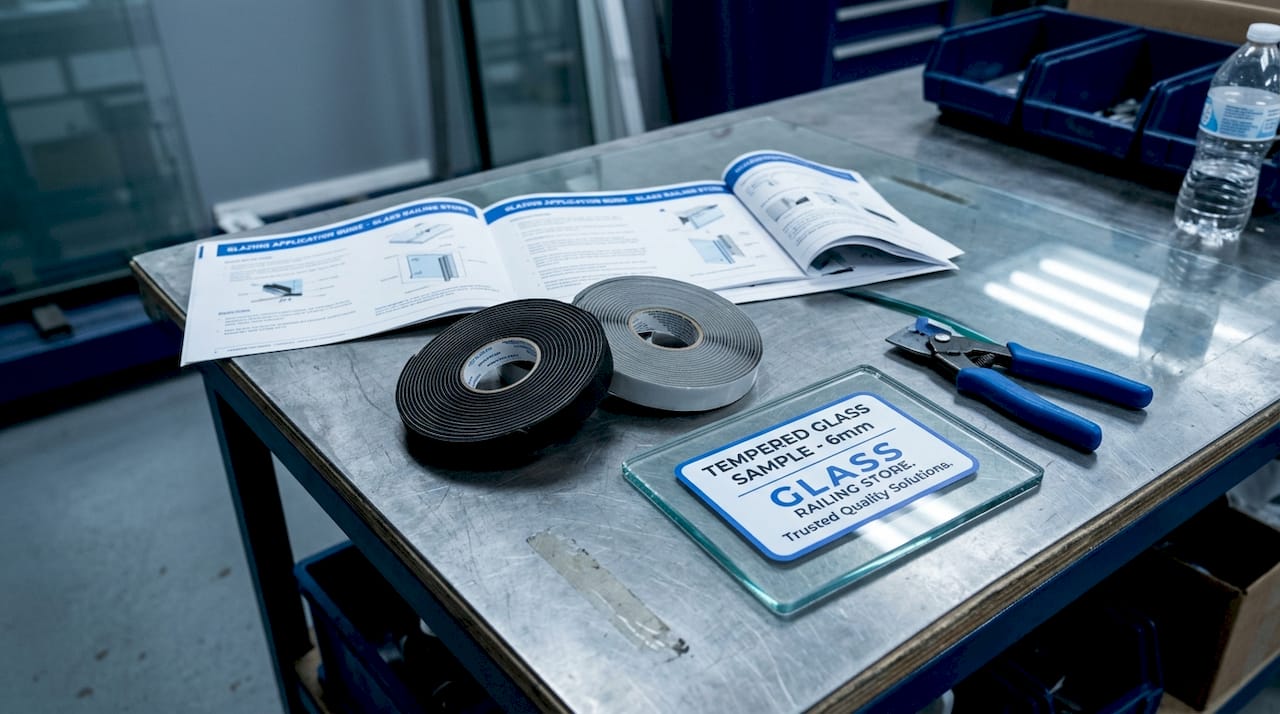
Foam glazing tape
Foam tape, typically made from cross-linked polyethylene foam with acrylic adhesive, comes in standard 1/8-inch thickness and remains flexible across a wide temperature range. It is the go-to choice for indoor railings, lighter-duty residential applications, and situations where installers need a forgiving, easy-to-handle product.
Best for:
- Interior stair railings and balcony dividers
- Climates with moderate temperature swings
- DIY installations where ease of handling matters
- Projects where the glass channel is slightly irregular and needs a compressible buffer
Butyl rubber glazing tape
Butyl rubber tape is denser, stickier, and more resistant to water vapor transmission than foam. It creates a near-airtight seal that holds up in coastal environments, high-humidity climates, and commercial applications where architectural applications demand long-term performance.
Best for:
- Exterior deck and pool fence railings
- Coastal or high-humidity environments
- Commercial buildings with code-mandated performance standards
- Any installation where glass railing engineering testing requires documented sealing performance
| Feature | Foam glazing tape | Butyl rubber tape |
|---|---|---|
| Ease of installation | Very easy | Moderate |
| Weatherproofing | Good | Excellent |
| Temperature range | Moderate | Wide |
| UV resistance | Moderate | High |
| Cost | Lower | Higher |
| Best environment | Indoor/mild outdoor | Outdoor/coastal/commercial |
| Typical lifespan | 5 to 10 years | 10 to 20 years |
“For any railing within 1,000 feet of saltwater, butyl rubber is not optional. It is the only tape that reliably resists the combination of salt, moisture, and UV that destroys foam tapes within a couple of seasons.”
Head-to-head: How leading glazing tapes perform in real installations
Understanding the main types of glazing tape is helpful, but performance in real-life installations is what truly matters. Let’s see which options come out on top according to data.
Consumer Reports testing of sealing and weather-stripping tapes found that butyl tape reduces HVAC costs by 15% in documented case studies, and the best butyl products carry durability ratings of 10 to 20 years. That is a significant performance gap compared to standard foam tapes, which typically begin showing adhesive degradation after 5 to 8 years in outdoor conditions.
| Performance metric | Foam tape | Butyl tape |
|---|---|---|
| Cold-temperature adhesion | Moderate | Excellent |
| Hot-temperature adhesion | Good | Excellent |
| Water vapor resistance | Moderate | Very high |
| Energy savings potential | Minimal | Up to 15% HVAC reduction |
| Typical warranty | 12 months | 12 months (performance to 20 years) |
| Replacement frequency | Every 5 to 8 years | Every 10 to 20 years |
Key takeaways from real installation data:
- Butyl tape held adhesion in cold-weather testing where foam tape showed measurable peel-back at corners and edges.
- Long-term durability favors butyl strongly. A commercial railing sealed with quality butyl tape at installation may never need re-taping within the building’s useful life.
- Foam tape wins on installation speed. On large residential projects with dozens of glass panels, the easier handling of foam tape can save meaningful labor time, making it a practical choice when the environment allows.
- Warranty periods are often the same (12 months for most products), but actual service life varies dramatically. Butyl tape’s real-world performance far exceeds its warranty period when installed correctly.
For best results on any outdoor installation, review the glass railing installation best practices before committing to a tape type. Surface prep and application technique affect performance as much as the product itself.
Key stat: The 15% HVAC cost reduction documented in butyl tape case studies applies primarily to large commercial installations. For a residential deck railing, the energy savings are smaller in absolute dollars, but the weatherproofing and durability benefits are just as real.
When (and how) to upgrade your glass railing sealing solution
Seeing the performance data, you might wonder when it is time to replace your current glazing tape or how to upgrade to a more robust solution. Here are the expert-backed steps.
Signs your glazing tape needs replacement:
- Visible gaps between the glass edge and the channel
- Water stains or rust streaks below the glass panels after rain
- Glass panels that rattle or feel loose when you push on them
- Crumbling, sticky residue, or discolored tape visible at the base of the glass
- Drafts or air movement felt near the railing on windy days
Most glazing tapes carry a 12-month warranty, though top products last 10 to 20 years under normal conditions. If your installation is older than 10 years and showing any of the signs above, it is time to act.
Step-by-step upgrade process:
- Remove the glass panel safely. Always have a second person assist. Tempered glass is heavy and can shift unexpectedly when the seal is broken.
- Strip the old tape completely. Use a plastic scraper to avoid scratching the channel. Adhesive residue left behind will prevent the new tape from bonding properly.
- Clean the channel and glass edge. Isopropyl alcohol (70% or higher) removes oils, residue, and moisture. Let the surface dry fully before applying new tape.
- Apply new tape without stretching it. Stretching tape during application causes it to pull back and lose adhesion within days. Lay it flat with light, even pressure.
- Seat the glass firmly and evenly. Press the panel down into the channel with consistent pressure across the full length of the glass edge.
- Allow cure time before loading the railing. Most tapes reach full adhesion strength within 24 to 72 hours. Avoid heavy use of the railing during this period.
Pro Tip: Check the glass railing installation tips for channel-specific guidance. Some frameless railing systems use a slightly different tape placement than traditional framed systems, and getting that detail right makes a visible difference in the finished look.
Common mistakes to avoid:
- Applying tape over dirty or wet surfaces
- Using indoor-rated tape on exterior installations
- Overlapping tape at corners instead of mitering the ends cleanly
- Choosing tape thickness based on price rather than channel specifications
Why the small details of sealing make the biggest difference in railing safety
Here is an uncomfortable truth that does not get said enough in the glass railing industry: most installation failures do not start with the glass. They start with the components that nobody photographs for the project portfolio. Glazing tape is invisible once the job is done. That invisibility is exactly why it gets underestimated.
We have seen beautiful, expensive frameless glass railing systems installed on high-end decks where the contractor sourced premium tempered glass and marine-grade stainless hardware, then grabbed whatever foam tape was on the shelf at the hardware store. Within two seasons, the glass panels were rattling. Within four, water was getting into the posts. The homeowner blamed the hardware. The contractor blamed the glass. The real culprit was a $12 roll of tape that was never rated for outdoor use.
The same pattern plays out in commercial projects. A building manager signs off on engineering-tested glass railings that meet every structural load requirement, but the sealing spec gets left to the installer’s discretion. When the glazing tape fails, the railing passes its next load test but fails its weather inspection. Code compliance is not just about structural strength. It is about the whole system performing as designed, and glazing tape is part of that system.
The mindset shift we encourage is simple: treat glazing tape as a structural component, not a finishing accessory. Budget for it. Specify it by name and product number. Inspect it during installation. That level of attention to a small detail is what separates a railing that looks great for 20 years from one that needs remediation in three.
Find tested solutions and professional guidance for your glass railings
If you are ready to take your glass railings to the next level, the right resources and products make all the difference.

At Glass Railing Store, we understand that a railing system is only as strong as its weakest component. Whether you are a homeowner tackling a deck upgrade or a contractor managing a large commercial project, our team can help you source the right sealing solutions and connect you with certified glass railing installers who know how to apply them correctly. We also provide detailed glass railing code resources to make sure every product you choose meets local building requirements. From premium tempered glass panels to the hardware and accessories that complete the system, we carry what you need to build railings that stay beautiful, safe, and sealed for decades.
FAQs
1. How long does glazing tape last on residential and commercial railings?
Quality glazing tape typically lasts 10 to 20 years in real-world conditions, though most product warranties only cover 12 months. Proper surface prep and using an outdoor-rated product significantly extend service life.
2. Can glazing tape help reduce energy costs?
Yes. Butyl tape reduces HVAC costs by approximately 15% in documented commercial case studies by creating a tighter weather seal around glass panels. Residential savings are smaller but still meaningful in climates with extreme temperatures.
3. What’s the difference between foam and butyl glazing tapes?
Foam tapes, made from cross-linked polyethylene with acrylic adhesive, are flexible and easy to install but less durable outdoors. Butyl rubber tapes offer superior weather resistance, longer service life, and better performance in harsh environments.
4. How do I know when to replace glazing tape?
Replace your glazing tape if you notice air leaks, water intrusion after rain, visible crumbling or sticky residue, or glass panels that rattle when pressure is applied. These are all signs the tape has lost its seal.
5. Does glazing tape work in extreme temperatures?
Quality glazing tapes are engineered to stay flexible and maintain strong adhesion across a wide temperature range. Butyl rubber performs especially well in both very cold and very hot conditions compared to standard foam alternatives.