

1–3 Day Balcony Glass Replacement: Hire or Supply Panels to Save Time
Most cracked or cloudy balcony glass railing needs full panel replacement, not repair. Budget a typical amount for a 4 to 6 foot residential run, with costs rising for high-access or frameless balconies. Before signing anything, get on-site estimates from two or three licensed contractors, and confirm whether they’re proposing tempered or laminated glass and who’s pulling the permit.
TL;DR:
- Material and hardware costs can vary by $60 to $140 per linear foot, with higher prices for high-access or complex installations.
- Laminated glass generally costs 20 to 40 percent more than tempered glass, with higher premiums for larger or high-rise balcony projects requiring permits.
- Contractors should specify whether they use tempered or laminated glass, and permit handling can add $200 to $1,000 or more depending on the project.
- Most residential balcony glass replacements take one to three days, depending on crew size, complexity, and whether the panels are prefabricated.
- Proper maintenance, including periodic sealing and hardware inspections, is essential to ensure long-term safety and minimize repair costs.
Table of Contents
- How Much Does Balcony Glass Replacement Cost?
- Which Glass Type Is Right for Your Balcony?
- What Questions Should You Ask Before Hiring a Contractor?
- How Long Does Balcony Glass Installation Take?
- Maintaining Your New Balcony Glass Over Time
- Sourcing Your Own Glass Panels and Hardware
- Why Good Material Specs Matter As Much As a Good Installer
- Sources
How Much Does Balcony Glass Replacement Cost?
Contractors price balcony glass replacement by stacking four line items: material, labor, hardware, and site logistics. Miss one on a quote and you’ll get a change order mid-project.
Labor alone commonly runs $60 to $140 per linear foot depending on access and crew size. A ground-floor balcony with a driveway pull-up costs far less to service than a third-story unit requiring a lift.
**A typical 4 to 6 foot installed job falls within a moderate cost range typical for residential projects, though larger or architecturally complex jobs can exceed $6,000.
Here’s how three common scenarios shake out:
- Scenario A, framed tempered glass, 4-foot run: falls near the low end of the range, since framed systems use standard hardware and simpler anchoring.
- Scenario B, frameless laminated glass, 6-foot run: costs notably more, since frameless systems typically add 20 to 40% over framed pricing and laminated panels carry a material premium.
- Scenario C, a high-access city unit requiring permits and a hoist: adds $200 to $1,000 or more just in delivery, disposal, and permitting costs.
When you’re comparing quotes side by side, check for missing disposal fees, vague “hardware allowance” lines, and permit costs buried into a lump sum rather than itemized. If a bid looks suspiciously low, ask what’s excluded before you ask what’s included.
Which Glass Type Is Right for Your Balcony?
Tempered and laminated glass both meet safety standards, but they fail differently, and that difference matters more than most quotes explain. Tempered glass shatters into small, granular pieces when it breaks. Laminated glass has a plastic interlayer that holds shards in place even after cracking, which is why many contractors now recommend it for balconies above ground level.
HomeAdvisor notes that code guidance generally recommends heat-treated or laminated glass for balcony applications specifically because it needs to resist both impact and sustained load, not just occasional bumps.
One risk worth understanding: tempered glass can occasionally fail spontaneously from nickel sulfide inclusions, a rare manufacturing defect. Heat-soak testing catches most of these defective panels before installation by baking the glass and triggering early failures in the factory rather than on your balcony. It adds cost and isn’t required by every local code, so ask your contractor whether it’s an option for high-rise or high-traffic installations.
Before you sign off, confirm these code basics apply to your project:
- Balcony railing height requirements, typically 39 to 42 inches
- Whether your municipality requires a permit and inspection for the specific panel size
- Glass thickness matched to your local wind and load requirements
Pro Tip: Compare laminated versus tempered options before your first contractor visit. Walking in already knowing which type fits your situation puts you in a much stronger position to evaluate what you’re quoted.
What Questions Should You Ask Before Hiring a Contractor?
The biggest cost overruns and safety issues on balcony jobs trace back to skipped vetting, not bad luck. A few minutes of questions at the estimate stage saves weeks of headaches later.
- Are you licensed and insured for this work in my jurisdiction? Ask to see the license number and confirm coverage directly with the insurer if the job is large.
- What glass type and thickness are you specifying, and why? A contractor who can’t explain the tradeoff between tempered and laminated hasn’t thought through your specific balcony.
- Who pulls the permit, and is that cost included in the quote? Permit handling and code-aware installation should never be a surprise add-on.
- What does the warranty cover, and for how long? Get it in writing before the deposit changes hands.
Red flags worth walking away from: no written warranty, no on-site measurement before quoting, vague payment terms, or a contractor who can’t name the glass manufacturer. Any one of these on its own might be nothing. Two or more together usually means trouble down the line.
How Long Does Balcony Glass Installation Take?
Most residential balcony glass jobs run 1 to 3 days from removal to final inspection, though the exact timeline depends heavily on crew size and prefabrication. A straightforward ground-floor swap with pre-cut panels can wrap in a single day. High-rise installations requiring a crane or custom fabrication stretch closer to the three-day mark.
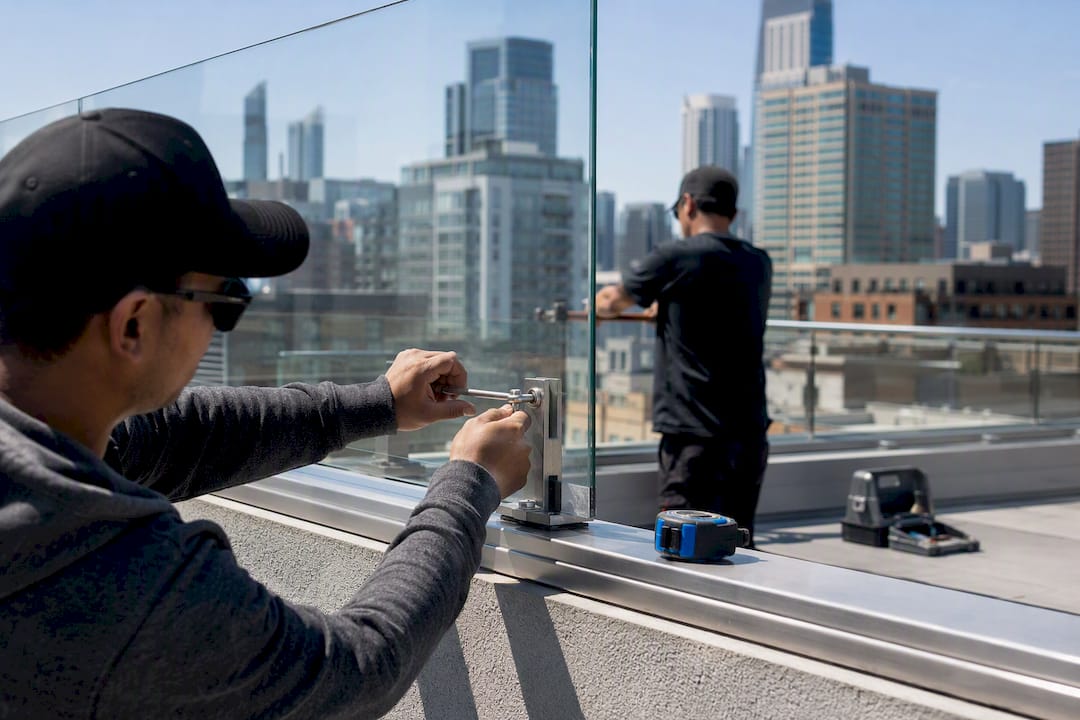
The general flow: old glass and hardware come out, the frame or clamps get inspected and prepped, new panels go in, seals get set, and a final walkthrough confirms everything meets code.
To keep your project on schedule:
- Clear furniture, planters, and decor from the balcony before crews arrive.
- Keep pets and kids away from the work zone for the full install window.
- Expect temporary barriers or tape during the sealing and curing phase.
- Ask upfront whether the crew handles debris cleanup or if that’s a separate charge.
Maintaining Your New Balcony Glass Over Time
New glass isn’t maintenance-free. Wipe panels down every few months and inspect clamps and seals twice a year, more often in coastal or high-wind areas where hardware corrodes faster.
Watch for hazy or discolored sealant, hardware that wiggles when pushed, or hairline cracks near the edges. These are early warning signs, not emergencies, but they warrant a call to your installer.
A reasonable contractor warranty covers workmanship for at least one year and often extends longer on hardware. Laminated glass tends to reduce long-term risk since a cracked panel stays intact rather than needing emergency replacement, which can make repair a reasonable stopgap instead of forcing a full swap.
Pro Tip: Re-sealing every 5 to 7 years, depending on your climate, is far cheaper than waiting for a seal failure to force a full panel replacement.
Sourcing Your Own Glass Panels and Hardware
Some homeowners and property managers prefer to control the specs themselves rather than leave glass type and hardware choices entirely to a glass railing installation guide and supplier contractor’s supplier. Glassrailingstore carries tempered and laminated panels, connectors, and caprail hardware built for exactly this kind of direct sourcing.
Specifying exact panel thickness, glass type, and connector style before you request quotes cuts down on the variability you’ll see across contractor bids. A 46 inch tempered glass panel gives you a concrete reference point to hand any installer, and pairing it with the right wall connector or 90 degree connector means your contractor spends less time sourcing parts and more time installing them. That can shave days off lead time on jobs where custom fabrication would otherwise hold up the schedule. Browse the panel and hardware options, then bring your spec sheet to your next estimate.
Why Good Material Specs Matter As Much As a Good Installer
Homeowners often assume the installer is the only variable that matters. Material choice carries equal weight. A skilled contractor working with vague or mismatched hardware still ends up with a wobbly rail or a warranty dispute down the line.
That’s why Glassrailingstore builds detailed planning guides alongside its panel and hardware listings. Knowing your exact specs before you call a contractor protects you twice: once on price, once on safety. Always verify credentials independently, and reach out if you want help matching panels to your project.
— Fuanne
Sources
- Glass Balcony Railing Cost: Prices, Materials, and Installation in the U.S. 2026 – Current Cost
- How much do glass stair and deck railings cost? — HomeAdvisor