

$60–$400+/ft Options to Replace Deck Railing With Glass for Homeowners
Yes, you can replace deck railing with glass, and for most homeowners the smart path is a framed glass system, which is DIY-friendly and typically runs around $100 to $130 per linear foot. Frameless glass delivers the cleanest, most unobstructed view but usually calls for a professional and costs considerably more. Before you buy anything, check your existing deck framing for rot or weak blocking and confirm your local permit and code requirements.
TL;DR:
- Framed glass railings are the most cost-effective and DIY-friendly option, costing around $100 to $130 per linear foot and tolerating uneven deck framing.
- Thick laminated glass (3/8 to 9/16 inch) meets safety codes and resists shattering, with thickness varying based on system type and load requirements.
- Existing deck structures often need reinforcement or repairs, especially for anchoring points, to safely support glass panels, favoring framed systems in questionable conditions.
- Frameless glass offers the clearest view and better wind flow but requires professional installation and can exceed $400 per linear foot once all factors are included.
- Glass railing maintenance includes regular cleaning for fingerprints and water spots, and hardware may need periodic rinsing, particularly in coastal environments.
Table of Contents
- Framed vs. Semi-Frameless vs. Frameless: Which Glass Railing Fits Your Deck?
- What Glass Type and Thickness Does Your Railing Need?
- Can Your Existing Deck Structure Handle Glass Panels?
- How Much Does It Cost to Replace Deck Railing with Glass?
- What Does the Installation Process Actually Look Like?
- What Are the Downsides of Glass Deck Railings?
- When Should You Hire a Professional Installer?
- Ready to Order? How Glassrailingstore Fits Your Project
- Sources
- FAQ
Framed vs. Semi-Frameless vs. Frameless: Which Glass Railing Fits Your Deck?
Framed glass railings hold each panel inside a metal or composite channel top and bottom, spreading structural load across the frame rather than the glass itself. This construction style is generally more forgiving for older decks and easier for a confident DIYer to install. Semi-frameless systems ditch the top rail but keep a base channel, giving you a cleaner sightline while still distributing weight the way framed systems do. Frameless designs rely on standoff spigots or a base shoe to hold panels with zero visible hardware above the deck, which looks stunning but demands precise anchoring into solid structure.
Here’s how the three stack up in practice:
- Framed: Lowest cost, easiest install, most tolerant of imperfect framing, slightly more visible hardware.
- Semi-frameless: Cleaner look than framed, moderate installation difficulty, mid-range pricing.
- Frameless: Best unobstructed view and wind flow, highest cost, usually requires professional installation and sometimes engineering sign-off.
If your deck view is the whole point of the renovation and your budget can stretch, frameless wins. If you’re working with an aging substructure or want to do the labor yourself on a weekend, framed is the practical call.
What Glass Type and Thickness Does Your Railing Need?
Building codes treat a glass deck railing as a guard, not a decoration, so the glass itself has to meet structural standards. Laminated glass, often laminated over tempered, is the preferred choice because it holds together even when cracked, which is exactly why laminated construction keeps showing up as the standard for guard applications rather than the fall hazard that a shattered monolithic pane creates.
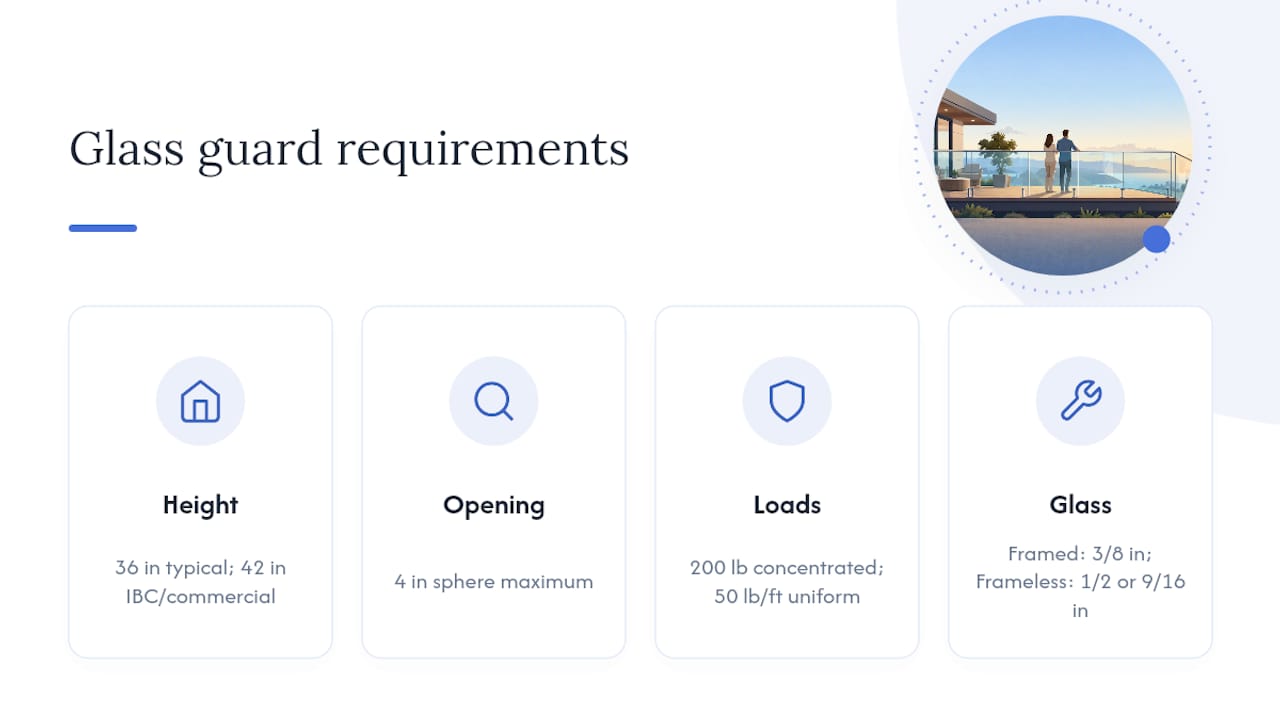
Code snapshot: Most residential guards need to stand 36 inches tall under the IRC, though 42 inches applies in some jurisdictions and is standard for IBC and commercial work. Every opening has to fail a 4 inch sphere test, meaning nothing larger than a soda can should be able to pass through any gap. Structurally, guards must resist a 200 pound concentrated load and 50 pounds per linear foot of uniform load, which is why glass thickness varies by system: framed panels commonly use 3/8 inch laminated or tempered glass, while frameless spigot systems typically need 1/2 inch or 9/16 inch laminated-tempered glass to handle the load without a supporting frame. Check your local building codes before you order glass, since some counties add their own wind load or coastal requirements on top of the IRC baseline.
Can Your Existing Deck Structure Handle Glass Panels?
Not every deck is ready for glass the day you decide to install it. Walk the perimeter and check these items before you order a single panel:
- Inspect the rim joist and ledger board for rot, soft spots, or old fastener damage. Glass railing systems, especially frameless ones, concentrate load at discrete anchor points rather than spreading it the way a wood balustrade does.
- Confirm joist spacing and blocking. Base shoes and spigots need solid backing directly beneath the mounting hardware, and many older decks lack blocking in the right spots.
- Choose your mounting method to match what you find. Top-mount base shoes work well on solid joists, fascia mounts free up deck space by anchoring to the outer rim, and spigots or standoffs need the most robust substrate of the three.
- Budget for remediation if you find rot or undersized framing. Sistering a joist or adding blocking is common. If the whole rim joist needs replacement, a full glass conversion may not be worth it until that repair happens anyway.
Framed systems are more forgiving here because they distribute load across posts and rails instead of concentrating it at a handful of anchor points, which is exactly why they’re the safer bet when your deck structure is questionable.
How Much Does It Cost to Replace Deck Railing with Glass?
Glass railing pricing splits cleanly by system type and who’s doing the labor. DIY glass panel kits run $60 to $130 per linear foot, professionally installed framed systems run $100 to $130 per linear foot, and semi-frameless installs run $165 to $250 per linear foot. Frameless systems cost more because of the thicker glass and precision anchoring required, and installed frameless projects commonly land at $400 or more per linear foot in many markets.
A few factors drive the final number more than anything else:
- Glass thickness and lamination — frameless jobs need thicker, more expensive laminated-tempered panels.
- Mounting complexity — spigots and standoffs cost more to install correctly than a simple base channel.
- Permits and engineering — a stamped letter, when required, adds a fixed professional fee on top of materials.
- Site conditions — stairs, curves, and multi-level decks all add labor time.
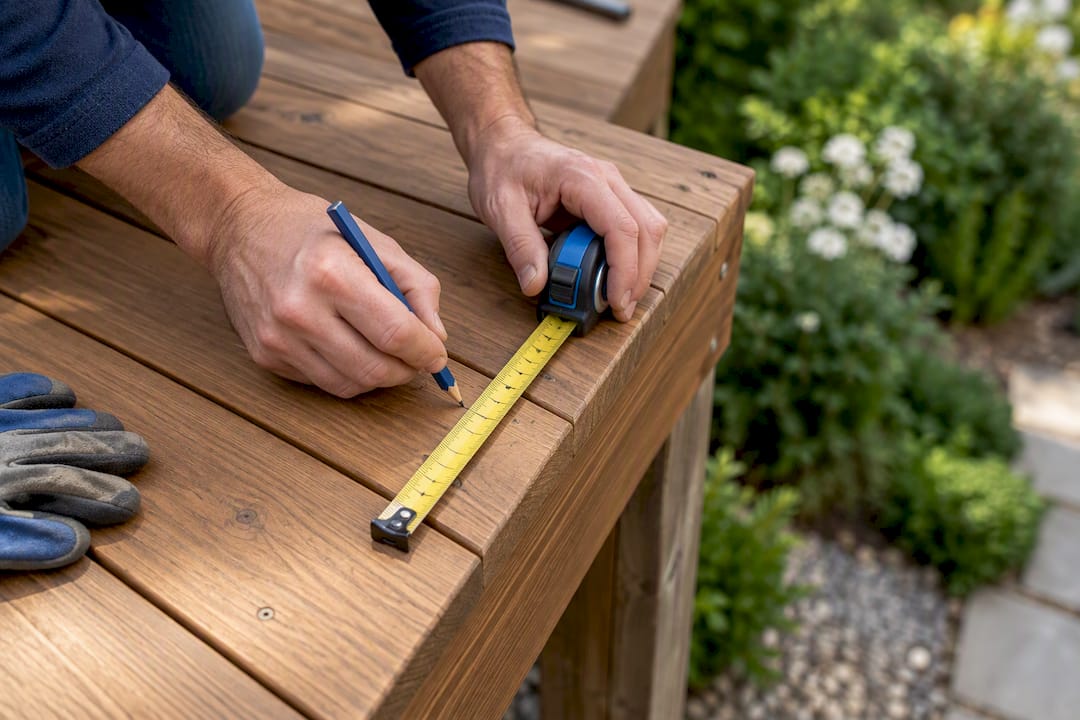
Measure your railing run in exact linear feet, note any corners or stairs separately, and get at least two quotes if you’re going the pro route. Standard panel widths run in set increments, so a careful measurement now saves you a costly reorder later.
What Does the Installation Process Actually Look Like?
Framed installation follows a predictable sequence: measure and mark post locations, install the base channel and posts, drop panels into the channel, then cap and seal. Frameless work is less forgiving. It starts with precise layout for spigot or base shoe locations, drilling and anchoring into verified solid framing, then setting each heavy panel with shims to get it perfectly level before final torque on the hardware.
- Confirm the permit is pulled and any required engineering letter is in hand before you touch the old railing.
- Remove the existing railing section by section, not all at once, so the deck edge stays protected.
- Prep and verify anchor points, adding blocking now if your structural check flagged a gap.
- Set posts or spigots, checking level and plumb at every single point before moving to the next.
- Install panels. Glass panels of this size and thickness commonly require two people to lift safely, and a single dropped panel is an expensive mistake.
- Cap, seal, and torque hardware to the manufacturer’s spec.
- Photograph the finished installation and schedule your building department’s final inspection.
Pro Tip: Lay down moving blankets or foam padding along the deck edge before you start setting panels. A glass panel that slips during a lift is far less likely to crack if it lands on padding instead of decking boards.
The publisher’s own DIY replacement guide walks through this same measure, prep, install, and seal sequence in more detail, which is worth a read before your first cut.
What Are the Downsides of Glass Deck Railings?
Glass isn’t maintenance-free. Expect regular cleaning to keep fingerprints and water spots off the panels, and if you live near the coast, rinse stainless hardware periodically to slow corrosion. Glare on sunny afternoons and the higher upfront cost compared to wood or metal balusters are the two most common complaints homeowners raise after installation.
- Upfront cost runs higher than wood or cable railing for the same linear footage.
- Visible smudges and water spots show up faster than on solid balusters.
- Panel replacement logistics can be slower since you’re often waiting on a custom-cut piece rather than a stock 2x4.
If low maintenance and rock-bottom cost matter more than an open view, cable railing or a traditional metal picket system is worth considering instead. If a solar-control or safety film interests you for glare or privacy, a specialist like Blacktint covers that niche.
When Should You Hire a Professional Installer?
Frameless systems, high wind or snow load regions, and any mounting into a deck with borderline structural integrity are the three triggers that push a project from DIY into “call a pro” territory. A reputable installer should show up with a site survey, load calculations for your specific span, a stamped engineering letter when your jurisdiction requires one, and clear hardware specifications before a single anchor goes into your deck. They should also handle permit filing rather than leaving that paperwork to you. Publisher resources like the glass railing building code guide are a good way to walk into that conversation already knowing the right questions to ask.
— Fuanne
Ready to Order? How Glassrailingstore Fits Your Project
Glassrailingstore sells the same categories covered above directly, so you’re not stuck translating this guide into a shopping list on someone else’s site. Various types of glass railing panels are available, including options suitable for homeowners handling their own installation, and many systems ship with hardware sized for outdoor exposure.
If your deck framing checked out and your budget favors a weekend project, a DIY kit is the right call. If you’re set on a frameless look, live in a high-wind region, or your structural check turned up problems, request a frameless glass railing quote instead and let a professional handle the anchoring math. Either way, start by pulling up the glass railing cost breakdown to line up your linear footage against real per-foot pricing before you commit to either route.
Sources
- Glass Deck Railing: A Homeowner’s Guide
- Glass Railings for Decks & Balconies: Safety, Code & Installation Guide (2026)
FAQ
What Are the Downsides of Glass Railings?
Glass shows fingerprints and water spots more visibly than wood or metal, so it needs more frequent cleaning to stay looking sharp. Coastal homes also need periodic hardware rinsing to slow corrosion, and upfront costs run higher than most traditional railing materials.
How Much Does a Deck Glass Railing Cost?
Costs depend heavily on the system: framed glass railings run $100 to $130 per linear foot, semi-frameless runs $165 to $250 per linear foot, and DIY kits start around $60 per linear foot. Frameless professional installs typically cost the most, often exceeding $400 per linear foot once anchoring and thicker glass are factored in.
What Can I Use Instead of a Deck Railing?
Cable railing, aluminum or steel picket systems, and traditional wood balusters are the common alternatives to glass. Cable and metal systems generally cost less and need less cleaning, though they don’t offer the same unobstructed view.
How Much Does It Cost to Install Glass Railings?
Installation cost depends on whether you DIY or hire a pro, and which system you choose. A DIY framed kit can run as low as $60 per linear foot, while a professionally installed frameless system commonly starts around $400 per linear foot once labor, anchoring, and thicker laminated glass are included.