

Explaining Exterior Glass Barriers: A Homeowner's Guide
Exterior glass barriers are structural safety installations made from engineered glass panels that protect people on elevated outdoor surfaces while preserving unobstructed views. Known in the industry as glass balustrades or glass guardrails, these systems appear on decks, balconies, terraces, pool fences, and stairways where a fall risk exists. The right glass type, mounting method, and compliance with local building codes determine whether your barrier performs safely for decades or becomes a liability. This guide covers every decision point: glass types, safety regulations, installation practices, and design factors that affect long-term performance.
What types of exterior glass barriers are available?
Glass barriers are not a single product. Three distinct glass types serve different structural and safety roles, and choosing the wrong one creates real risk.
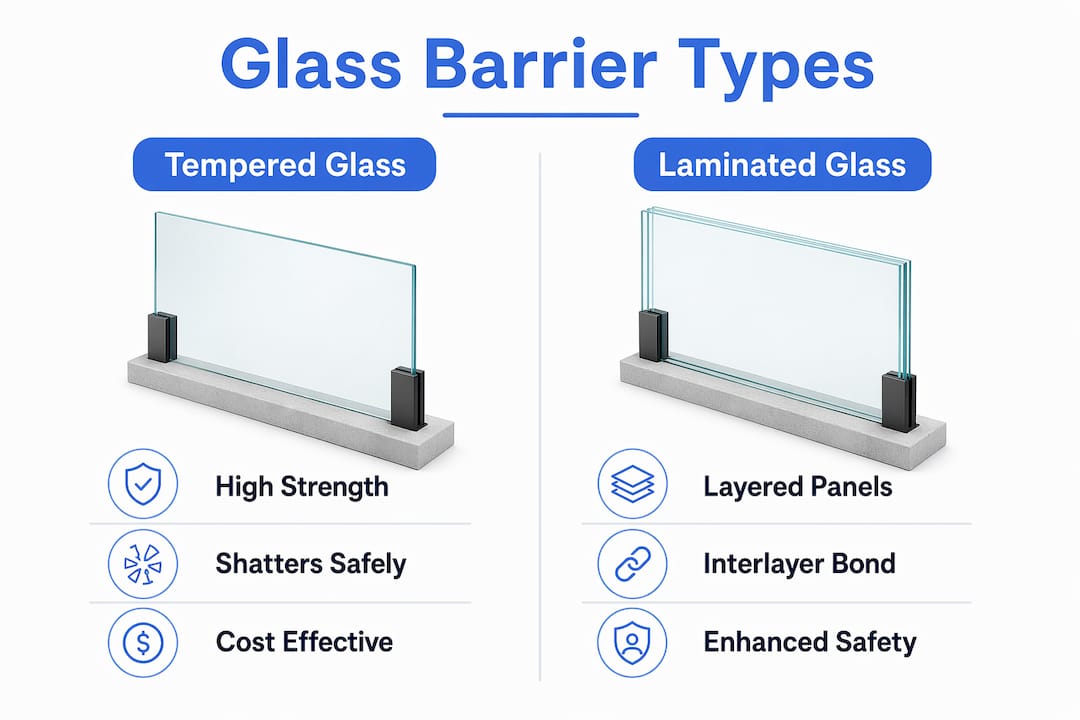
Tempered glass is heat-treated to be four to five times stronger than standard glass. When it breaks, it shatters into small, relatively harmless granules. The problem for exterior barriers is that monolithic tempered glass shatters completely on impact, leaving no residual barrier. Building codes increasingly restrict its use as a standalone panel in guardrail applications for exactly this reason.
Laminated glass bonds two or more glass panes with a plastic interlayer, either PVB (polyvinyl butyral) or SGP (SentryGlas ionoplast). When laminated glass breaks, the interlayer holds the fragments together, maintaining the barrier function. Frameless glass systems rely entirely on the glass panel as the primary structural element, which is why laminated, heat-strengthened glass is the standard choice for these installations.
Heat-strengthened laminated glass combines thermal treatment with lamination. It is the preferred specification for structural exterior barriers because it resists thermal stress breakage and retains load-bearing capacity after an impact event. For coastal or high-rise properties, SGP interlayer outperforms PVB significantly. SGP is five times stronger and far more moisture resistant, making it the correct choice wherever humidity, salt air, or wind loads are elevated.
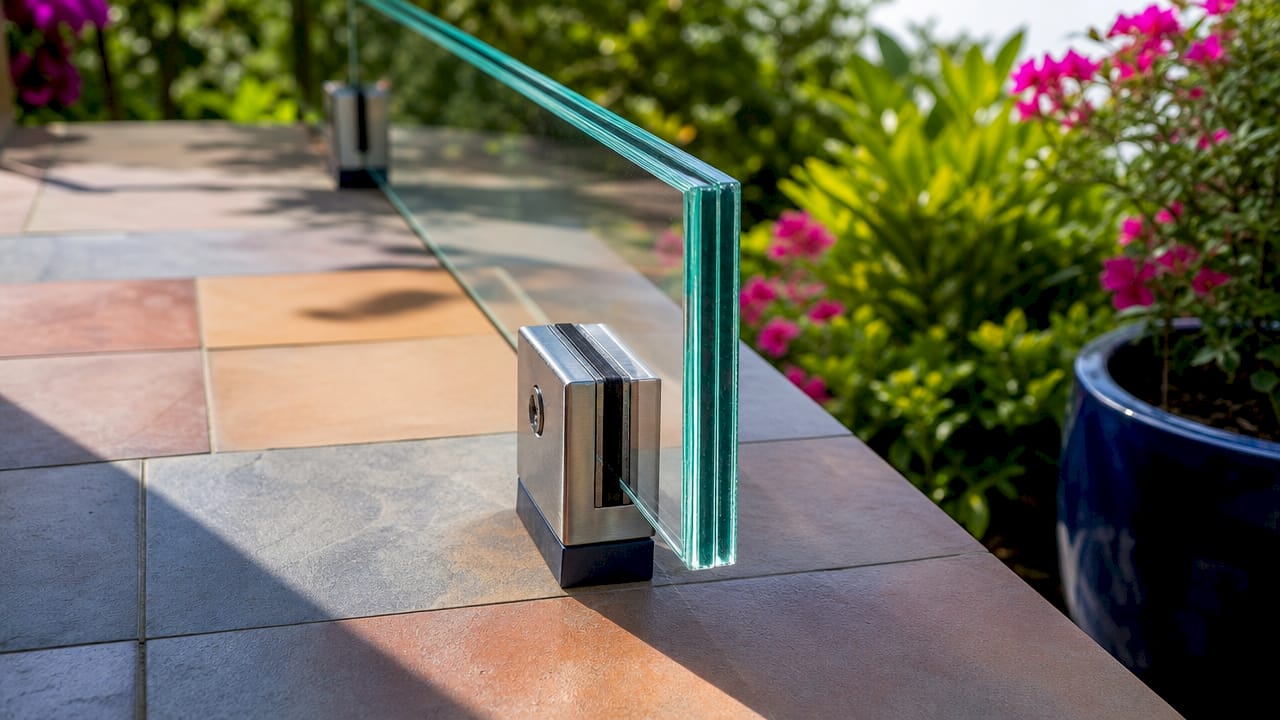
| Glass Type | Strength | Breakage Pattern | Best Use |
|---|---|---|---|
| Tempered (monolithic) | High | Shatters into granules | Framed systems with secondary support |
| Laminated PVB | Moderate to high | Holds together | Residential balconies, low-wind zones |
| Laminated SGP | Very high | Holds together firmly | Coastal, high-rise, frameless systems |
| Heat-strengthened laminated | Highest | Holds together, resists thermal stress | Structural frameless barriers, all climates |
Typical panel thickness for exterior barriers runs from 12mm to 21.5mm depending on height, span, and wind load. Thicker panels are not always better. The correct specification comes from a site-specific load calculation, not a general rule of thumb.
Pro Tip: Ask your supplier for the interlayer specification in writing before purchasing. “Laminated glass” without specifying PVB or SGP tells you almost nothing about real-world performance.
What safety standards and building codes govern glass barriers?
Understanding glass barriers means understanding the regulations that define minimum performance. These are not suggestions. They are legal requirements tied to occupancy permits and liability.
The most fundamental trigger is height. Building codes require guardrails on any elevated surface 600mm (24 inches) or more above the adjacent grade. Below that threshold, a barrier is optional. At or above it, a compliant barrier is mandatory. This applies to decks, balconies, pool surrounds, and raised terraces.
Child safety is addressed through the sphere test. No opening in a barrier may allow passage of a 100mm sphere. This prevents a child’s head or body from passing through gaps between panels or between a panel and a post. Frameless systems with tight panel-to-panel tolerances naturally satisfy this requirement, but framed systems with wide post spacing may not.
Load requirements cover three scenarios. Line loads test resistance to horizontal force along the top rail. Point loads test resistance to concentrated force at a single location. Impact tests simulate a person falling against the barrier. The specific values vary by jurisdiction and occupancy type, but residential decks and commercial terraces carry different load requirements. Consulting the building codes for glass railings in your jurisdiction before specifying any system is the only way to confirm compliance.
Regional differences matter considerably. Ontario’s 2026 building code, California’s Title 24, and the International Building Code each specify different minimum heights, load values, and glass specifications. What passes inspection in one state or province may fail in another. A structural engineer familiar with your local code is not an optional expense on a commercial property. On residential projects, many jurisdictions allow homeowner-managed installations, but the code compliance obligation remains the same.
How are exterior glass barriers properly installed?
A glass barrier installation guide that skips substrate preparation is incomplete. The structure your barrier attaches to determines whether the system performs to its rated load capacity or fails at a fraction of it.
The three primary mounting methods each suit different applications:
-
Base channel systems set the glass panel into a continuous aluminum or stainless steel channel anchored to the deck surface. The channel distributes load across the panel’s full base width, making it structurally efficient and visually clean.
-
Point-fixed systems attach the glass to the structure through drilled fittings at specific locations on the panel face or edge. These require precise hole placement and high-quality fittings to avoid stress concentrations at the fixing points.
- Post systems use vertical posts to carry the structural load, with glass panels infilling between them. The posts bear the lateral force, reducing the structural demand on the glass itself.
Regardless of method, neoprene or rubber setting blocks must be placed between the glass edge and any hard surface contact point. Direct glass-to-metal or glass-to-concrete contact concentrates stress at the edge and causes chipping or spontaneous breakage over time. Setting blocks transfer the load safely and protect the glass edge throughout its service life.
Alignment during installation is not cosmetic. Panels that are not plumb or level create uneven load distribution across the fixing points. Over time, this accelerates wear on hardware and can cause panel movement under load. Check plumb and level at every panel before final tightening.
Pro Tip: Before drilling into a deck or balcony substrate, verify the structural member beneath. Anchoring a base channel into decking boards rather than the joist below is one of the most common installation errors and one of the most dangerous.
Maintenance for glass barriers is straightforward but requires consistency. Clean panels with a non-abrasive glass cleaner and a soft cloth every one to three months depending on exposure. Inspect all hardware, sealants, and setting blocks annually. Any impact damage to a panel, even a chip at the edge, warrants immediate professional assessment. Chips propagate under load and can lead to unexpected panel failure.
What aesthetic and environmental factors affect glass barrier performance?
Glass barriers offer a transparency that no cable railing or metal panel system can match. That transparency, however, creates two problems that require deliberate design decisions.
The first is visibility for people with impaired vision. Pure glass is effectively invisible at a distance. Accessibility standards recommend high-contrast markings at two height bands: 40 to 70 cm and 120 to 160 cm above the walking surface. These markings reduce collision risk and are required in many public and commercial applications. For residential use, frosted bands or decorative film serve the same function without compromising the overall aesthetic.
The second is UV radiation. Ordinary glass transmits approximately 74.3% of UVA radiation, which degrades outdoor furniture, flooring, and finishes over time. Laminated glass blocks 100% of UVA, making it the correct choice for any barrier adjacent to a covered terrace or screened area where UV protection matters.
Wind load is the dominant structural variable for exterior barriers. Site-specific wind load calculations determine the required panel thickness and fixing strength. A barrier on a ground-floor deck in a sheltered suburban yard faces a fraction of the wind pressure that a rooftop terrace or oceanfront balcony experiences. Panels that deflect excessively under wind load create both a safety concern and an unsettling visual effect for occupants.
Coastal environments add corrosion to the list of concerns. Salt air attacks aluminum and standard stainless steel hardware over time. Marine-grade 316 stainless steel is the correct specification for any installation within roughly two kilometers of saltwater. The glass itself is unaffected by salt, but the hardware that holds it in place is not.
Bird strike is a less-discussed but real concern with large glass panels. Patterned glass, UV-reflective coatings, or applied film can reduce collision risk without significantly affecting transparency from the human perspective.
Key Takeaways
Exterior glass barriers require laminated, heat-strengthened glass with the correct interlayer, code-compliant installation, and consistent maintenance to deliver long-term safety and visual performance.
| Point | Details |
|---|---|
| Glass type determines safety | Use laminated heat-strengthened glass for frameless systems; avoid monolithic tempered glass as a standalone panel. |
| Interlayer choice matters | SGP ionoplast outperforms PVB in coastal, high-rise, and high-humidity applications. |
| Code compliance is mandatory | Barriers are required at 600mm or higher; the 100mm sphere test and load requirements apply regardless of jurisdiction. |
| Installation quality is critical | Setting blocks, substrate verification, and panel alignment directly affect structural performance and service life. |
| Environment shapes specification | Wind loads, UV exposure, salt air, and visibility requirements all influence the correct glass and hardware selection. |
Why I think most homeowners underestimate the interlayer decision
When property owners contact me about glass barrier projects, the conversation almost always starts with aesthetics: frameless or framed, clear or tinted, how thick. The interlayer question rarely comes up until I raise it. That is a problem, because the interlayer is the single specification that most directly determines how the barrier behaves after an impact event.
A PVB interlayer in a coastal installation will absorb moisture over several years, causing delamination at the edges. The glass does not shatter, but the barrier’s structural integrity degrades quietly and invisibly. By the time you notice the milky edge discoloration, the panel has already lost a meaningful portion of its post-breakage load capacity. SGP does not have this problem. The cost difference between PVB and SGP laminated panels is real but modest compared to the cost of replacing panels or, worse, managing a liability claim after a failure.
The second thing I see consistently is homeowners treating the substrate as someone else’s problem. The glass supplier specifies the panel. The hardware supplier specifies the fittings. Nobody explicitly owns the question of whether the deck framing can actually carry the imposed loads. A structural engineer’s review of the substrate costs a fraction of what a deck rebuild costs. On any elevated installation above a living space or pool area, that review is not optional in my view, regardless of what the local permit process requires.
Glass barriers done correctly are genuinely low maintenance and visually superior to every alternative. The failures I have seen all trace back to the same two decisions: the wrong interlayer for the environment, and inadequate substrate preparation. Get those two right, and the system will perform for decades.
— Fuanne
How Glassrailingstore supports your glass barrier project

Glassrailingstore supplies tempered and laminated glass panels, marine-grade stainless steel hardware, base channels, and point-fixed fittings for residential and commercial exterior glass barrier installations. Every product is specified for code-compliant outdoor use, and the platform offers detailed glass railing engineering testing services to verify that your system meets the load and safety requirements for your jurisdiction. Whether you are specifying a frameless deck barrier or a pool fence, Glassrailingstore provides product guides, compliance resources, and direct support for both DIY homeowners and professional contractors. Explore the full range of 46-inch tempered glass panels and request a quote for your specific project dimensions and site conditions.
FAQs
1. What is the minimum height that requires an exterior glass barrier?
Building codes require a guardrail on any surface 600mm (24 inches) or more above the adjacent ground level. This threshold applies to decks, balconies, terraces, and pool surrounds in most North American jurisdictions.
2. Are glass barriers safe for homes with children?
Yes, when correctly specified and installed. Compliant barriers must pass the 100mm sphere test, meaning no gap in the system allows a 100mm sphere to pass through. Frameless glass systems with tight panel tolerances naturally satisfy this child safety requirement.
3. What is the difference between PVB and SGP interlayers?
SGP (SentryGlas ionoplast) is five times stronger than PVB and significantly more moisture resistant. For coastal properties, high-rise balconies, or any frameless system where the glass carries the full structural load, SGP is the correct specification.
4. How often should exterior glass barriers be cleaned and inspected?
Clean panels every one to three months with a non-abrasive glass cleaner. Inspect all hardware, sealants, and setting blocks annually, and have any edge chip or impact damage assessed by a professional immediately, as damage can propagate under load.
5. Do glass barriers require a building permit?
In most jurisdictions, yes. Any guardrail installation on an elevated surface requires a permit and must comply with local building codes covering height, load capacity, glass specification, and hardware. Check your local building code requirements before beginning any installation.
Recommended
- The Role of Glass in Outdoor Safety Explained – The Glass Railing Store
- Why glass barriers beat wood and metal for outdoor safety – The Glass Railing Store
- How Glass Improves Views: A Homeowner’s Guide – The Glass Railing Store
- Weatherproof Glass Railing Features: A Homeowner’s Guide – The Glass Railing Store