

Glass Hardware Durability: What Every Builder Must Know
Glass hardware durability is defined as the capacity of components like hinges, clamps, rollers, and handles to maintain structural integrity, smooth function, and appearance under daily use, environmental stress, and material fatigue. In construction and design, this is not a cosmetic concern. It directly determines whether a glass railing, door, or partition performs safely over its intended lifespan. The industry measures this performance through specific benchmarks: 50,000+ cycle testing, load capacity ratings above 65kg per pair, and corrosion resistance verified through standardized salt spray protocols. Selecting hardware that meets these benchmarks is the difference between a 10-year installation and a 25-year one.
Glass hardware durability is the industry term for a component’s ability to resist wear, corrosion, mechanical fatigue, and environmental degradation over time. The recognized performance benchmarks come from cycle testing, load ratings, and corrosion protocols used by manufacturers and verified by third-party labs.
Testing protocols like the 120-hour neutral salt spray test, ASTM E283/E331 infiltration tests, thermal cycling, and impact testing confirm that hardware can endure real-world stress. Hardware that passes these tests reliably performs for 20–30 years or more. That is a meaningful benchmark when you are specifying components for a commercial deck or a coastal balcony.
Load capacity is equally critical. Hardware rated for 65kg or more per pair handles the weight of standard tempered glass panels without deflection or stress concentration. Undersized hardware creates hidden failure points that are not visible until a component cracks or loosens under load.
Pro Tip: Always request the test certificates from your hardware supplier before specifying components for a project. A reputable manufacturer will provide salt spray test results and cycle count data on request.
| Testing Standard | What It Measures | Performance Threshold |
|---|---|---|
| Cycle Testing | Open-and-close operational life | 50,000+ cycles minimum |
| Load Capacity | Weight-bearing ability per hardware pair | 65kg+ per pair |
| Salt Spray Test | Corrosion resistance in humid or coastal environments | 120-hour neutral salt spray |
| ASTM E283/E331 | Air and water infiltration resistance | Pass/fail per specification |
| Thermal Cycling | Expansion and contraction under temperature change | No cracking or seal failure |
Material selection is the single biggest factor in glass fittings durability. The wrong metal in the wrong environment will fail within a year. The right one will outlast the building’s first renovation cycle.
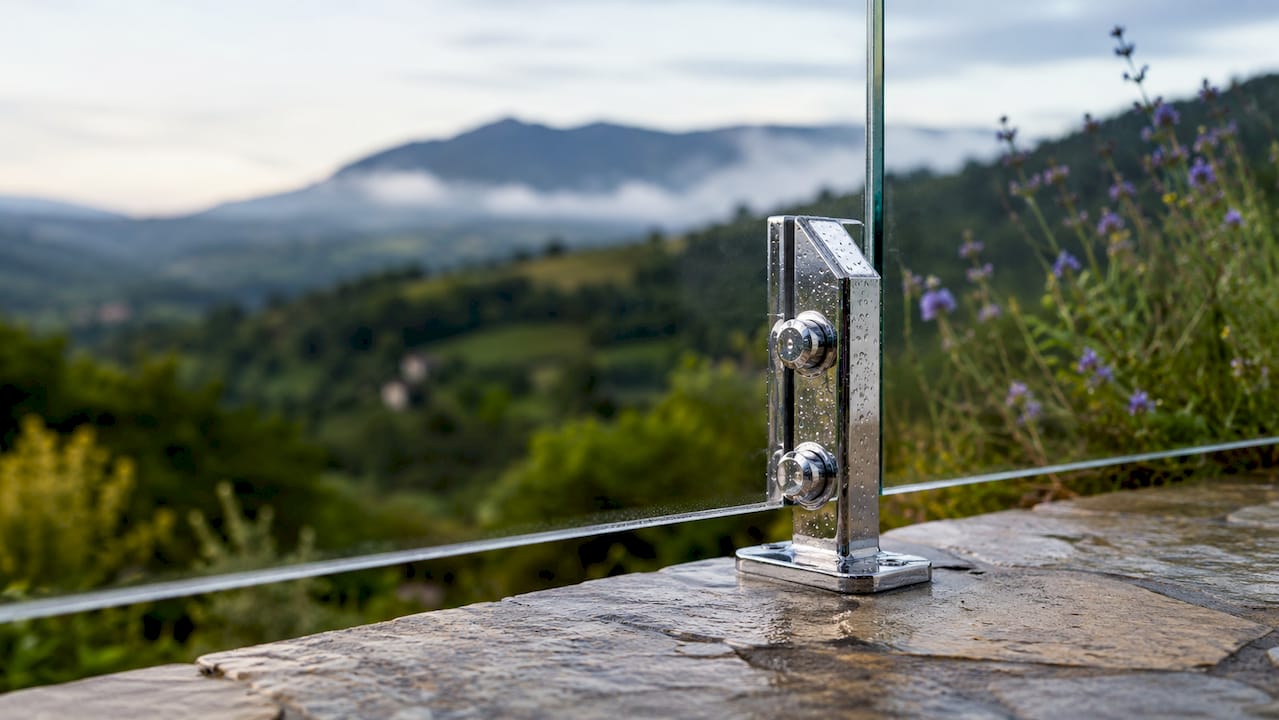
Stainless steel grades 304 and 316 are the industry standard for durable glass hardware, outperforming zinc alloys that succumb to pitting and blistering within a year in high-humidity areas. Grade 316 adds molybdenum to its alloy composition, which gives it superior resistance to chloride corrosion. That makes it the correct choice for coastal installations, pool fences, and any application within a mile of saltwater.
Grade 304 performs well in interior and low-humidity outdoor environments. It costs less than 316 and handles commercial interior applications like glass office partitions and interior railings without issue. Specifying 316 where 304 is sufficient wastes budget. Specifying 304 where 316 is needed accelerates failure.
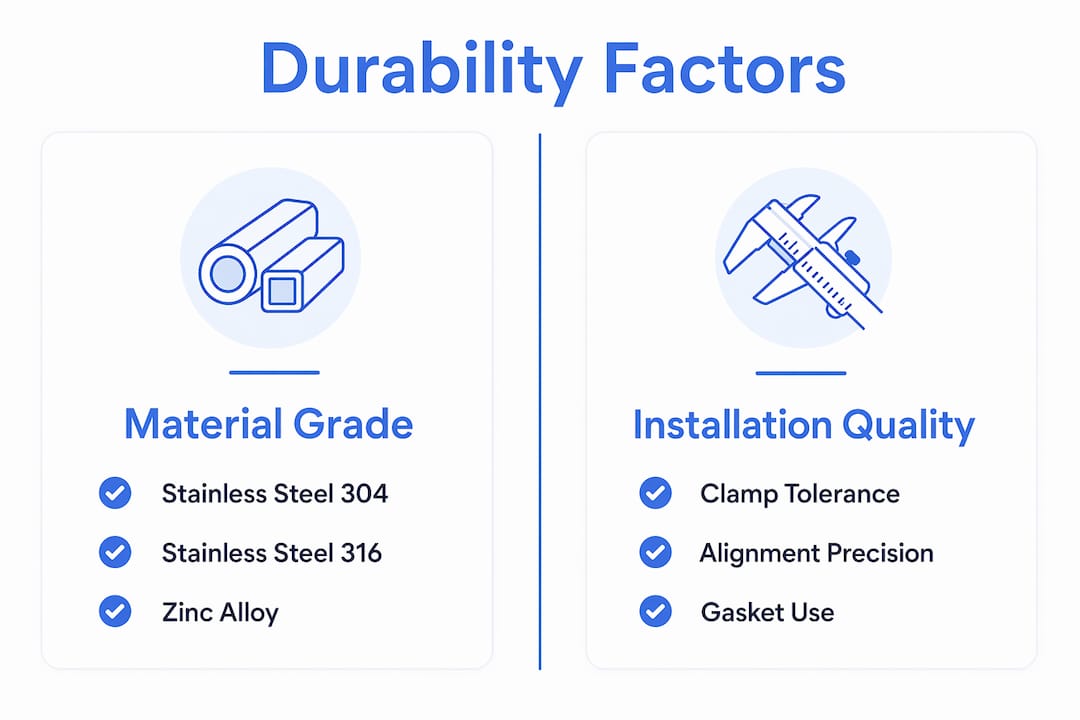
Zinc alloys and die-cast metals are common in budget hardware. They are cheaper to manufacture but corrode faster in humid conditions. Brass with multi-layer plating performs better than zinc but still falls short of solid stainless steel in long-term outdoor applications. For any project with regular moisture exposure, solid stainless steel is the correct specification.
Pro Tip: For outdoor glass railings near the ocean, always specify marine-grade 316 stainless steel hardware. The cost difference over 304 is minor compared to the cost of replacing corroded fittings in three years.
| Material | Corrosion Resistance | Best Environment | Lifespan Estimate |
|---|---|---|---|
| Stainless Steel 316 | Excellent | Coastal, pool, high humidity | 20+ years |
| Stainless Steel 304 | Good | Interior, low-humidity outdoor | 15–20 years |
| Solid Brass (plated) | Moderate | Interior, dry climates | 10–15 years |
| Zinc Alloy | Poor | Dry interior only | 3–5 years |
Precision engineering is what separates hardware that performs from hardware that fails quietly. Tight clamp tolerances of 0.10–0.30 mm distribute loads evenly across the glass panel surface. Loose tolerances create uneven pressure points that concentrate stress and eventually crack the glass or loosen the fitting.
Misalignment as small as 1–2 mm creates hidden stress concentrations that lead to premature failure. This is not visible during installation. The damage accumulates over months until a hinge pulls away from the frame or a clamp begins to rock under load. Proper installation requires level surfaces, correctly torqued fasteners, and hardware matched to the exact weight of the glass panel being supported.
Glass installation longevity also depends on gaskets and cushioning pads placed between metal hardware and glass surfaces. These components absorb vibration, reduce thermal expansion stress, and prevent the metal-on-glass contact that causes micro-fractures over time. Skipping gaskets to save a few dollars is a common mistake that shortens hardware life significantly.
Key engineering factors that directly affect durability include:
- Hardware-to-glass weight matching: Hardware must be rated for the actual weight of the panel, not an estimated average.
- Fastener torque specifications: Over-tightening clamps creates the same stress concentration as misalignment.
- Gasket material quality: EPDM and neoprene gaskets outperform generic rubber in UV and temperature resistance.
- Structural substrate integrity: Hardware anchored to weak or rotted framing fails regardless of its own quality rating.
- Commercial vs. residential cycle loads: A commercial entrance door cycles 200+ times per day. Residential doors cycle 20–30 times. Hardware must be specified for the actual usage pattern, not a generic category.
For a detailed look at how structural precision affects railing systems, the engineering tolerances involved go deeper than most installation guides cover.
How Does Environment and Maintenance Influence Hardware Lifespan?
Environment is the variable most builders underestimate when specifying glass hardware. Window hardware lifespan ranges from 10 to 25 years, but coastal or polluted environments accelerate corrosion significantly. That 15-year range is entirely explained by where the hardware is installed and how it is maintained.
Coastal air carries salt particles that deposit on metal surfaces and accelerate oxidation. Hard water leaves mineral deposits that trap moisture against metal and degrade finishes. Cleaning chemicals, particularly those containing chlorine or ammonia, strip protective coatings and expose base metal to corrosion. All three of these factors compound each other when present simultaneously.
Regular maintenance including lubrication and cleaning can extend hardware lifespan by 10 or more years. That is not a minor benefit. It is the difference between replacing hardware at year 10 and replacing it at year 20 or beyond.
A practical maintenance routine for glass hardware includes:
- Monthly cleaning: Wipe all hardware with a soft cloth and mild soap solution. Rinse thoroughly and dry completely to prevent water spots and mineral buildup.
- Quarterly lubrication: Apply a silicone-based lubricant to hinges, rollers, and pivot points. Avoid oil-based lubricants that attract dust and grit.
- Biannual inspection: Check all fasteners for loosening, inspect gaskets for cracking or compression set, and look for early signs of surface corrosion.
- Annual deep clean: Remove mineral deposits with a diluted white vinegar solution on non-plated stainless steel. Rinse and dry immediately.
- Post-storm inspection: After heavy rain, wind, or coastal weather events, inspect all hardware for debris, displacement, or corrosion acceleration.
For a complete set of glass hardware maintenance tips, the routines above apply to most residential and commercial installations.
Which Hardware Components Wear Fastest and How Can You Extend Their Life?
Not all glass hardware wears at the same rate. Understanding which components fail first lets you plan proactive replacements before a failure creates a safety issue.
Floor springs in commercial settings typically last 3–5 years under high daily cycle loads. In residential settings with proper maintenance, the same component lasts 8–10 years. The difference is cycle frequency. A commercial entrance door cycles hundreds of times daily. A residential gate cycles a fraction of that. Signs of floor spring failure include slow return times, louder closing impact, and visible door displacement from the center line.
Nylon pulleys degrade within 3–5 years, while stainless steel rollers last 5–8 years but often require simultaneous track replacement when swapped out. Nylon is quieter but less durable. Stainless steel lasts longer but adds noise and requires track maintenance as part of the replacement cycle. Choosing between them is a trade-off between acoustic performance and service interval.
Key wear points to monitor in any glass hardware installation:
- Hinges: Look for play in the pivot, visible wear on the pin, or uneven door alignment as early failure signals.
- Clamps and patch fittings: Check for loosening, cracked gaskets, or visible corrosion at the contact point with glass.
- Rollers and pulleys: Listen for grinding or squeaking, which signals bearing wear or debris in the track.
- Floor springs and closers: Test return speed monthly. Slow return means the hydraulic mechanism is losing pressure.
- Surface finishes: Pitting or discoloration on hardware surfaces is an early corrosion signal, not just a cosmetic issue.
Key Takeaways
Glass hardware durability depends on material grade, engineering precision, testing certification, and consistent maintenance working together across the full installation lifespan.
| Point | Details |
|---|---|
| Testing benchmarks define durability | Specify hardware that passes 50,000+ cycle tests and 120-hour salt spray protocols. |
| Material grade determines environment fit | Use 316 stainless steel for coastal and pool applications; 304 suits interior and low-humidity outdoor use. |
| Installation precision is non-negotiable | Clamp tolerances of 0.10–0.30 mm and correct torque prevent hidden stress failures. |
| Maintenance extends lifespan by a decade | Monthly cleaning and quarterly lubrication can add 10+ years to hardware service life. |
| Component wear rates vary significantly | Floor springs last 3–5 years commercially; nylon pulleys degrade faster than stainless steel rollers. |
What I've Learned About Specifying Glass Hardware That Actually Lasts
Most durability failures I have seen in glass hardware projects come down to two decisions made early: material grade and installation tolerance. Builders who specify 304 stainless steel on a beachfront deck because it costs less than 316 are not saving money. They are scheduling a replacement job in three years. The math never works out in their favor.
The second pattern I see consistently is hardware installed without proper gaskets or with fasteners torqued by feel rather than specification. A 1–2 mm misalignment looks like nothing on installation day. Eighteen months later, that same fitting is rocking under load and the glass panel has a micro-fracture that nobody noticed until it became a safety issue.
What I tell anyone specifying glass hardware for a commercial renovation or a high-end residential project is this: ask your supplier for the test certificates before you order. If they cannot produce a salt spray test result and a cycle count, that hardware has not been tested to the standard you need. Working with a commercial renovation contractor who understands hardware specifications is worth the investment on any project where safety and longevity are non-negotiable.
Maintenance is the part most project owners forget entirely. The hardware gets installed, the project closes out, and nobody sets up a maintenance schedule. Then at year five, the hinges are corroded and the floor springs are failing, and the owner is surprised. A simple quarterly lubrication routine and an annual inspection would have prevented all of it.
The future of glass hardware durability is moving toward multi-layer nano-coatings and smart monitoring systems that flag wear before failure. But the fundamentals will not change. Material grade, engineering precision, and maintenance discipline are what determine whether your installation lasts 10 years or 30.
— Fuanne
How Glassrailingstore Supports Durable Glass Hardware Projects
Glassrailingstore supplies tempered glass panels and marine-grade stainless steel hardware engineered to meet the durability benchmarks covered in this article. Every product in the catalog is designed for real-world performance under load, weather, and daily use cycles.
For projects where compliance and performance documentation matter, Glassrailingstore offers glass railing engineering testing services that verify hardware meets code and structural requirements before installation. The team also provides guidance on building code compliance for glass railing systems across residential and commercial applications. Whether you are specifying a deck railing, a pool fence, or a stair system, Glassrailingstore has the hardware, the documentation, and the technical support to back your project from planning through installation.
FAQs
1. What is the minimum cycle count for durable glass hardware?
Durable glass hardware should pass a minimum of 50,000 open-and-close cycles in testing. High-traffic commercial applications may require higher ratings depending on daily use frequency.
2. Which stainless steel grade is best for outdoor glass hardware?
Grade 316 stainless steel is the correct choice for outdoor and coastal glass hardware because its molybdenum content resists chloride corrosion. Grade 304 suits interior and low-humidity outdoor environments at a lower cost.
3. How long does glass hardware typically last?
Glass hardware lifespan ranges from 10 to 25 years depending on material grade, environment, and maintenance. Hardware in coastal or high-humidity environments without regular maintenance falls toward the lower end of that range.
4. How does installation quality affect glass hardware durability?
Clamp tolerances outside the 0.10–0.30 mm specification and misalignment as small as 1–2 mm create stress concentrations that cause premature failure. Proper torque, level substrates, and quality gaskets are as important as the hardware grade itself.
5. What maintenance routine extends glass hardware lifespan the most?
Monthly cleaning with mild soap, quarterly silicone lubrication of moving parts, and biannual fastener inspections are the three practices that most consistently extend hardware service life by 10 or more years.
Recommended
- Glass railing durability: Build it right, build it to last – The Glass Railing Store
- Essential Glass Railing Tools for Builders and Homeowners – The Glass Railing Store
- Why Choose Stainless Steel Hardware for Outdoor Builds – The Glass Railing Store
- Weatherproof Glass Railing Features: A Homeowner’s Guide – The Glass Railing Store