

Glass Railing Surface Mount Explained for Decks
A glass railing surface mount is a system where posts or base shoes are bolted directly to the top of a deck or floor surface, creating a secure barrier without cutting into the structural framing below. This mounting method is the most common choice for residential decks and balconies because it works on wood, concrete, and composite substrates without requiring embedded footings. Industry standards from bodies like ASTM and local building codes govern load requirements, glass thickness, and fastener specifications for every surface mounted railing system. Glassrailingstore offers a full range of tempered glass panels, aluminum base shoes, and stainless steel hardware designed specifically for surface mount applications.
What Is Glass Railing Surface Mount, and How Does It Work?
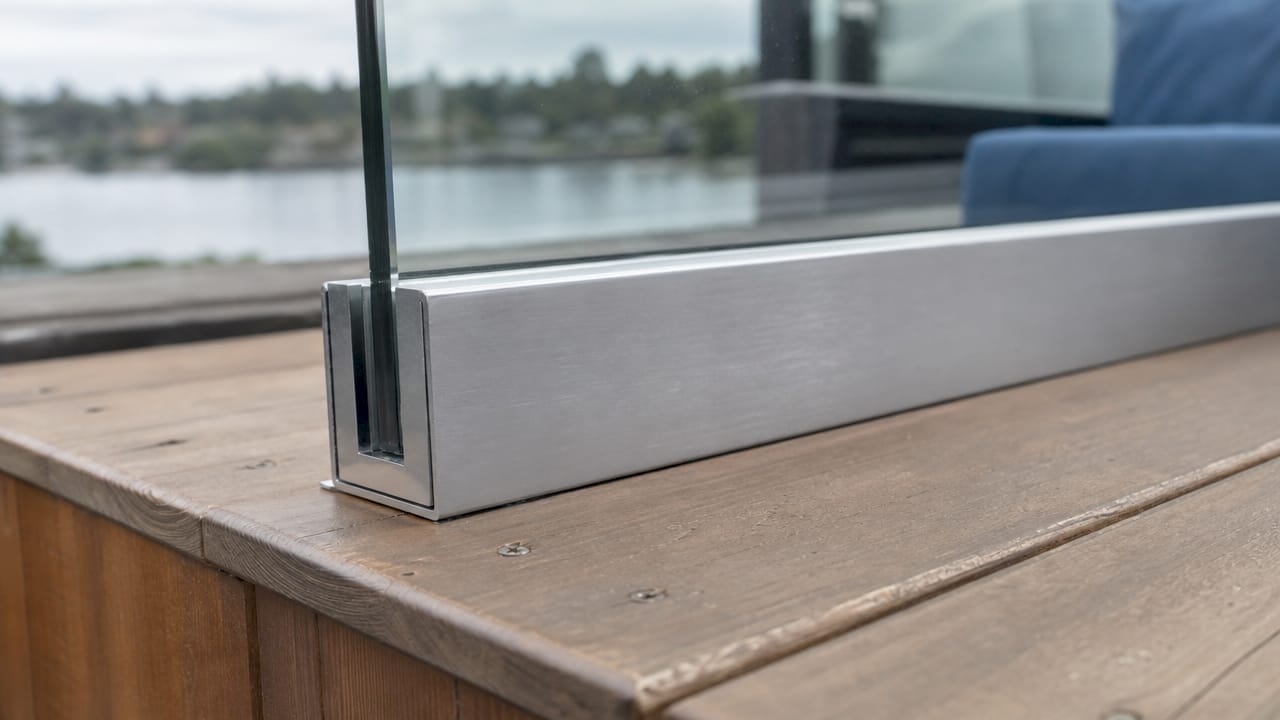
Surface mount glass railing, also called a top mount system in the industry, attaches posts to the deck surface rather than embedding them inside the framing or fastening them to the side of the structure. The post or aluminum base shoe sits flat on the deck, and bolts pass through the decking into the structural joists or concrete below. Glass panels then slot into the base shoe channel, held in place by rubber gaskets and set screws. The result is a clean, modern look with no visible structural penetration from the outside.
This method differs from core-drilled or embedded mounts, where posts are set into concrete or framing before the deck surface is finished. Surface mounts are faster to install and easier to adjust or replace if a post shifts or a panel needs swapping. That accessibility is a real advantage for contractors working on tight schedules and homeowners who want a DIY-friendly system.
How Does Surface Mount Differ from Other Glass Railing Mounting Methods?
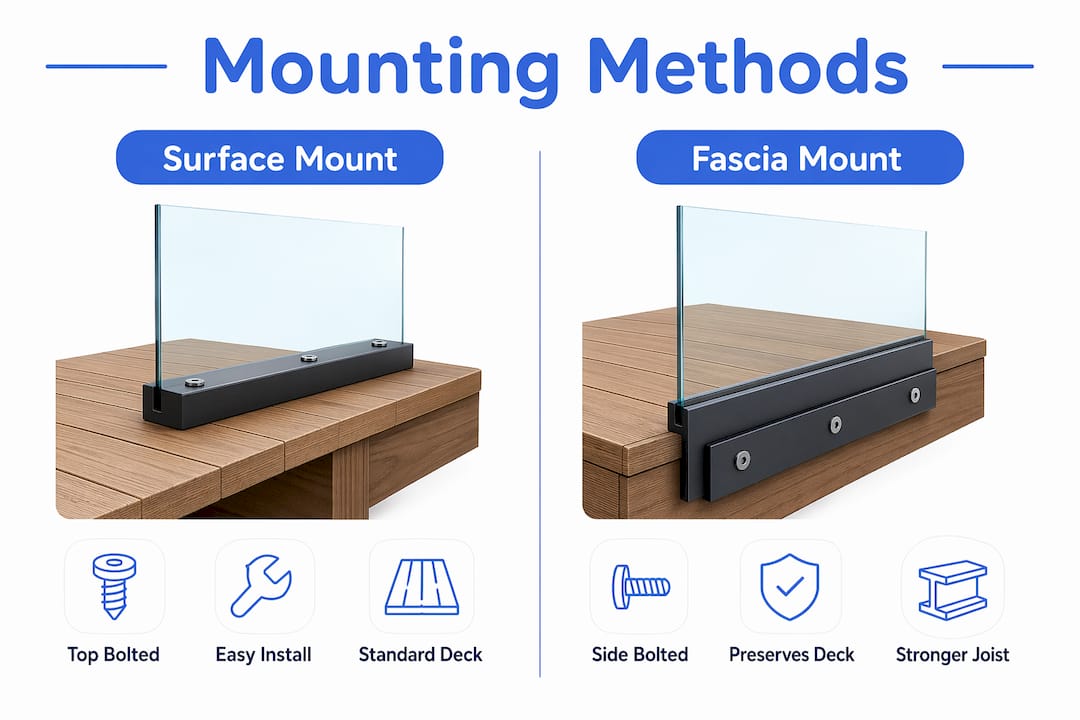
Three primary mounting methods exist for glass railings: surface mount, fascia mount (also called side mount), and embedded mount. Each handles structural loads differently and suits different substrates.
Base shoe systems distribute lateral loads continuously along the full length of the channel, which spreads force evenly across the deck framing. Standoff and spigot systems, by contrast, concentrate loads at individual fastener points. That distinction matters when you are working with older decks or composite framing that may not handle point loads as well as solid lumber.
| Mounting method | Load distribution | Typical substrate | Installation complexity |
|---|---|---|---|
| Surface mount (base shoe) | Continuous, along channel | Wood, composite, concrete | Low to moderate |
| Fascia mount (side mount) | Point loads at brackets | Solid rim joist, concrete edge | Moderate |
| Embedded (core drill) | Distributed through footing | Concrete slab, thick timber | High |
| Spigot (standoff) | Point loads at spigot base | Concrete, steel frame | Moderate to high |
Fascia mounts attach to the vertical face of the deck’s rim joist. They preserve the full deck surface but require a structurally sound rim joist with no rot or damage. Embedded mounts offer the cleanest look of all three, but they require planning before the concrete is poured or the framing is built. Retrofitting an embedded system into an existing deck is rarely practical.
Pro Tip: Verify your rim joist condition before choosing fascia mount. A single soft spot from moisture damage can disqualify the entire side of the deck for that method, forcing a switch to surface mount mid-project.
Mismatch between mounting method, glass thickness, and substrate condition is the leading cause of redesign and project delays. Confirm your substrate before you order hardware.
What Are the Benefits of Glass Railing Surface Mounts for Outdoor Decks?
Surface mount systems deliver a combination of structural reliability and visual appeal that few other railing types match. The benefits are concrete and practical, not just aesthetic.
- Unobstructed views. Glass panels eliminate the visual clutter of wood balusters or metal pickets. On a deck overlooking a yard, lake, or mountain range, that difference is significant.
- Speed of installation. Surface mounts require no embedded footings or complex framing modifications. A contractor can complete a standard deck run in a single day.
- Adjustability. If a post shifts or a panel cracks, you can remove and replace individual components without disturbing the rest of the system.
- Durability. Tempered safety glass and marine-grade stainless steel hardware resist UV exposure, salt air, and freeze-thaw cycles far better than wood or painted metal alternatives.
- Code-friendly design. Most surface mount systems are engineered to meet residential building code requirements for load resistance and railing height, which simplifies the permit process.
- Modern aesthetic. Glass railing design ideas consistently trend toward frameless and minimalist looks. Surface mount systems support that direction without requiring custom fabrication for every project.
The benefits of glass railing extend beyond looks. A well-installed surface mount system adds measurable value to a home by improving safety and curb appeal simultaneously.
How to Install Surface Mount Glass Railings: Key Steps and Considerations
Installation quality determines whether a surface mount system performs safely for decades or fails within a few years. The process is straightforward, but each step has a non-negotiable requirement.
Local building codes significantly affect rail height, glass type, and hardware specifications. Confirm code compliance before purchasing any materials. Rework after installation is expensive and avoidable.
Numbered installation steps:
- Assess the substrate. Probe wood decking for rot, check joist spacing, and confirm the deck can handle the additional load of glass panels and hardware.
- Mark post or base shoe positions. Follow the manufacturer’s layout guide, typically spacing base shoe sections to align with structural joists below.
- Pre-drill fastener holes. Use the correct bit size for your fastener type. Oversized holes reduce pull-out resistance and compromise the entire load path.
- Install base shoes with through-bolts. Proper fastener size and through-bolting are critical for meeting pull-out resistance requirements. Lag screws alone are not sufficient on most wood decks without confirmed joist engagement.
- Apply sealant around the base shoe perimeter. Water infiltration under the base shoe accelerates wood rot and corrodes hardware. Use a marine-grade silicone sealant rated for outdoor exposure.
- Insert rubber gaskets into the base shoe channel. Gaskets protect the glass edges from direct metal contact and absorb minor vibration.
- Set glass panels into the channel. Lift panels straight down into the base shoe. Never force or torque a panel sideways, as this can chip the edge.
- Tighten set screws and check alignment. Use a level on each panel before final tightening. Misaligned panels create uneven load distribution across the base shoe.
- Install top rail or cap rail connectors. Cap rail adds a finished look and provides a graspable top surface where codes require it.
- Conduct a final load inspection. Apply lateral pressure to each panel and check for movement. Any play in the base shoe indicates an undertightened fastener or a missed joist.
Pro Tip: On concrete substrates, use stainless steel wedge anchors rather than plastic sleeve anchors. Plastic anchors degrade with freeze-thaw cycling and can fail under sustained lateral load.
Assuming lag screws suffice without substrate confirmation risks structural failure. Always verify joist location and depth before selecting fastener length.
Construction sites introduce additional hazards during railing installation. Contractors should review common construction site hazards to protect workers during the mounting and glass-setting phases of any project.
How Should You Maintain Surface Mount Glass Railings for Long-Term Performance?
A surface mount glass railing system requires consistent but simple maintenance to stay safe and clear. Neglecting hardware inspections is the most common mistake homeowners make, and it is also the most costly one to fix later.
Maintenance involves cleaning glass 2–4 times yearly with mild solutions and conducting annual hardware inspections. That schedule keeps the glass clear and catches hardware wear before it becomes a structural issue.
Glass railing maintenance tips:
- Clean glass with mild, non-ammonia solutions. Ammonia-based cleaners degrade rubber gaskets over time and can leave streaks on tempered glass. Use a soft microfiber cloth and a diluted dish soap solution instead.
- Clean on cool, shaded days. Cleaning on cool, shaded days prevents the cleaning solution from drying too fast, which causes micro-scratches and streaks.
- Inspect hardware annually. Check set screws, base shoe fasteners, and cap rail connectors for corrosion or loosening. Tighten or replace as needed.
- Replace rubber gaskets every 10 years. Gaskets harden and crack with UV exposure, reducing their ability to cushion glass panels and seal out moisture.
- Reseal aluminum base shoes every 3–5 years. The silicone bead around the base shoe perimeter breaks down with weather exposure. A fresh bead prevents water from pooling under the shoe and rotting the deck below.
- Inspect for glass edge chips after storms. Wind-driven debris can chip tempered glass edges. A chipped edge weakens the panel and should be replaced promptly.
Weather exposure is the primary driver of maintenance frequency. Coastal installations with salt air require more frequent hardware checks than inland locations. A long-term maintenance plan for your specific climate and substrate type will extend the system’s life significantly.
Key Takeaways
Surface mount glass railing systems deliver the best balance of installation speed, structural reliability, and visual clarity when the substrate is properly verified and local codes are confirmed before work begins.
| Point | Details |
|---|---|
| Surface mount definition | Posts or base shoes bolt to the deck top, distributing loads along the channel. |
| Substrate verification first | Confirm joist location, depth, and condition before selecting fasteners or hardware. |
| Code compliance early | Check local building codes for height, glass type, and fastener requirements before ordering. |
| Heat-soaked glass for outdoors | Heat-soaked tempered glass reduces spontaneous breakage risk in exterior applications. |
| Maintenance schedule | Clean glass 2–4 times yearly and reseal aluminum base shoes every 3–5 years. |
What I’ve Learned from Watching Surface Mount Projects Go Wrong
The single most common planning mistake I see is treating every glass railing project as interchangeable. Assuming every installation is the same is the biggest error professionals consistently identify. A deck built in 2005 with 16-inch joist spacing behaves completely differently than a 2022 composite deck with 12-inch spacing and a steel subframe.
My strongest recommendation is to verify the structural substrate before you select a mounting method, not after. I have seen contractors order a full fascia mount kit, arrive on site, and discover a rim joist with moisture damage that disqualifies the entire approach. That mistake costs time, money, and credibility.
On outdoor projects, I always specify heat-soaked tempered glass rather than standard tempered. Heat-soaking eliminates the nickel sulfide inclusions that cause spontaneous breakage in exterior panels. The added cost is real, but a panel shattering on a deck with people nearby is a far worse outcome.
Finally, confirm your local building code requirements before the first fastener goes in. Code compliance confirmed early saves you from the worst-case scenario: a completed installation that fails inspection and requires full removal. That conversation with your building department takes 20 minutes. The rework takes days.
— Fuanne
Glass Railing Components for Surface Mount Systems at Glassrailingstore
Glassrailingstore carries the full range of components you need for a surface mount installation, from panels to connectors to hardware.

The 46" tempered glass panels are built for outdoor surface mount systems, offering the clarity and impact resistance that residential and commercial decks require. For finishing the top rail, Glassrailingstore’s square caprail straight connectors create clean, continuous runs with no visible gaps. If your project has unique dimensions or angles, the custom glass railing option lets you specify exact panel sizes and hardware configurations. Free shipping applies on orders over $3,000, and the Glassrailingstore team provides quotes and planning support for both DIY and contractor projects.
FAQs
1. What is a surface mount glass railing system?
A surface mount glass railing system is one where posts or aluminum base shoes are bolted directly to the top of a deck or floor surface. This method provides strong support and simplifies installation compared to embedded or fascia mount options.
2. What height does a glass railing need to be?
Residential glass railings must be at least 36 inches tall, though some local codes require 42 inches. Commercial and multifamily applications often require the taller height.
3. How often should I clean my glass railing?
Clean glass panels 2–4 times per year using a mild, non-ammonia solution and a soft microfiber cloth. Annual hardware inspections should accompany your cleaning routine.
4. Do I need special glass for an outdoor surface mount railing?
Heat-soaked tempered glass is the recommended choice for outdoor installations. It reduces the risk of spontaneous breakage caused by nickel sulfide inclusions present in standard tempered glass.
5. Can I install a surface mount glass railing on a composite deck?
Yes, composite decks support surface mount systems when the base shoe fasteners engage the structural joists below the composite surface. Always confirm joist spacing and depth before selecting fastener length and type.
Recommended
- Glass Railing Wood Deck Attachment: A Builder’s Guide – The Glass Railing Store
- How to Install Glass Railing on Composite Decking – The Glass Railing Store
- Deck Railing With Glass Panels: Make Outdoor Spaces Feel Larger – The Glass Railing Store
- Glass Railings for Decks and Patios: Enhancing Outdoor Views – The Glass Railing Store