

Glass Deck Railing Cost: What to Budget per Linear Foot
Most homeowners pay roughly $200–$500 per linear foot installed, with a typical total project landing between $4,000 and $10,000. A 20-foot deck railing in a mid-range semi-frameless system often runs $5,000–$8,000 all-in, including materials, labor, and permits.
The three main cost bands break down like this:
- Budget framed systems: $150–$250 per linear foot installed, aluminum posts, standard tempered glass
- Mid-range semi-frameless: $250–$400 per linear foot, stainless or aluminum base shoes, cleaner sight lines
- Premium frameless: $400–$600+ per linear foot, thicker glass panels, precision marine-grade hardware, maximum view
Regional variation moves these numbers more than most buyers expect.
Key Takeaways
Glass deck railing cost runs $150–$600 per linear foot installed, with most residential projects landing between $4,000 and $10,000 depending on system type, glass spec, and local labor rates.
| Point | Details |
|---|---|
| Per-foot cost range | Installed costs run $150–$600/LF; framed at the low end, frameless at the high end. |
| Typical total project | Most homeowners spend $4,000–$10,000 on such projects. |
| Top cost drivers | Glass thickness, system type, hardware grade, stair sections, and local permit fees move the number most. |
| Labor share | Labor typically makes up 20%–50% of total cost; complex geometry and difficult site access push it higher. |
| Glassrailingstore | Sells tempered panels and hardware at wholesale pricing with free shipping over $3,000 and quote support. |
Table of Contents
- How much does glass deck railing cost by project size?
- What drives the price? Key cost factors homeowners must know
- Glass types, hardware materials, and how each affects price and performance
- Frameless vs. framed vs. semi-frameless: which costs more and why
- Labor, permits, timeline, and DIY vs. professional installation
- Sample line-item estimate for a 20 linear-foot deck railing
- Maintenance needs, lifespan, pros and cons, and resale impact
- How to reduce cost without sacrificing safety or style
- What to bring to a contractor and common red flags in quotes
- How Glassrailingstore approaches pricing, products, and support
- What frameless glass railing really costs you, beyond the price tag
- Glassrailingstore makes it straightforward to price and order your railing
- Sources
How Much Does Glass Deck Railing Cost by Project Size?
The table below maps common run lengths to realistic low, mid, and high totals.
These figures align with published project-range data for U.S. residential installs. Permits, shipping, and site prep are included in the estimates above; specialty glass or stair sections will push totals toward the high column.
Pro Tip: Multiply your exact linear footage by the per-foot rate that matches your system type, then add a flat $300–$600 for permits and $200–$400 for shipping if you’re ordering panels online. That gives you a working budget before you call a single contractor.
What Drives the Price? Key Cost Factors Homeowners Must Know
Glass deck railing cost is not a single number. It’s the sum of several variables, and understanding each one lets you read a contractor quote critically instead of just accepting it.
Glass type and thickness are the first lever. Standard 3/8-inch tempered glass covers most residential code requirements and sits at the lower end of the material cost range. Step up to 1/2-inch tempered or laminated glass and the panel price climbs noticeably. Low-iron glass, which eliminates the slight green tint in standard tempered, adds another premium on top of that.
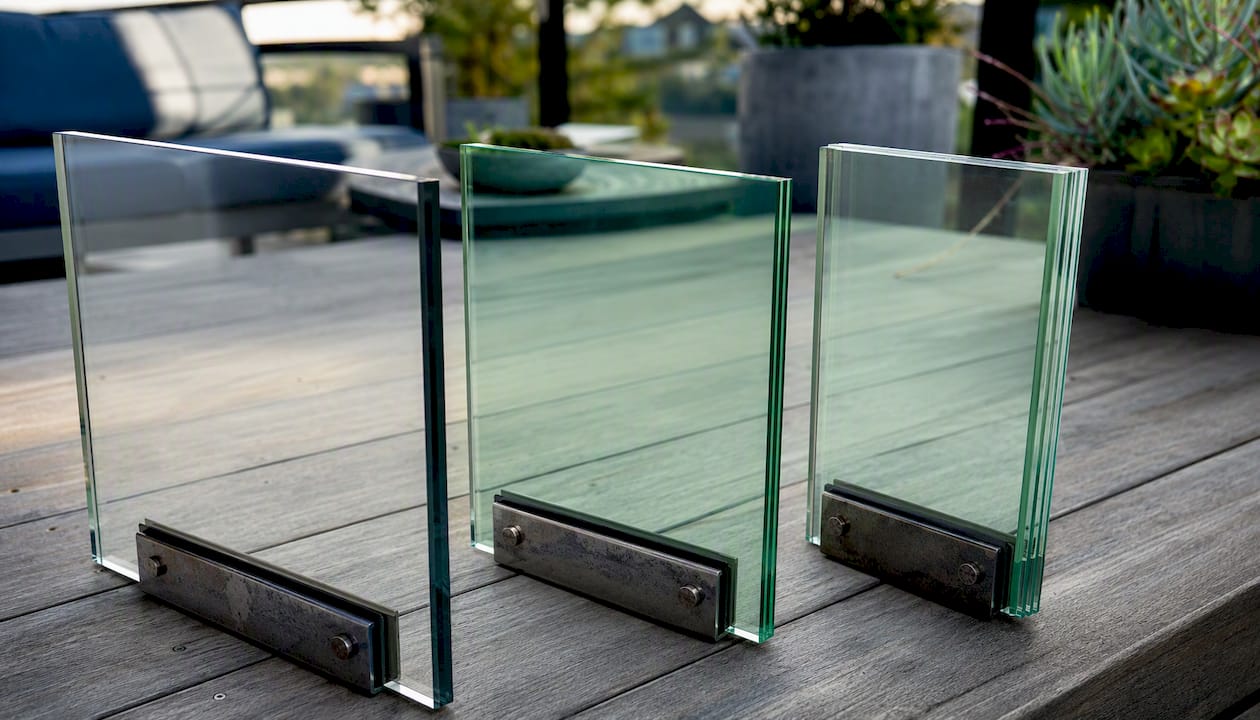
Hardware and system components often surprise buyers. Aluminum hardware costs less upfront but marine-grade stainless steel lasts significantly longer in wet or coastal environments, where salt air accelerates corrosion on standard alloys.
Mounting method changes both material and labor costs. Surface-mounted posts require solid blocking in the deck framing below. Fascia-mounted systems attach to the rim joist and can look cleaner, but they demand a structurally sound rim joist and precise layout. Spigot systems are the most common frameless approach and require accurate hole placement in concrete or wood.
According to INSO Supply’s glass railing guide, professional installation typically adds $50–$100+ per linear foot on top of material costs, with labor making up 20%–50% of the total job depending on complexity. Difficult site access, multi-level decks, and angled stair sections push labor toward the top of that range.
Other cost factors worth tracking:
- Permits: typically $150–$2,000 depending on municipality and project scope
- Shipping: glass panels are heavy and fragile; freight costs on a 20-LF order can run $200–$500
- Site prep and disposal: removing an old railing and reinforcing framing can add 10%–20% to the total on older decks
- Custom cuts: non-standard panel widths or angled stair panels carry a per-piece surcharge from most fabricators
Understanding how size, materials, and design complexity drive price helps you set a realistic budget before quotes arrive.
Glass Types, Hardware Materials, and How Each Affects Price and Performance
Choosing the right glass and hardware combination is where most buyers either save money or overspend without realizing it.
Tempered vs. Laminated vs. Low-Iron Glass
Tempered glass is the standard for residential railings. It’s heat-treated to be roughly four times stronger than annealed glass and shatters into small, relatively safe pieces on impact. Most residential codes accept 3/8-inch tempered for standard deck heights. Laminated glass bonds two panes with a plastic interlayer, so it holds together when broken rather than shattering. It costs more than tempered and is often specified for overhead applications or where falling glass is a concern. Low-iron glass removes the greenish tint visible on standard tempered panels when viewed at an angle, which matters most in frameless systems where the glass edge is visible.
Thickness: 3/8" vs. 1/2"
The glass type and panel dimensions directly affect both material cost and what hardware you can use. At 3/8 inch, most standard spigots and base shoes work fine for deck heights up to 42 inches. At 1/2 inch, you get a stiffer panel with more resistance to lateral load, which some local codes require for taller railings or commercial applications. The thicker panel also costs more to ship.
Hardware Materials
- Aluminum: lightest, least expensive, good for inland residential projects; anodized finishes hold up well in moderate climates
- Standard stainless steel (304 grade): stronger than aluminum, more corrosion-resistant, common in most residential installs
- Marine-grade stainless (316 grade): the right call within a mile or two of saltwater; costs more but resists pitting that 304 develops in coastal air
When Specialty Glass Meaningfully Increases Price
Curved panels, decorative laminated glass, and frosted or tinted tempered all require custom fabrication. A curved panel for a rounded deck corner can cost three to five times the price of a standard flat panel of the same area. If your design includes curves, budget for them explicitly rather than treating them as a minor add-on.
Frameless vs. Framed vs. Semi-Frameless: Which Costs More and Why
System type is the single biggest driver of per-linear-foot cost, and the visual difference between them is obvious from 50 feet away.
Framed systems use aluminum or steel posts at regular intervals with glass panels set between them. The frame does the structural work, so the glass can be thinner. These are the most affordable option, running roughly $150–$300 per linear foot installed for most residential projects.
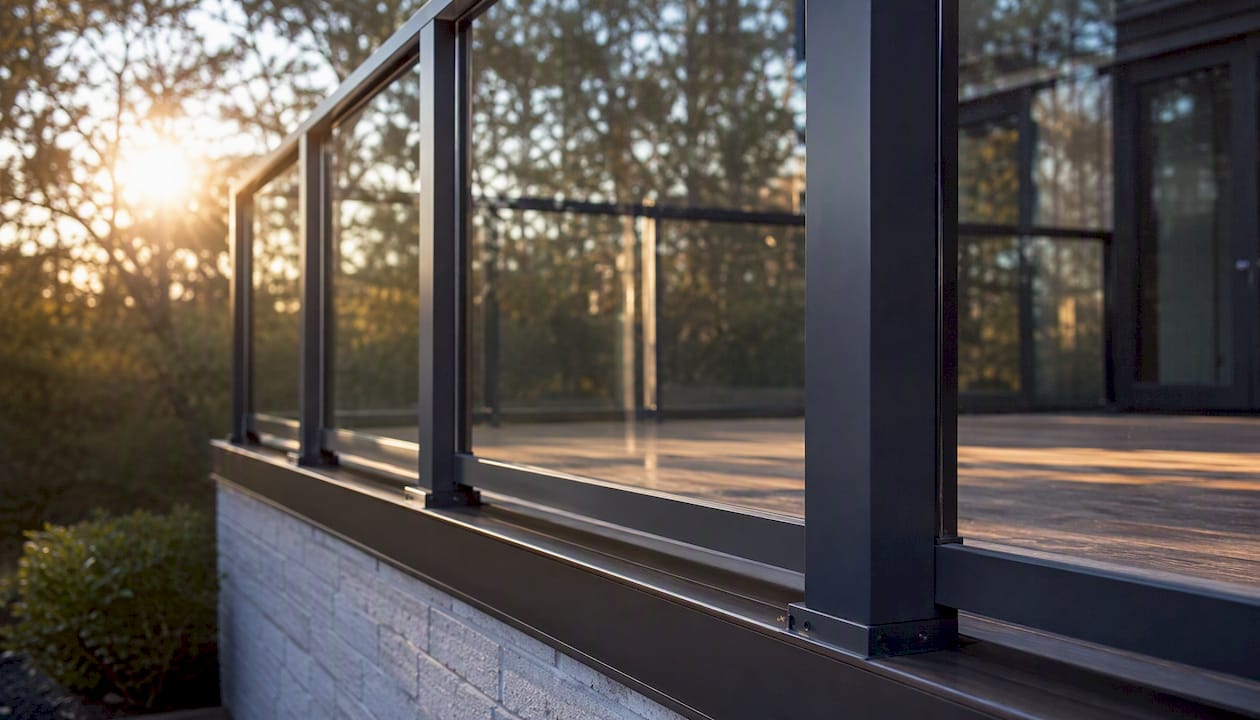
Semi-frameless systems use posts or standoffs at wider spacing, with the glass panels doing more of the load-sharing. The result is a cleaner look with less visible hardware. Installed costs typically run $250–$400 per linear foot, and they work well for standard deck and balcony applications where buyers want better sight lines without the full frameless price.
Frameless systems are the premium tier. Glass panels attach directly to the deck surface via spigots or a continuous base shoe, with no vertical posts interrupting the view. Nationwide installed costs for frameless systems commonly reach $300–$600+ per linear foot, with basic framed systems at the low end of the overall $150–$600 range. The higher price reflects thicker panels, precision hardware, and tighter installation tolerances.
Where hidden costs appear:
- Stair sections: angled panels require custom cuts; contractors typically charge a per-foot surcharge on stair runs
- Taller-than-code panels: anything above 42 inches (common for commercial or aesthetic reasons) requires custom panel heights and sometimes thicker glass
- Corner details: 90-degree and 180-degree transitions need specific connectors and precise panel sizing; errors here are expensive to fix
For a standard 20-foot deck railing with no stairs, semi-frameless is usually the best value. Frameless earns its premium when the view is the whole point of the deck.
Labor, Permits, Timeline, and DIY vs. Professional Installation
A professional installer on a straightforward deck railing typically requires one to two days on-site. Permit processing times vary by jurisdiction, sometimes adding days or weeks to the timeline. Consider this lead time in project planning before ordering materials.
Permits for glass railing projects commonly run $150–$2,000 depending on the municipality and project scope. In most jurisdictions, the contractor pulls the permit, but the homeowner is ultimately responsible for ensuring the work is inspected and approved. Skipping the permit is a real risk: unpermitted railings can complicate a home sale and may need to be removed or rebuilt to pass inspection later.
Labor as a share of total cost varies by system complexity. On simpler installations, labor represents a moderate portion of total cost; more complex systems with custom stair sections and difficult access can increase labor’s share significantly. Understanding local code requirements before you start helps avoid mid-project surprises that inflate labor hours.
DIY feasibility checklist:
- You have experience with power tools, level work, and reading structural drawings
- The deck framing is sound and you’ve confirmed blocking locations
- You’re installing a framed or semi-frameless system (not a frameless spigot system, which requires precise drilling into concrete or composite decking)
- Your municipality allows homeowner-pulled permits for this work
- You have at least one helper for panel handling
Red flags that require a pro:
- Stair sections with non-standard angles
- Fascia mounting on a rim joist you haven’t inspected
- Any coastal or high-wind zone with specific glass thickness requirements
- Frameless spigot systems in concrete
Pro Tip: Schedule your permit application before you order materials. Glass panels have lead times of two to four weeks from most fabricators. If your permit takes longer than expected, you’ll have panels sitting in your garage. Apply first, order second.
Sample Line-Item Estimate for a 20 Linear-Foot Deck Railing
This example assumes a semi-frameless system with 3/8-inch tempered glass, aluminum hardware, a 42-inch panel height, and a mid-range local labor rate. It reflects a typical suburban residential project.
This total sits near the middle of the $4,000–$10,000 range cited by Angi’s 2025 cost data. Upgrading to stainless steel hardware adds roughly $300–$500. Switching to a frameless system with 1/2-inch low-iron glass can push the total to $8,000–$10,000 for the same 20-foot run.
Maintenance Needs, Lifespan, Pros and Cons, and Resale Impact
Glass railings are lower maintenance than wood but not zero maintenance. The main task is cleaning: salt spray, pollen, and hard water leave deposits that obscure the view and, over time, can etch the glass surface if left untreated. A monthly wipe-down with a mild glass cleaner keeps panels clear. In coastal areas, rinse hardware with fresh water after heavy salt-air exposure.
Tempered glass panels, when properly installed and not subjected to impact, last 20–30 years or more. The hardware is usually the first thing to show wear. Marine-grade 316 stainless holds up for decades in coastal environments; standard 304 stainless may show surface pitting within 5–10 years near saltwater. Aluminum hardware in inland climates can last 15–20 years with basic care.
On resale, glass railings are generally viewed as a premium feature by buyers, particularly on decks with strong views. Conservative estimates suggest they can contribute to perceived home value, though the return varies significantly by market and buyer preference.
Pros:
- Unobstructed views from the deck
- Durable and weather-resistant when properly specified
- Low ongoing maintenance compared to wood or cable
- Modern aesthetic that appeals to a broad buyer pool
Cons:
- Higher upfront cost than wood, aluminum, or cable alternatives
- Glass can show fingerprints, water spots, and pollen quickly
- Frameless systems require precise installation; errors are costly to fix
- Tempered glass, while strong, can shatter from a sharp point impact
For buyers weighing view preservation against cost, semi-frameless systems hit the practical sweet spot.
How to Reduce Cost Without Sacrificing Safety or Style
The fastest way to cut glass deck railing cost is to design around standard panel sizes. Custom widths require fabrication time and a per-piece surcharge that adds up quickly on longer runs. Standard panel widths from most suppliers run 23–24 inches; plan your post spacing around those dimensions and you avoid custom cuts entirely.
A few more practical moves:
- Choose semi-frameless over frameless when the view matters but the budget is firm. The visual difference is smaller than the price difference.
- Select aluminum hardware for inland, low-humidity climates. The corrosion resistance of marine-grade stainless is worth paying for near the coast; inland, it’s often unnecessary.
- Bundle your order. Many suppliers, including Glassrailingstore, offer free shipping above $3,000 and volume pricing on larger orders. Combining panels and hardware in one order avoids multiple freight charges.
- Plan straight runs. Every corner transition requires custom connectors and precise panel sizing. A deck layout with fewer corners costs less to rail than one with multiple 90-degree turns.
- Consider phased installation. If budget is tight, install the primary deck perimeter now and add stair railings in a second phase. Most systems allow this without visible mismatches if you stay with the same product line.
- Ask about financing. Some suppliers and contractors offer payment plans or financing options that spread the cost over 12–24 months, making a frameless system accessible at a lower monthly outlay.
Pro Tip: Ask your installer whether they use dry or wet glazing. Dry glazing uses mechanical clamps and gaskets instead of sealant, which means no cure time and faster installation. On a 20-foot run, that difference can shave half a day off labor, which translates directly to savings on the invoice.
What to Bring to a Contractor and Common Red Flags in Quotes
Walking into a contractor meeting with the right information cuts quote time in half and makes it easier to compare bids apples-to-apples.
Measurements and photos to collect before the meeting:
- Total linear footage of each railing run (measure at the deck surface, not the top rail)
- Elevation changes and stair angles (use a digital angle finder for accuracy)
- Photos of the attachment surface: deck framing, rim joist, or concrete slab
- Existing railing photos if you’re replacing rather than building new
- Ceiling or overhead clearance if the railing terminates near a roof or pergola
Questions to ask every supplier and contractor:
- What glass spec are you quoting? (thickness, type, tempered vs. laminated)
- What hardware grade? (aluminum, 304 stainless, 316 marine-grade)
- What is the warranty on panels and hardware?
- What is the lead time for panels?
- Who pulls the permit, and is that cost included in this quote?
- Is shipping included, or is it a separate line item?
- Does the quote include disposal of the existing railing?
Red flags in estimates:
- No itemized pricing (a single lump-sum number with no breakdown)
- Vague glass specs (“tempered glass” with no thickness or grade listed)
- No permit or disposal line item
- A quote that comes in 40%+ below the others without a clear explanation
- No mention of inspection or code compliance
Understanding local building code requirements before you meet contractors also helps you catch specs that fall short of what your municipality requires. State-level code pages, like those for Utah and Virginia, show exactly what panel heights and hardware standards apply in those jurisdictions.
How Glassrailingstore Approaches Pricing, Products, and Support
Glassrailingstore carries a full range of tempered glass panels, stainless steel and aluminum hardware, connectors, cap rails, and accessories for residential and commercial projects. The product catalog covers standard panel sizes for framed, semi-frameless, and frameless systems, along with the hardware needed to complete each system type.
Pricing is presented transparently by product line: panels are listed per panel with dimensions and glass spec clearly stated, hardware is sold as individual line items so you can build a precise material list, and shipping is free on orders over $3,000. That threshold is reachable on most 20-foot-plus projects when panels and hardware are ordered together.
For homeowners and builders who want help before ordering, Glassrailingstore offers quote and planning support. The team can help you calculate panel counts, identify the right hardware grade for your climate, and flag any spec issues before materials ship.
Key offerings:
- Tempered safety glass panels in standard and custom sizes
- Marine-grade stainless steel and aluminum hardware
- Connectors, base shoes, spigots, cap rails, and wall connectors
- Wholesale pricing and volume discounts for larger projects
- Free shipping on orders over $3,000
- Planning and quote support for both DIY and contractor-led installs
What Frameless Glass Railing Really Costs You, Beyond the Price Tag
The conventional wisdom is that frameless is the premium choice and framed is the budget choice. That framing is accurate but incomplete, and it leads a lot of buyers to make the wrong call in both directions.
Frameless systems are worth the premium when the view is genuinely the point of the space. A deck overlooking a lake, a mountain range, or a city skyline loses something real when vertical posts interrupt the sightline every four feet. In those situations, the extra $150–$200 per linear foot is not a luxury. It’s the difference between a deck that delivers on its promise and one that doesn’t.
Where frameless is often oversold is on decks with no particular view, or where the deck faces a fence or a neighbor’s wall. Buyers sometimes choose frameless because it looks better in showroom photos, then live with a maintenance reality they didn’t anticipate: every fingerprint and water spot is visible on a panel with no frame to draw the eye away from it. Semi-frameless panels in the same situation look nearly as open and are easier to keep looking clean.
The contractor mistake I see most often in project planning is underestimating stair sections. Buyers budget the deck perimeter accurately, then discover that a single stair run adds $800–$1,500 to the total because of custom panel cuts and the extra labor for angled installation. Get a separate line-item quote for every stair section before you commit to a total budget.
The real tradeoff is not frameless vs. framed. It’s view vs. maintenance burden vs. upfront cost, and the right answer depends on what the deck actually looks out onto.
Glassrailingstore Makes It Straightforward to Price and Order Your Railing
Skipping the contractor markup on materials is one of the most direct ways to bring glass deck railing cost down without cutting corners on quality. Glassrailingstore sells tempered glass panels and complete hardware kits directly to homeowners and builders at wholesale-friendly pricing, with free shipping on orders over $3,000.
Whether you’re pricing a 10-foot balcony or a 50-foot deck perimeter, the planning team can help you build an accurate material list, confirm the right glass spec for your local code, and identify where a building cost analysis might reveal additional savings in your overall project. Orders ship with detailed installation resources, and the quote service is available before you commit to anything. Visit Glassrailingstore to get a quote or browse panels and hardware by system type.
Sources
- How Much Does a Glass Railing Cost to Install? 2025 Data
- Glass railing prices — HomeAdvisor
- Glass Railing Cost Guide 2026