

Self-Closing Gate Hardware: A Homeowner's Guide
Self-closing gate hardware is any mechanical device that returns a gate to its closed position automatically after someone passes through, without requiring a manual push or pull. The category covers spring-loaded hinges, hydraulic closers, and gravity-based mechanisms, each designed to eliminate the single most common gate failure: a gate left open by accident. Products like TruClose and SureClose from D&D Technologies are the most recognized names in residential and pool gate applications. For homeowners with pools, young children, or pets, automatic gate closure removes the need to remember to close the gate, which significantly reduces safety breaches and liability exposure.
What Are the Main Types of Self-Closing Gate Hardware?
Three main mechanisms drive the self-closing gate hardware market: spring-loaded hinges, hydraulic closers, and gravity-based hinges. Each works differently, costs differently, and suits different gate types.
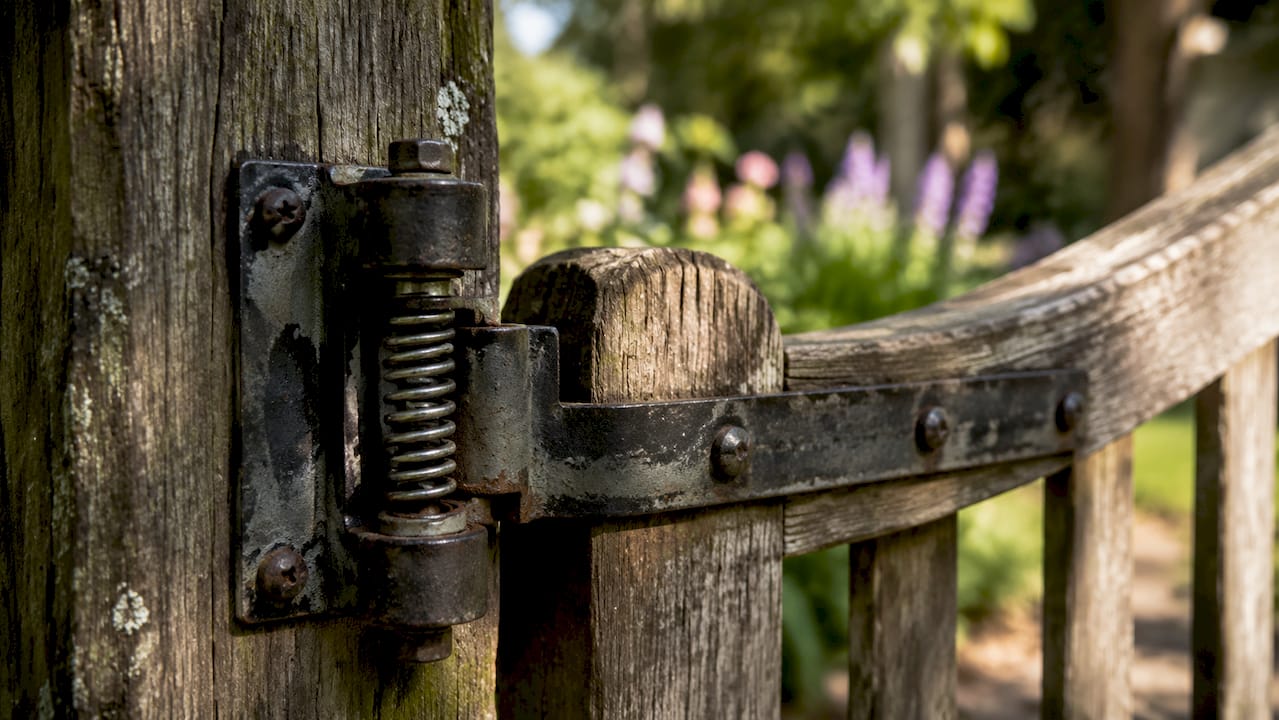
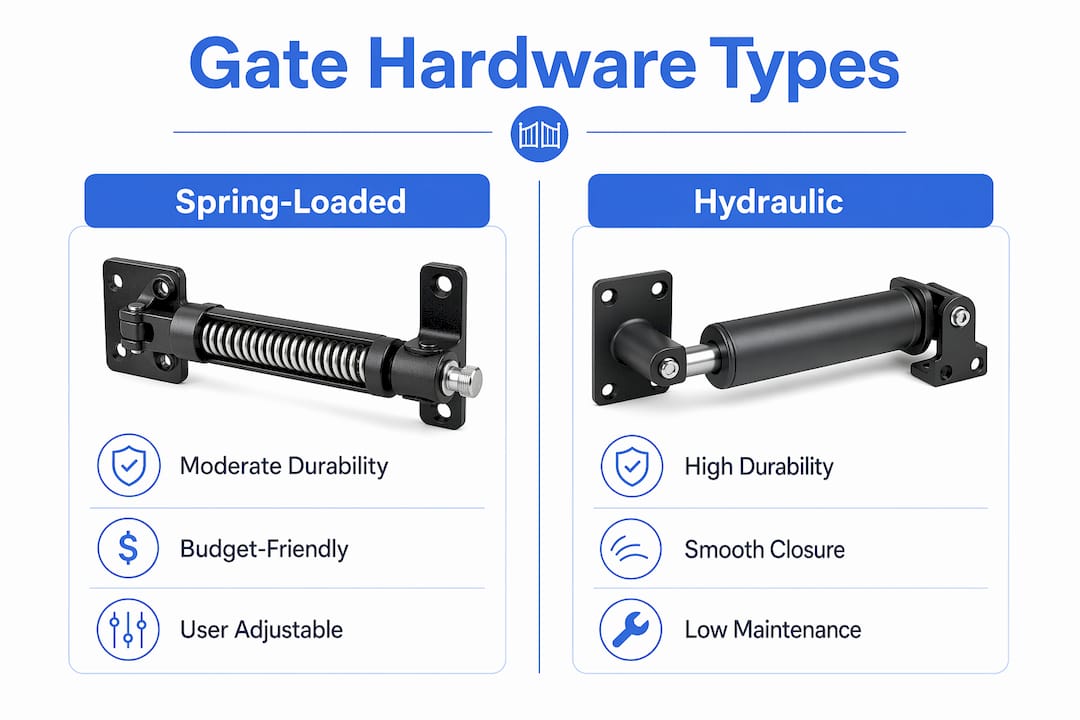
Spring-Loaded Hinges use a coiled spring inside the hinge barrel. You adjust tension manually with a hex key or a swing arm to control how forcefully the gate returns. They are the most affordable option and work well on lightweight wood or vinyl gates. The downside is that tension drifts over time, especially on timber gates that swell and settle with the seasons.
Hydraulic Closers use oil-filled cylinders to deliver smooth, speed-controlled closure. Products like the Waterson closer feature adjustable closing speed and a final snap action that pulls the gate firmly into the latch regardless of wind interference. This technology is the industry standard for pool gates and ADA-compliant installations because it prevents slamming while guaranteeing secure latching on every cycle.
Gravity Hinges rely on the gate’s own weight and a tilted hinge pin to pull the gate shut. They have no moving parts beyond the hinge itself, which makes them nearly maintenance-free. They work best on heavy steel or iron gates and perform poorly on lightweight panels that lack the mass to overcome wind resistance.
| Type | Durability | Cost | Maintenance | Best Use |
|---|---|---|---|---|
| Spring-Loaded Hinge | Moderate | Low | Periodic tension reset | Wood, vinyl, light gates |
| Hydraulic Closer | High | Medium–High | Minimal; oil sealed | Pool gates, ADA applications |
| Gravity Hinge | High | Low–Medium | Very low | Heavy steel or iron gates |
The right choice depends on your gate’s weight, your local climate, and whether you need to meet a specific safety code. For most residential pool gates, hydraulic closers are worth the extra cost because they deliver consistent performance without frequent adjustment.
Which Materials Work Best for Outdoor Gate Hardware?
Material selection determines how long your hardware lasts, especially in harsh outdoor environments. The wrong choice can mean hardware failure within one to two years.
The top-performing materials for outdoor self-closing gate hardware installations are:
-
316-grade stainless steel: Resists chlorine and salt spray better than 304 stainless steel. The preferred choice for pool gates and coastal installations where salt air accelerates corrosion.
-
Hot-dip galvanized steel: A cost-effective alternative for non-coastal areas. The thick zinc coating bonds to the steel surface and resists rust for years under normal weather exposure.
-
Powder-coated steel: Acceptable for covered or low-humidity locations. Avoid it for pool surrounds or coastal yards. Scratches in the coating allow moisture to reach bare steel, and degradation begins quickly.
- Pot metal (zinc alloy castings): Found in budget hardware. Pot metal degrades within one to two years outdoors and should be avoided entirely for safety-critical gates.
Pro Tip: Never mix metals in the same gate installation. Combining stainless steel screws with aluminum brackets, for example, creates galvanic corrosion that eats through both materials faster than either would corrode alone. Use fasteners and hardware from the same metal family throughout.
For pool gates specifically, chlorine exposure is the deciding factor. Standard 304 stainless steel handles most outdoor conditions, but pool chemistry accelerates pitting corrosion in that grade. Spending a little more on 316-grade hardware pays off in a gate that still functions correctly five years from now without replacement. Glassrailingstore stocks marine-grade stainless steel hardware for exactly this reason.
How Do You Select and Install Self-Closing Gate Hardware Correctly?
Correct selection starts before you buy anything. Matching glass railing hardware to your specific gate prevents the two most common installation failures: a gate that slams shut and one that fails to latch.
Follow these steps to get it right:
-
Measure your gate’s weight and dimensions. Every hinge and closer is rated for a maximum gate weight. Exceeding that rating causes premature wear and unreliable closure. Measure height, width, and thickness, and weigh the gate if possible.
-
Identify your mounting surface. Wood posts, metal frames, and masonry walls each require different brackets and fastener types. Confirm the hardware you choose includes the correct mounting option or sells compatible brackets separately.
-
Check the gap between gate and post. Most self-closing hinges require a specific gap, typically 3/8 inch to 1/2 inch, for proper operation. Too tight and the gate binds; too wide and the latch misses the strike plate.
-
Pair your closer with a self-latching mechanism. Installing self-closing hardware without a rated self-latching latch results in a gate that swings shut but does not stay closed. The latch must be rated for the gate’s weight and mounted on the correct side per local code.
- Adjust tension or closing speed after installation. Set the tension low first, then increase gradually until the gate closes fully from a 90-degree open position without slamming. Test from multiple angles, including a 12-inch-open position, which is the minimum required under California pool gate code.
Pro Tip: Before ordering, send your supplier a photo of the gate and post along with your rough measurements. Suppliers like those at Glassrailingstore can confirm the correct hinge type and bracket configuration before you commit to a purchase, which saves a return trip and a second installation.
Adjustable hinges are particularly important for timber gates because wood swells in summer and contracts in winter. A hinge with hex-key tension adjustment lets you fine-tune closure force seasonally without replacing hardware. Industry experts confirm this is not a one-time setup. Plan to check and adjust tension at least once a year.
What Safety Codes Does Self-Closing Gate Hardware Help Meet?
Self-closing gate hardware is not just a convenience feature. For pool gates, it is a legal requirement in most U.S. states.
California sets one of the clearest standards. California Health and Safety Code 115922 requires all swimming pool barrier gates to be both self-closing and self-latching. The gate must close and latch automatically from any position as narrow as 12 inches from the gate post. The gate must also open outward, away from the pool, and the opening force must not exceed 5 pounds to comply with ADA requirements.
The International Residential Code (IRC) and International Building Code (IBC) carry similar requirements at the national level. These codes specify maximum closing force, minimum closing speed, and latch positioning rules that restrict access from the pool side.
| Code or Standard | Requirement | Hardware Implication |
|---|---|---|
| California HSC 115922 | Self-closing and self-latching from 12-inch position | Hydraulic or spring closer with rated latch |
| ADA | Max 5 lbs opening force | Hydraulic closer with adjustable speed |
| IRC Section R326 | Gate opens away from pool | Hinge orientation and latch side matter |
| IBC | Latch on pool side, 54 inches min height | Latch placement and hardware height |
Self-closing pool gates with adjustable hydraulic hardware are the most reliable way to meet these overlapping requirements. The adjustable closing speed satisfies ADA force limits, while the final snap action satisfies the self-latching requirement. For commercial properties or public pools, consult your local building department to confirm which code edition applies, since adoption varies by jurisdiction.
Understanding building code compliance before you buy hardware prevents costly retrofits after a failed inspection.
Key Takeaways
Self-closing gate hardware is the most reliable way to prevent accidental gate failures, and hydraulic closers with adjustable tension are the best choice for pool gates and code-sensitive installations.
| Point | Details |
|---|---|
| Three core mechanism types | Spring, hydraulic, and gravity closers each suit different gate weights and environments. |
| Material matters most outdoors | Use 316-grade stainless steel or hot-dip galvanized steel; avoid pot metal and basic powder-coated steel. |
| Pair closer with a latch | A self-closing hinge without a self-latching mechanism does not satisfy safety codes or prevent accidents. |
| Measure before you buy | Gate weight, post gap, and mounting surface determine which hardware fits and functions correctly. |
| Code compliance is mandatory | California HSC 115922, ADA, and IRC all require specific closing force, speed, and latch positioning for pool gates. |
Why I Think Most Homeowners Underestimate This Hardware
After working with gate hardware across dozens of residential projects, the pattern I see most often is this: homeowners spend carefully on the gate itself and then grab the cheapest hinges available. That decision reverses the logic entirely. The gate is passive. The hardware is what makes it work.
The second mistake I see constantly is skipping the self-latching component. A gate that swings shut but bounces back open because the latch is misaligned or undersized is worse than no closer at all. It creates a false sense of security. Latch-to-hinge reliability matters more than how the hardware looks.
Adjustable hardware is not optional for timber gates. Wood moves. A gate that closes perfectly in October may hang open in July if the hinge tension was set for dry-season conditions. I recommend checking tension every spring and fall as part of basic home maintenance, the same way you check smoke detectors.
The one thing I tell every homeowner who asks: buy the best hydraulic closer your budget allows, pair it with a code-rated latch, and use 316 stainless steel fasteners throughout. You will not touch it again for years. Cheap hardware costs more in the long run because you replace it, re-install it, and deal with the liability gap in between.
— Fuanne
How Glassrailingstore Supports Safe Gate Installations

Glassrailingstore carries glass gate panels and hardware designed to work with self-closing mechanisms right out of the box. The gate panels pre-holed for hinges and latches eliminate the most error-prone step in DIY gate installation: drilling through tempered glass. Every panel is made from tempered safety glass and paired with marine-grade stainless steel hardware that meets pool safety and ADA requirements. If you need a complete gate solution that is already sized and code-ready, the glass railing gate latch options at Glassrailingstore are rated for outdoor use and compatible with the hydraulic and spring closers covered in this article. Browse the full selection or request a quote to get hardware matched to your specific gate dimensions.
FAQs
1. What is self-closing gate hardware exactly?
Self-closing gate hardware is any mechanical device, including spring hinges, hydraulic closers, or gravity hinges, that automatically returns a gate to its closed position after it is opened. It eliminates the need for manual closure and is required by law for most residential pool gates.
2. Do self-closing gates also self-latch?
Not automatically. Self-closing hardware controls the swing of the gate, but a separate self-latching mechanism is required to keep it securely closed. Installing both together is mandatory under California pool gate code and most other residential safety standards.
3. How often should i adjust self-closing gate hardware?
Check and adjust tension or closing speed at least once a year, ideally in spring and fall. Timber gates require more frequent adjustment because wood swells and contracts with seasonal moisture changes, which shifts the gate’s weight and alignment.
4. Which type of self-closing hardware is best for a pool gate?
Hydraulic closers are the best choice for pool gates. They provide smooth, speed-controlled closure that satisfies ADA opening force limits and deliver a final snap action that guarantees secure latching on every cycle, even in windy conditions.
5. What metal should i use for outdoor self-closing gate hardware?
316-grade stainless steel is the top choice for pool surrounds and coastal environments because it resists chlorine and salt spray better than any other common option. Hot-dip galvanized steel is a solid alternative for inland, non-pool applications.