
Railing Finishing Options List for Homeowners
Railing finishing options are specialized coatings and treatments applied to railing surfaces to protect them from weather, wear, and corrosion while improving their appearance. The most effective railing finishing options list includes powder coating, penetrating oils, spar varnish, polyurethane finishes, and hardwax oils. Each finish type serves a different combination of material, climate, and maintenance preference. Brands like Fairview Architectural and products like Osmo hardwax oils have set the benchmark for what premium railing finishing looks like in residential and commercial applications.
Powder Coating for Metal Railings
Powder coating creates a durable, uniform finish on metal railings through an electrostatic spray process followed by heat curing. The result is a continuous, hard coating layer that resists corrosion, chips, and fading far better than standard liquid paint. You get a wide range of gloss levels and colors, making it the go-to choice for aluminum and steel railings on decks, balconies, and staircases.
The biggest advantage of powder coating is longevity. A properly applied powder coat on exterior metal railings can last 15–20 years with minimal upkeep. For homeowners and property managers who want a set-it-and-forget-it finish, this is the most practical option on the list.
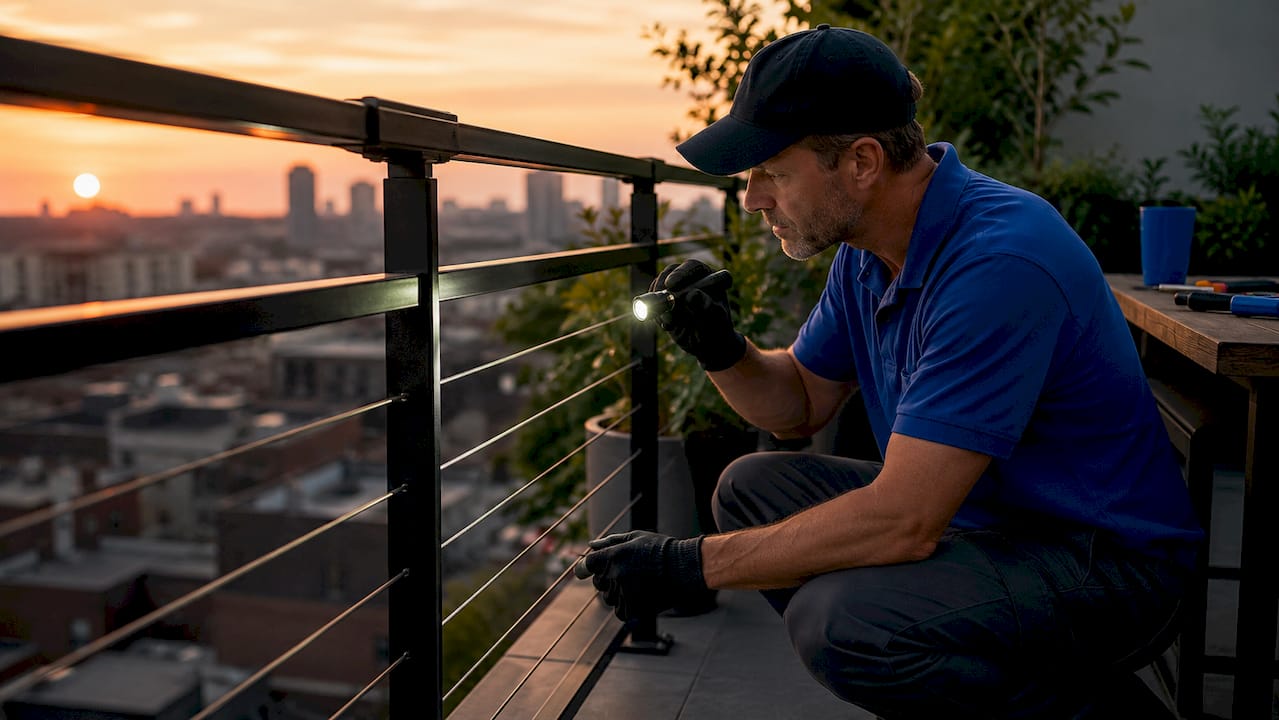
Pro Tip: Ask your fabricator whether their powder coat meets AAMA 2605 standards. AAMA 2605 compliant coatings provide the highest resistance to fading, cracking, and chalking for architectural railings, which means decades of reliable performance without recoating.
2. Penetrating Oils for Wood Railings
Penetrating oils, including tung oil and Danish oil, soak into wood fibers rather than sitting on the surface. This creates a natural, matte look that highlights wood grain while providing moisture resistance from within. The finish feels like bare wood to the touch, which many homeowners prefer for handrails and deck railings.
The trade-off is maintenance frequency. Penetrating oil costs around $25 per quart and requires reapplication every year for outdoor wood railings. That annual schedule sounds like work, but each reapplication takes less than an hour on a standard deck railing section. The process is also forgiving since you simply wipe on a fresh coat without stripping the old one.
Penetrating oils work best on open-grain woods like teak, oak, and cedar. They are not the right choice for dense, closed-grain species where absorption is limited.
3. Spar Varnish for Outdoor Wood
Spar varnish is the standard exterior wood finish for railings exposed to direct sun and rain. It forms a hard, flexible film on the wood surface that resists UV radiation and moisture penetration. The flexibility matters because outdoor wood expands and contracts with temperature changes, and a rigid finish would crack under that movement.
Spar varnish runs about $35 per quart and holds up for roughly two years before reapplication is needed. That makes it more cost-effective over time than annual oil treatments. The finish produces a glossy, amber tone that deepens the color of most wood species, which works well on cedar and redwood railings.
The downside is application complexity. Spar varnish requires thorough surface preparation and multiple thin coats, with sanding between each layer. Skipping prep steps leads to peeling within the first season.
4. Oil-Based Polyurethane for Durability
Oil-based polyurethane is the toughest film-forming finish available for wood railings. It builds a thick, hard surface layer that resists scratches, moisture, and heavy foot traffic on stair railings and handrails. The finish adds a warm amber tone to wood, which enhances the look of oak, walnut, and maple.
Oil-based polyurethane costs around $30 per quart and lasts 5–10 years indoors. Outdoors, UV exposure shortens that lifespan unless you choose a formula with UV inhibitors. The main drawback is yellowing over time, which becomes noticeable on lighter wood species like maple or pine.
Application requires patience. Oil-based poly takes longer to dry between coats, and working in a well-ventilated area is non-negotiable due to strong fumes.
5. Water-Based Polyurethane for Indoor Railings
Water-based polyurethane dries in about two hours compared to the much longer cure time of oil-based formulas. It produces a clear, non-yellowing finish that preserves the natural color of wood. Low odor and easy soap-and-water cleanup make it the practical choice for interior stair railings and handrails.
Water-based poly costs around $28 per quart and holds up for about four years on indoor railings. It is not as tough as oil-based formulas under heavy impact, but for interior applications where UV exposure is minimal, it performs reliably. The faster dry time also means you can apply multiple coats in a single day.
6. Hardwax Oils for High-Traffic Areas
Hardwax oils are an emerging favorite in the railing finishing options list, particularly for high-touch surfaces like handrails and stair balusters. They combine penetrating oil with a thin wax layer, creating a finish that is both protective and easy to repair. Unlike film-forming finishes, hardwax oils do not peel or crack. Damaged spots can be touched up without stripping the entire surface.
Hardwax oils apply 40% faster than traditional polyurethane systems, making them a strong choice for large railing projects. Osmo Polyx-Oil is the most recognized product in this category and is widely used in residential and commercial settings. The finish produces a natural, low-sheen appearance that suits both modern and traditional railing designs.
Pro Tip: Hardwax oils are the best option when you want a finish that looks great and stays manageable over years of use. A premium finish does not always mean the highest gloss or cost. Hardwax oils balance durability with ease of maintenance better than most alternatives.
7. Marine-Grade Finishes for Coastal Environments
Marine-grade finishes are formulated for the harshest outdoor conditions, including salt air, high humidity, and intense UV exposure. They are the correct choice for railings on coastal properties, pool decks, and waterfront balconies. Marine-grade finishes and 316-grade stainless steel bases offer the highest durability for exterior railings in these environments.
Standard finishes fail quickly in salt air because the salt accelerates corrosion and breaks down coating adhesion. Marine-grade formulas use higher concentrations of UV absorbers and flexible resins to handle constant environmental stress. For metal railings in coastal zones, pairing a marine-grade topcoat with a zinc-rich primer adds a second layer of corrosion protection.
Comparing Railing Finish Types at a Glance
The table below gives you a quick reference for selecting railing finishes based on your priorities.
| Finish type | Durability | Reapplication | Cost per quart | Best use case |
|---|---|---|---|---|
| Powder coating | 15–20 years | Rarely needed | Varies by fabricator | Metal railings, exterior |
| Penetrating oil | 1 year | Annual | ~$25 | Wood, natural look |
| Spar varnish | 2 years | Every 2 years | ~$35 | Outdoor wood, UV exposure |
| Oil-based polyurethane | 5–10 years | Every 5–10 years | ~$30 | Indoor wood, high durability |
| Water-based polyurethane | 4 years | Every 4 years | ~$28 | Indoor wood, clear finish |
| Hardwax oil | 3–5 years | Spot repair as needed | ~$40 | High-touch wood surfaces |
| Marine-grade finish | 3–5 years | Every 3 years | ~$45+ | Coastal, poolside, exterior |
Pro Tip: When selecting railing finishes for outdoor use, always check whether the product is rated for your specific climate zone. A finish rated for humid subtropical conditions may underperform in a dry desert environment.
How to Choose the Right Finish by Material and Climate
Selecting the right finish starts with knowing your railing material and where it lives.
For wood railings, the species and moisture content of the wood determine which finish will adhere properly. Wood moisture content should be 6–8% indoors and 10–12% outdoors before any finish is applied. Finishing wood that is too wet causes adhesion failure, peeling, and cracking within months. Use a moisture meter before you open any can of finish.
For metal railings, powder coating is the standard choice for aluminum and mild steel. Stainless steel railings, particularly 316-grade hardware used in marine environments, often require no coating at all. When a finish is needed on stainless steel, a clear lacquer or wax-based product preserves the metal’s appearance without interfering with its natural corrosion resistance. You can learn more about choosing railing suppliers who stock the right hardware for your finish type.
For composite railings, manufacturer-approved paints or solid-color stains are the correct approach. Most composite manufacturers void warranties if unapproved finishes are applied, so check the product documentation before purchasing any coating.
Climate factors to consider:
-
Coastal and humid zones: Use marine-grade finishes or powder coating with a zinc primer. Salt air degrades standard finishes within one season.
-
High UV regions: Choose finishes with built-in UV inhibitors. Spar varnish and marine-grade formulas are designed for this.
-
Freeze-thaw climates: Flexible finishes like spar varnish handle wood movement better than rigid film-forming products.
- Dry, arid climates: Penetrating oils work well here since low humidity reduces the risk of moisture-related adhesion problems.
For glass railing systems, the hardware finish matters more than the glass itself. Read the weatherproof railing features guide from Glassrailingstore to understand how hardware coatings affect long-term performance.
Application Tips and Mistakes to Avoid
Getting the finish right depends as much on preparation as on the product itself.
-
Measure moisture before finishing. Use a pin-type moisture meter on wood railings. Finishing over wet wood is the single most common cause of premature finish failure.
-
Sand to 220 grit before the final coat. Sanding with 220 grit and using HVLP sprayers produces even, drip-free coats on curved railing parts. Hand-sanding works for flat surfaces, but a sprayer saves time on complex profiles.
-
Apply thin coats. Three to four coats at 3–4 mils thickness each produce a stronger finish than one thick application. Thick coats trap solvents and lead to bubbling or wrinkling.
-
Test on scrap material first. Testing marine-grade finishes on scrap pieces in the actual environment validates expected durability before you commit to the full railing. This step takes one afternoon and can save you from a full restrip job.
-
Allow full cure time before use. Dry to the touch is not the same as cured. Oil-based polyurethane needs 30 days to reach full hardness. Using a railing before it cures leaves fingerprints, dents, and marks that are difficult to remove.
- Clean the surface with a degreaser before any finish. Oils from hands, construction debris, and mill glaze on new lumber all prevent proper adhesion. Wipe down every surface with a clean cloth and appropriate solvent before the first coat.
Understanding building code compliance for railings also affects finish selection, particularly for commercial properties where surface treatments must meet specific safety standards.
Key Takeaways
The most durable and cost-effective railing finish depends on your material, climate, and how much maintenance you are willing to do each year.
| Point | Details |
|---|---|
| Match finish to material | Wood, metal, and composite railings each require different finish types for proper adhesion. |
| Climate drives selection | Coastal and high-UV environments demand marine-grade or AAMA 2605-rated finishes. |
| Moisture content matters | Wood must be 6–8% moisture indoors and 10–12% outdoors before any finish is applied. |
| Hardwax oils for high-touch spots | They apply faster than polyurethane and allow spot repairs without full stripping. |
| Test before full application | Always test your chosen finish on scrap material in the actual environment first. |
What I Have Learned from Years of Watching Finishes Fail
The most common mistake I see homeowners make is choosing a finish based on price per quart rather than total cost over five years. A $25 penetrating oil sounds cheap until you factor in annual reapplication, labor, and the occasional full strip when the wood absorbs too much moisture between coats. A $40 hardwax oil applied once and touched up as needed often costs less over a decade.
I have also noticed that people underestimate how much climate matters. A finish that performs perfectly in Atlanta will fail in two seasons on a Cape Cod deck. The salt air does not just corrode metal. It breaks down the binders in film-forming finishes, causing them to flake from the edges inward. Marine-grade products exist for a reason, and skipping them to save $10 per quart is a decision most coastal homeowners regret.
My personal preference for residential handrails and stair railings is hardwax oil. The spot-repair capability alone justifies the slightly higher upfront cost. When a section of railing gets scratched or worn, you treat that section without touching the rest. With polyurethane, a bad scratch often means sanding the entire surface and starting over.
One more thing: do not skip the moisture meter step. I have seen brand-new wood railings fail within a single winter because the lumber was finished before it dried to the correct moisture level. That is a preventable problem, and a $20 moisture meter eliminates it entirely.
— Fuanne
Glassrailingstore’s Approach to Finish-Ready Railing Systems

Glassrailingstore builds its glass railing systems around marine-grade 316 stainless steel hardware that arrives finish-ready and corrosion-resistant from day one. Every panel goes through engineering testing to verify structural performance under real-world load conditions, so you are not guessing about durability. The tempered glass panels require no surface finish at all, which removes one variable from your project entirely. For homeowners and property managers who want a railing system that meets building codes and holds up without annual recoating, Glassrailingstore’s custom glass railing options are worth a close look. The hardware finishes are backed by a no-rust promise that covers the life of the product.
FAQs
1. What is the most durable finish for outdoor wood railings?
Spar varnish and oil-based polyurethane with UV inhibitors are the most durable film-forming finishes for outdoor wood railings. For high-touch surfaces, hardwax oils offer easier long-term maintenance with comparable protection.
2. How often do railing finishes need to be reapplied?
Reapplication frequency depends on the finish type. Penetrating oils need annual reapplication, spar varnish lasts about two years, and oil-based polyurethane holds for 5–10 years indoors.
3. Does powder coating work on all metal railings?
Powder coating works on aluminum and mild steel railings and is the standard choice for exterior metal applications. Stainless steel railings typically do not require powder coating because the metal resists corrosion on its own.
4. What moisture level should wood be before finishing?
Wood should measure 6–8% moisture content for indoor railings and 10–12% for outdoor railings before any finish is applied. Finishing over wetter wood causes adhesion failure and early peeling.
5. Are there finishes that meet building code standards?
Yes. Finishes meeting the AAMA 2605 standard provide verified resistance to fading, cracking, and chalking for architectural railings. Check local building codes for specific requirements, particularly for commercial properties.
Recommended
- How to Plan Balcony Railing: a Homeowner’s Guide – The Glass Railing Store
- Weatherproof Glass Railing Features: A Homeowner’s Guide – The Glass Railing Store
- Railing Corner Installation Guide for DIY Homeowners – The Glass Railing Store
- Glass Balustrade Feature List: What Homeowners Need to Know – The Glass Railing Store