

Glass Railing Edge Treatments List: 2026 Guide
Glass railing edge treatments are the finishing techniques applied to glass edges to improve safety, durability, and visual appeal in railing systems. The industry recognizes eight standard edge finishes for balustrades: seamed, ground, polished, bullnose, beveled, pencil/C-edge, 2.5D, and stepped. Standards like ASTM C1036 and ASTM C1048 govern the base glass quality that makes these treatments effective. Glassrailingstore supplies tempered glass panels and hardware designed to work with all eight finishes, giving homeowners, contractors, and architects a single source for complete railing solutions.
1. The Complete Glass Railing Edge Treatments List
The eight treatments below cover the full range of options you will encounter when specifying or installing a glass balustrade. Each finish is produced by a different fabrication process, and each delivers a distinct combination of safety, cost, and visual character.
Seamed Edge
A seamed edge removes the sharpest points from a cut glass edge using a light abrasive pass. The result is not smooth or refined, but it is safe and cost-effective for applications where the edge stays hidden inside a channel or frame. Seamed edges are the lowest-cost option on this list. Use them when budget matters and the edge will not be visible or touched.
Ground Edge
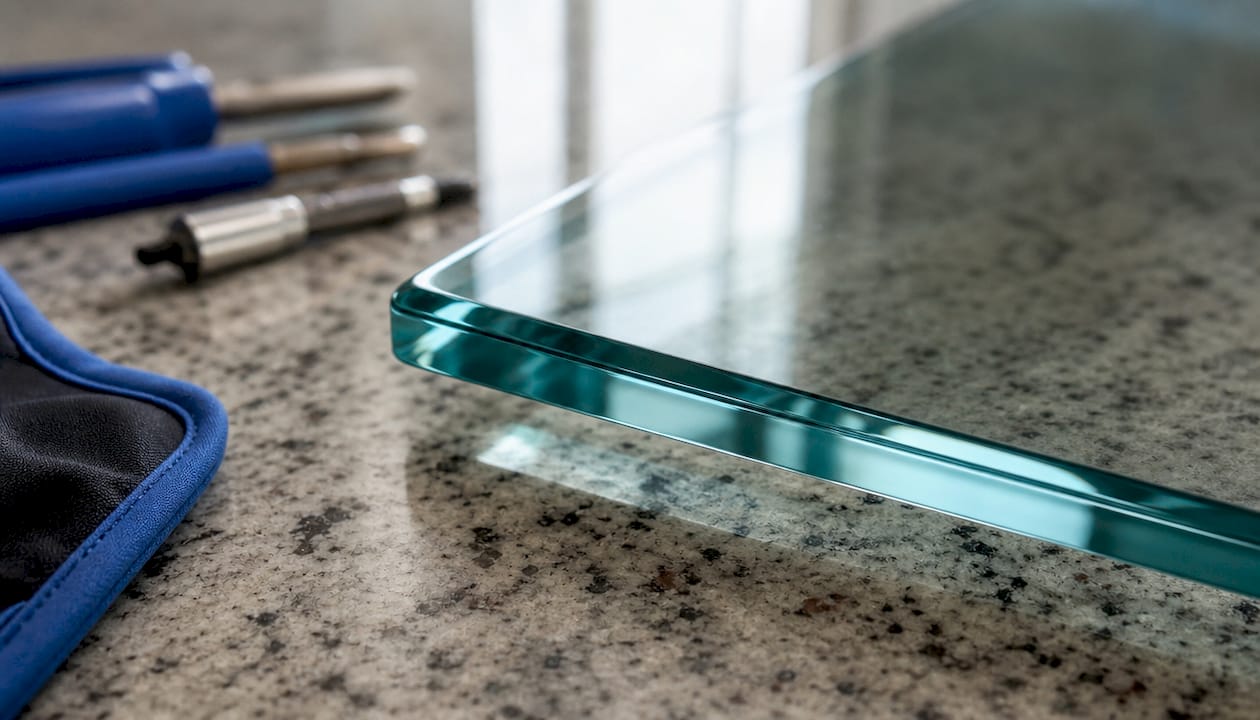
A ground edge uses a coarse grinding wheel to flatten and smooth the raw cut. The surface feels matte and slightly rough to the touch. Ground edges cost more than seamed but less than polished, and they work well in utilitarian outdoor settings where clarity of the edge profile is secondary to function.
Polished Edge
A polished edge starts with grinding and finishes with progressive buffing until the edge becomes clear and glass-smooth. Polished edges reduce micro-cracks that cause stress concentration points, which directly improves glass durability in outdoor or high-load environments. This is the most popular finish for exposed edges on residential decks and balconies. The clarity also makes the glass look thicker and more refined.
Bullnose Edge
A bullnose edge rounds the entire thickness of the glass into a smooth, convex curve. The fabrication requires more passes on the grinding wheel than a standard polish. Bullnose edges eliminate any corner that could cause injury, making them a top choice for pool fences and low-level deck railings where children are present. The rounded profile also catches light softly, adding a subtle decorative quality.
Beveled Edge
A beveled edge cuts the glass at an angle, typically between 15 and 45 degrees, creating a flat angled face along the edge. Beveled edges create a prism-like visual effect by reflecting light and help distribute impact to improve resistance to edge breakage. That dual benefit, aesthetic and structural, makes beveled edges one of the most specified finishes in high-end residential and commercial projects. The angled face also adds perceived depth to the glass panel.
Pencil/C-Edge
A pencil edge, also called a C-edge, applies a small radius to both the top and bottom corners of the glass edge, producing a gentle curve that resembles the cross-section of a pencil. The treatment is faster and cheaper than a full bullnose. Pencil edges are common on interior glass railings and stair balustrades where a clean, finished look is needed without the cost of a polished bullnose.
2.5D Edge
A 2.5D edge combines a flat polished face with chamfered corners, creating a profile that sits between a standard polish and a full bevel. The name refers to the partial three-dimensional quality of the finished edge. This treatment is gaining traction in 2026 for modern frameless railings because it offers a refined look at a lower fabrication cost than a full bevel.
Stepped Edge
A stepped edge creates multi-level profiles by machining two or more flat surfaces into the edge at different depths. This profile is used when hardware must sit flush against the glass without protruding. Stepped edges are favored in custom architectural projects and commercial installations where standard hardware profiles do not fit the design intent.
Pro Tip: Ask your fabricator to show you a physical sample of each edge finish before ordering. Photos rarely capture the difference between a ground edge and a polished edge under direct sunlight.
| Edge Type | Safety Level | Relative Cost | Visual Appeal | Best Application |
|---|---|---|---|---|
| Seamed | Basic | Lowest | Minimal | Hidden/framed edges |
| Ground | Moderate | Low | Matte | Utilitarian outdoor |
| Polished | High | Medium | Clear, refined | Exposed residential edges |
| Bullnose | Highest | Medium-high | Soft, curved | Pool fences, child-safe areas |
| Beveled | High | High | Prismatic, luxury | High-end residential/commercial |
| Pencil/C-edge | High | Medium | Clean, subtle | Interior railings, stairs |
| 2.5D | High | Medium | Modern, refined | Frameless modern railings |
| Stepped | Moderate | High | Architectural | Custom hardware integration |
2. How Do Glass Railing Edge Treatments Impact Safety and Durability?
Edge finish is not a cosmetic decision alone. The way a glass edge is finished directly affects how the panel handles stress, impact, and long-term outdoor exposure.
Raw cut glass edges contain micro-cracks left by the cutting wheel. Those cracks act as stress concentration points, meaning a small impact near the edge can propagate a fracture across the entire panel. Polished edge treatments significantly reduce these stress-induced micro-cracks, improving glass strength especially in outdoor or high-load installations when combined with silicone sealing. That combination of surface refinement and sealing is the most reliable way to extend panel life in coastal or high-wind environments.
Ground, bullnose, and polished edges are the preferred finishes for residential balustrades because they reduce cut risks and mitigate injuries from sharp edges. For any application where the edge is accessible to occupants, these three finishes represent the minimum acceptable standard.
Beveled edges add a structural benefit that is easy to overlook. The angled face distributes impact force across a larger surface area rather than concentrating it at a single point. That distribution slightly reduces the probability of edge breakage under lateral load. For glass safety in building projects, this matters most on stair railings and balconies where accidental contact is frequent.
Pro Tip: After installation, apply a thin bead of neutral-cure silicone along any exposed polished or ground edge that sits in a metal channel. This prevents water infiltration and reduces edge stress from thermal expansion.
3. What Aesthetic and Architectural Considerations Influence Edge Treatment Choice?
Edge finish shapes the visual character of a glass railing as much as the glass type or hardware color. The right finish either disappears into the design or becomes a deliberate design feature.
Polished and beveled edges enhance architectural lighting effects and perceived luxury, aligning with both modern and traditional design aesthetics. A polished edge on clear tempered glass reads as clean and minimal, which suits contemporary frameless railings. A beveled edge introduces a decorative line of refracted light that works well in transitional and traditional homes where detail is valued.
Design style compatibility breaks down clearly:
- Modern and minimalist: Polished or 2.5D edges with matte black or brushed stainless hardware. The clean line of a polished edge reinforces the frameless look.
- Traditional and transitional: Beveled or bullnose edges that add visual weight and decorative character without requiring ornamental hardware.
- Rustic and industrial: Ground edges with raw steel or dark-coated hardware. The matte texture of a ground edge complements rough materials.
- Luxury residential: Beveled edges with marine-grade stainless connectors. The prismatic light effect elevates the perceived quality of the entire railing system.
Hardware color and edge finish interact more than most designers expect. A polished edge next to a brushed gold connector creates a contrast that reads as intentional. The same polished edge next to a polished chrome connector creates a unified, high-gloss effect. Reviewing modern glass railing finishes before finalizing your edge choice helps you see how finish combinations read in real installations.
The 2026 trend in outdoor glass railing aesthetics favors refined edge treatments over raw finishes. Architects are specifying polished and 2.5D edges more frequently because they photograph well and hold their appearance longer than ground edges in outdoor conditions.
4. Installation and Maintenance Considerations for Different Glass Edge Treatments
Edge treatment affects more than appearance. It determines how the glass fits into hardware, how long installation takes, and how much ongoing care the railing needs.
Stepped edges require the most precise hardware alignment of any finish on this list. The multi-level profile must register exactly against the connector face, so fabrication tolerances are tighter and installation time increases. Beveled edges also require attention to orientation during installation because the angled face must face consistently inward or outward across all panels for the design to read correctly.
Seamed and ground edges are the easiest to install. They fit into standard channel systems without special alignment requirements, and their lower cost makes them practical for large commercial projects where hundreds of panels are being set. For a glass railing vs. aluminum railing comparison on cost and installation speed, seamed glass edges consistently reduce the total labor time.
Maintenance requirements vary by finish type:
- Polished edges: Clean with a microfiber cloth and mild detergent. Avoid abrasive pads that scratch the polished surface. Inspect annually for edge chips.
- Bullnose edges: The rounded profile resists chipping better than flat edges. Wipe with a damp cloth. No special treatment needed beyond standard glass cleaning.
- Beveled edges: The angled face collects water at the lower chamfer line. Dry the bevel after rain in humid climates to prevent mineral deposits.
- Ground and seamed edges: Avoid abrasive cleaners and use gentle methods tailored to the glass finish. A vinegar-and-water solution removes hard water stains without damaging the edge.
- Stepped edges: Check the hardware-to-glass contact point annually. Debris can collect in the step recess and hold moisture against the metal connector.
Pro Tip: For a complete glass railing maintenance guide, schedule a full edge inspection every spring. Look for white mineral deposits at the edge line, which signal water is sitting against the glass longer than it should.
Reviewing handrail and top rail options alongside your edge treatment choice helps you plan the full system before ordering, which reduces the chance of hardware conflicts on site.
Key Takeaways
Edge treatment choice is the single decision that most directly connects glass railing safety, durability, and visual design in one specification.
| Point | Details |
|---|---|
| Eight standard finishes exist | Seamed, ground, polished, bullnose, beveled, pencil/C-edge, 2.5D, and stepped cover every application. |
| Polished edges improve durability | Reducing micro-cracks through polishing and silicone sealing extends panel life in outdoor settings. |
| Beveled edges serve dual purposes | The angled face distributes impact and creates a prismatic light effect valued in high-end designs. |
| Installation complexity varies | Stepped and beveled edges require tighter tolerances; seamed and ground edges install fastest. |
| Maintenance is finish-specific | Each edge type needs a tailored cleaning approach to preserve clarity and prevent edge damage. |
Why I Always Ask Clients to Decide on Edge Finish Before Hardware
Most clients I work with treat edge finish as an afterthought. They pick the glass thickness, choose the hardware color, and then ask what edge comes standard. That sequence creates problems. The edge finish determines how light moves through the railing, how the hardware sits against the glass, and how much maintenance the system will need five years from now.
My honest recommendation for outdoor residential railings is a polished edge on any panel where the edge is visible or touchable. The durability benefit from reduced micro-cracks is real, and the visual upgrade over a ground edge is significant enough to justify the modest cost difference. For pool fences and low-level deck railings, I always push for bullnose. The rounded profile is the safest option for households with children, and it requires almost no special maintenance.
The mistake I see most often is specifying a stepped edge without confirming hardware compatibility first. Stepped edges are excellent for custom applications, but they require fabrication precision that not every supplier delivers consistently. Always request a tolerance spec from your fabricator before ordering stepped panels for a large project.
Glassrailingstore is one of the few suppliers I point clients toward for both the glass panels and the connectors in the same order. Getting both from one source eliminates the compatibility guesswork that slows down installation. For anyone still weighing finish options, the railing finishing options guide on their site is a practical starting point.
— Fuanne
Glassrailingstore’s Tempered Glass Panels and Connectors
Glassrailingstore carries 46" tempered glass panels built to work with the full range of edge finishes described in this guide. Each panel meets the safety requirements for residential and commercial balustrades, and the site lists full dimensional specs so you can confirm compatibility before ordering.

Hardware matters as much as the glass itself. The 90-degree connector and wall connector options are designed to seat cleanly against polished, beveled, and stepped edges without creating stress points at the contact surface. Free shipping applies to orders over $3,000, and the team provides quotes and planning support for both DIY and professional installations.
FAQs
1. What are the eight glass railing edge treatments?
The eight standard finishes are seamed, ground, polished, bullnose, beveled, pencil/C-edge, 2.5D, and stepped. Each is produced by a different fabrication process and suits different safety, cost, and design requirements.
2. Which edge finish is safest for residential glass railings?
Ground, bullnose, and polished edges are the safest choices for residential balustrades because they eliminate sharp points and reduce cut risk. Bullnose is the top choice where children are present.
3. Does edge treatment affect glass panel strength?
Yes. Polished edges reduce micro-cracks left by cutting, which lowers stress concentration and improves panel strength. Pairing a polished edge with silicone sealing delivers the best durability in outdoor installations.
4. How do I clean different glass railing edge finishes?
Use a microfiber cloth with mild detergent or a diluted vinegar solution for most finishes. Avoid abrasive cleaners on polished and pencil edges, and dry beveled edges after rain to prevent mineral deposit buildup.
5. When should I specify a stepped edge?
Specify a stepped edge when hardware must sit flush against the glass surface without protruding. Confirm fabrication tolerances with your supplier before ordering, as stepped profiles require tighter precision than standard finishes.
Recommended
- Glass Railing Cleaning Guide: Expert Tips for Spotless Results – The Glass Railing Store
- Glass Railing Top Rails: Required or Optional? – The Glass Railing Store
- Glass Railing Structural Integrity: Expert Guide to Safety & Durabilit – The Glass Railing Store
- Glass Railings: Safe and Elegant Customization – The Glass Railing Store