

Glass railing durability: Build it right, build it to last
Glass railings get a bad reputation they simply don’t deserve. Walk onto a glass-paneled deck and many people instinctively hesitate, convinced they’re standing next to something fragile waiting to shatter. The truth is the opposite: modern glass railing systems, when properly engineered, installed, and maintained, routinely outperform traditional wood and metal alternatives in both longevity and safety. What determines whether a glass railing system lasts five years or fifty years isn’t the glass itself. It’s every decision made before, during, and after installation.
Table of Contents
- What makes glass railings durable?
- Common failure points and how to avoid them
- Glass types, treatments, and innovations: What really matters
- How to ensure long-term durability: Maintenance and upgrades
- Why durability is misunderstood: The real opportunity for homeowners and developers
- Upgrade your project with certified glass railing solutions
- Frequently asked questions
Key Takeaways
| Point | Details |
|---|---|
| System design is critical | Glass railing durability depends on proper engineering, installation, and quality hardware—not just the glass panel. |
| Common failures are preventable | Most issues arise from poor installation or maintenance, not the inherent weakness of glass. |
| Choose the right glass | Heat-soaked, laminated glass reduces spontaneous failure and meets safety codes. |
| Maintenance ensures longevity | Regular inspections and timely upgrades are essential for lasting performance. |
| Work with certified pros | Partnering with certified installers and using warranty-backed materials maximizes safety and value. |
What makes glass railings durable?
Durability in glass railings isn’t a single property you can point to on a spec sheet. It’s a system-level outcome shaped by glass composition, support hardware, anchoring quality, and how all those elements interact under real-world stress: wind loads, crowd pressure, thermal cycling, UV exposure, and moisture.
Glass type matters enormously. The two most common options are tempered glass and laminated glass. Tempered glass is heat-treated to be roughly four times stronger than standard glass, and when it does break, it shatters into small, relatively harmless granules rather than large dangerous shards. Laminated glass bonds two or more glass panes with an interlayer (typically polyvinyl butyral, or PVB) so that even when cracked, the panel holds together. For railing applications, heat-soaked laminated glass is the gold standard because it addresses both spontaneous failure risk and post-break integrity simultaneously.
Hardware is where many systems quietly fail. Marine-grade stainless steel (grade 316) is the preferred choice for exterior applications because it resists corrosion in saltwater environments, resists oxidation from rain and humidity, and maintains its structural performance across wide temperature ranges. Inferior hardware, particularly grade 304 stainless or zinc alloy fittings, may look the same on day one but begins to degrade within a few years under outdoor exposure.
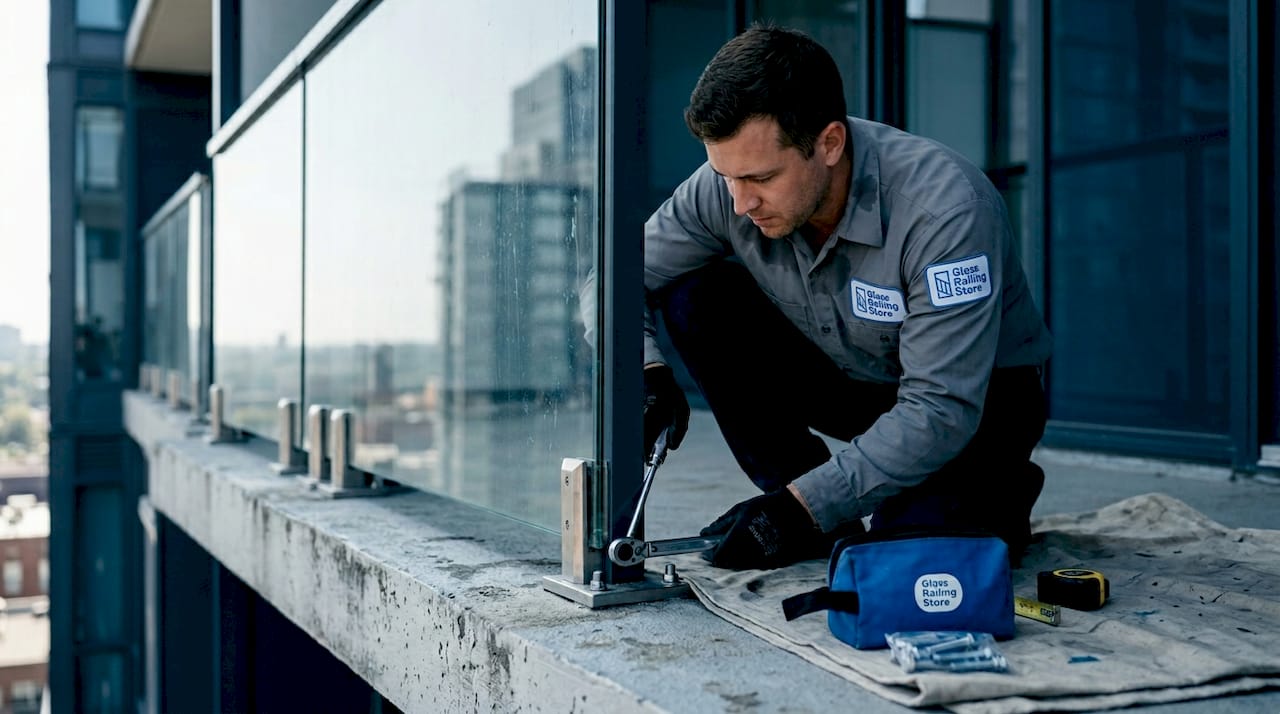
Anchoring is the foundation of everything. A high-quality panel in a poorly anchored base fitting is still a liability. Base shoes, standoffs, and clamp systems all distribute the lateral loads a railing experiences. Undersized or improperly installed anchors create stress concentrations at the glass edge, which is where virtually all breakage originates.
According to failure analysis research, failures often stem from improper installation, substandard glass or hardware, poor anchoring, and lack of maintenance, not from any inherent weakness in the glass material itself. This is an important reframe: the glass is not the weak link.
| System element | Low-quality choice | High-quality choice |
|---|---|---|
| Glass type | Monolithic tempered | Heat-soaked laminated |
| Hardware grade | 304 stainless/zinc alloy | 316 marine-grade stainless |
| Anchoring method | Adhesive or undersized bolts | Engineered base shoes/standoffs |
| Installation quality | DIY or uncertified labor | Certified installer with engineering review |
Make sure you understand building code requirements for your region before specifying any system component. Code minimums vary significantly and determine glass thickness, hardware load ratings, and post spacing.
Pro Tip: In high-traffic commercial settings or locations near pools, specify heat-soaked laminated panels from the start. The added upfront cost is a fraction of what a replacement or liability incident would cost down the line.
Common failure points and how to avoid them
Knowing what contributes to overall durability, it’s essential to understand where things most often go wrong and how to avoid costly mistakes.
The vast majority of glass railing failures trace back to the same root causes. Research into glass handrail failures confirms that the material itself is almost never the origin of the problem. Improper installation is responsible for most in-field failures, followed closely by substandard components, poor anchoring, and zero maintenance practice.
Improper installation looks like many things: base shoe bolts torqued unevenly, glass panels seated without proper rubber gaskets, edge clearances ignored, or load-path assumptions made without engineering review. Each of these on their own can cause a system to fail under load conditions it should easily handle.
Substandard hardware is often invisible until it’s too late. A railing that feels solid on day one may develop play and creep within two to three years if the fittings are undersized or made from corrosion-prone alloys. By the time you notice visible rust or movement, the structural integrity is already compromised.
Here’s a side-by-side comparison of what well-engineered versus poorly installed systems look like in practice:
| Characteristic | Well-engineered system | Poorly installed system |
|---|---|---|
| Load capacity | Meets or exceeds code load ratings | Borderline or unknown |
| Hardware corrosion | Minimal, even after 10+ years | Visible within 2 to 3 years |
| Panel movement | Zero play in any direction | Detectable lateral movement |
| Post-break behavior | Panel stays in place | Panel collapses or falls |
| Code compliance | Verified with documentation | Assumed without inspection |
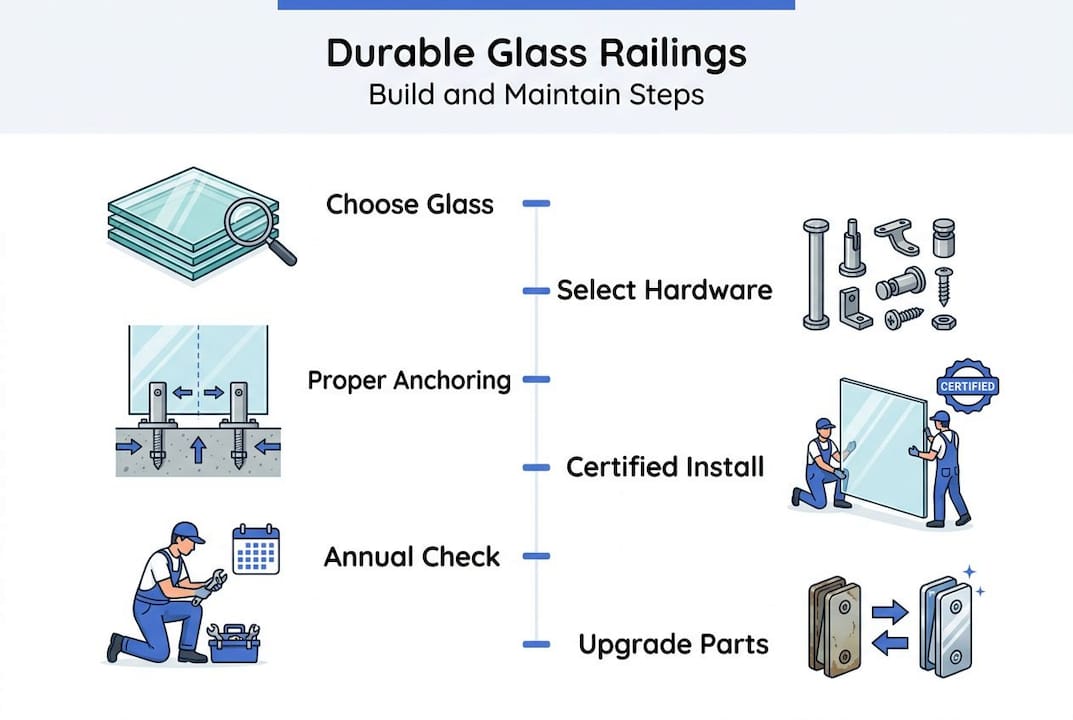
To build a system that performs reliably, follow these steps in order:
- Confirm your local American building code standards before purchasing any materials. Minimum railing heights, glass thickness requirements, and hardware load ratings differ by jurisdiction.
- Engage an engineer or certified installer for any elevated deck, commercial space, or application with concentrated crowd loads.
- Specify components as a complete system, not individual parts sourced from multiple suppliers. Mismatched clamps, base shoes, and glass thicknesses create stress points.
- Use proper installation accessories: rubber or neoprene gaskets at all glass contact points, anti-corrosion thread compound on bolts, and correctly torqued fasteners verified with a torque wrench.
- Document the installation with photos and spec sheets for future maintenance reference and code compliance verification.
“Failures in glass railing systems are almost always preventable. The material is not the problem. The process and the people involved in specification and installation make the difference between a system that lasts decades and one that becomes a liability.” (Glass railing failure analysis, Glassonweb)
Using certified installers isn’t just about peace of mind. It’s about ensuring that the design intent is actually executed in the field, that code compliance is verifiable, and that someone who understands load paths is making the judgment calls on site.
Glass types, treatments, and innovations: What really matters
Beyond just hardware and installation, the type of glass and modern manufacturing methods can elevate durability even further.
Not all tempered glass is created equal. Standard tempered glass contains small nickel sulfide (NiS) inclusions that form naturally during manufacturing. Under certain conditions, those inclusions can expand over time and cause spontaneous breakage months or even years after installation. This is often called “nickel sulfide inclusion failure” and while statistically rare, it’s a real risk in large exterior installations.
Heat soaking is the solution. The process involves holding tempered glass at elevated temperatures (around 290°C) for a set period to trigger any latent NiS inclusions to expand and break during manufacturing rather than after installation. Panels that survive the heat soak are dramatically less likely to fail spontaneously in service. Research confirms that NiS inclusions and thermal stress are mitigated by heat-soaking and lamination, though dynamic crowd loads still require higher safety factors in the design.
Laminated glass adds another layer of safety. The PVB or SGP (SentryGlas Plus) interlayer holds broken pieces together, which matters enormously in a fall-protection application. If someone leans into a cracked panel, a laminated system keeps the barrier intact long enough to prevent a fall. Monolithic tempered, once broken, provides zero structural resistance.
Here’s what to look for when specifying glass treatments:
- Heat-soaked laminated glass: Best choice for exterior railings, especially at elevation or near pools
- Anti-reflective coatings: Reduce glare and improve sight lines in sun-facing installations
- Hydrophobic or self-cleaning coatings: Repel water and mineral deposits, reducing cleaning frequency significantly
- UV-stable interlayers: Prevent yellowing over time in direct sun exposures
- Polished or seamed edges: Reduce edge stress concentrations compared to raw-cut edges
Stat: Heat-soaked laminated panels reduce spontaneous breakage risk by over 95% compared to standard monolithic tempered glass, making them the preferred specification for high-load or high-visibility installations.
Check regional requirements like the Ontario building code for glass railings if your project crosses jurisdictions. Some codes explicitly require heat-soaked glass for certain applications and heights.
Pro Tip: For coastal or lakeside projects, combine hydrophobic glass coating with grade 316 marine-grade hardware. Salt spray and humidity accelerate both glass surface degradation and hardware corrosion, so protecting both elements adds years to the system’s functional life.
How to ensure long-term durability: Maintenance and upgrades
To protect your investment, an ongoing commitment to care and periodic upgrades is vital, even with the best materials and installers.
Even a perfectly installed system degrades if it’s ignored. According to glass railing failure research, lack of maintenance is listed alongside poor installation as a primary cause of system failure. The good news: proper maintenance for a glass railing is genuinely straightforward.
Routine inspection checklist:
- Check hardware fittings for loosening or corrosion at least once a year
- Look for glass movement within clamps or base shoes (any play is a problem)
- Inspect silicone or gasket seals for cracking or shrinkage
- Look for staining, etching, or scratching on glass surfaces
- Check anchoring bolts and base plates for surface rust or settlement
For most homeowners, a spring inspection after winter freeze-thaw cycles and a fall check before winter are sufficient. Commercial properties with high foot traffic should inspect quarterly.
Cleaning the glass correctly matters more than most people realize. Mineral deposits, hard water staining, and industrial fallout all etch into glass surfaces over time. Use a soft microfiber cloth, a pH-neutral cleaner, and avoid abrasive pads. Never use steel wool or acidic cleaners near stainless hardware. For coated glass, follow the coating manufacturer’s specific cleaning instructions since some coatings are incompatible with standard cleaners.
Warning signs that call for urgent attention:
- Any visible crack in a glass panel, no matter how small
- Hardware that feels loose, turns by hand, or shows visible corrosion pitting
- Base shoe or standoff that has shifted from its original position
- Silicone seals that have pulled away from the glass or substrate
Upgrades are often more cost-effective than full replacement. If you have an older system with grade 304 hardware showing corrosion, replacing just the hardware while retaining sound glass panels can extend system life by another decade. Consult the Georgia building code glass railing guide if you’re upgrading an older system to verify whether current code standards apply to the renovation.
Why durability is misunderstood: The real opportunity for homeowners and developers
Here’s the perspective most guides rarely mention, and what it means for your next project.
The conversation about glass railing durability almost always focuses on the wrong thing: panel breakage. People worry about glass shattering. That fear drives requests for thicker glass, more glass, heavier glass. In practice, panel failure in properly specified systems is extraordinarily rare. The panels almost never fail due to the glass itself when it’s been correctly selected and installed.
The actual durability story lives in the hardware and the connections. A 12mm heat-soaked laminated panel sitting in a corroding base shoe, installed by someone without engineering training, is less safe than an 8mm panel in properly specified, professionally installed marine-grade hardware. Thickness alone does not equal safety. System integrity does.
There’s also a value argument that rarely gets made clearly enough. Durable glass railings tied to building codes and durability requirements add measurable, lasting value to residential and commercial properties. The unobstructed view a glass railing preserves increases perceived property value. The clean, modern aesthetic holds up over decades without repainting or re-staining. The maintenance burden is genuinely lower than wood once a well-specified system is in place.
The real opportunity for homeowners and developers is to shift focus from “how do I avoid glass breaking” to “how do I specify and install a complete system that performs for 25 years.” That means asking harder questions of suppliers, verifying certifications, demanding engineering review for elevated applications, and treating the glass railing as the structural safety component it actually is.
Upgrade your project with certified glass railing solutions
If you’ve worked through what it takes to build a glass railing that truly lasts, the next step is making sure every component in your project meets that standard.
At Glass Railing Store, every product in our catalog is selected with system performance in mind, from engineering testing for glass railings that validates load ratings under real conditions, to a trusted network of certified installers who execute to the same standards. Our hardware uses marine-grade 316 stainless steel, our glass panels meet or exceed regional safety codes, and every purchase is backed by clear warranty and rust protection terms so you’re covered long after installation day. Whether you’re a homeowner planning a single deck upgrade or a developer specifying dozens of balconies, we’re here to help you get it right the first time.
FAQs
1. Are glass railings safe for outdoor balconies exposed to extreme weather?
Properly engineered and installed glass railings with weather-resistant treatments are safe and meet building code requirements even in harsh climates, since heat-soaking and lamination directly address thermal stress and spontaneous failure risks common in temperature-extreme environments.
2. How often should glass railing systems be inspected for durability?
Glass railings should be inspected at least once a year to check for hardware loosening, glass movement, or surface deterioration, since lack of maintenance is consistently identified as a leading contributor to system failure over time.
3. What’s the lifespan of a high-quality glass railing in residential construction?
With the right materials and regular maintenance, glass railing systems can last 20 years or more in residential settings, especially when proper anchoring and quality hardware are part of the original specification.
4. Can glass panels break spontaneously, and how is that prevented?
Modern heat-soaked laminated glass panels greatly reduce the risk of spontaneous breakage caused by internal NiS inclusions, which are triggered and eliminated during the manufacturing process rather than after field installation.
Recommended
- Building Codes for Glass Railings – The Glass Railing Store
- Glass Railing Engineering Testing – The Glass Railing Store
- Wisconsin Building Code for Glass Railings – The Glass Railing Store
- New Jersey Glass Railing Codes: What You Need to Know Before You Build – The Glass Railing Store
- How to choose remodeling materials: Illinois guide