

Within 1,500 Feet of Surf, Use 316 Fasteners and AAMA 2605
For coastal decks, the materials that hold up are 316 marine-grade stainless steel, powder-coated aluminum finished to AAMA 2605, laminated glass on 316 fixings, marine-grade cable, and composite or vinyl. The single spec that decides whether any of them will last: 316 stainless fasteners and hardware throughout, not just on the visible frame. Pick based on view priority, wind exposure, and how much maintenance you’re willing to do, because the trade-offs run from “gorgeous but needs babysitting” to “boring but bulletproof.”
TL;DR:
- Use 316 stainless fasteners and hardware for all components to prevent galvanic corrosion and ensure longevity in salt-spray environments.
- Specify AAMA 2605 powder coating for aluminum parts and confirm the finish and alloy grades in writing to avoid downgrades after installation.
- Regularly rinse metal and glass surfaces with fresh water every one to two weeks and check tension and fastener condition twice a year to maintain coastal durability.
- Prioritize components with marine-grade stainless steel, proper finish tiers, and matching alloys to prevent corrosion-related system failure.
- For high-exposure sites within 1,500 feet of the surf, expect a substantial upfront investment in corrosion-resistant materials and diligent routine maintenance.
Table of Contents
- Quick Shortlist: Which Coastal Railing Materials To Choose
- How Do Coastal Railing Materials Hold Up Over Time?
- Which Hardware and Finishes Actually Determine Coastal Performance?
- How Often Should You Clean and Inspect Coastal Railings?
- How Do You Choose the Right Railing for Your Coastal Property?
- How Does the Glass Railing Store Apply These Coastal Specs?
- Why Hardware Matters As Much As the Visible Material
- How We Can Help: Coastal-Grade Glass Panels and 316 Hardware
- Codes and Standards Worth Checking Before You Order
- Sources
Quick Shortlist: Which Coastal Railing Materials To Choose
Every material on this list can survive salt air. The differences show up in cost, upkeep, and what happens to the parts you don’t see.
- 316 stainless steel: The benchmark for salt-spray zones. Higher upfront cost, but it shrugs off pitting and crevice corrosion that eats through lesser alloys. Best for oceanfront lots within a few hundred feet of breaking waves.
- Powder-coated aluminum (AAMA 2605): Lighter on the wallet, still tough if the coating tier is right. The catch is that a cheap 2603 finish chalks and fades fast near the water. Good for near-shoreline properties where budget matters more than showroom looks.
- Laminated or tempered glass with 316 fixings: Unbeatable for unobstructed ocean views, and the glass itself never rusts. The fittings do all the corrosion work, so they have to be marine grade or the whole system looks shabby within a couple of seasons.
- Marine-grade cable: Slim sightlines, strong under wind load, but it needs re-tensioning and inspection more often than rigid systems. Suits modern builds where a clean horizontal line matters.
- Composite/vinyl: No corrosion risk at all, moderate upfront cost, but UV fade and lower structural stiffness make it a secondary choice for high-wind or high-load situations.
Pro Tip: Ask your installer to write the finish grade and fastener alloy into the contract by name, not just “premium finish” or “stainless hardware.” Vague language is how downgrades happen after the deposit clears.
How Do Coastal Railing Materials Hold Up Over Time?
Salt air doesn’t just look corrosive. Chloride ions in sea spray actively attack metal surfaces, and the failure usually starts small, at a screw head or a weld, long before the main structure shows any wear.
316 stainless steel owes its coastal reputation to molybdenum, an alloying element that dramatically improves resistance to pitting and crevice corrosion compared to standard 304 stainless. That’s why 304, despite being cheaper and common in inland railing kits, is a poor substitute within reach of salt spray. Marine hardware suppliers treat 316 as the default for boat fittings, and the same logic applies to a railing bolted to a deck facing the surf. Brushed and mirror finishes both perform well; the alloy matters more than the polish.
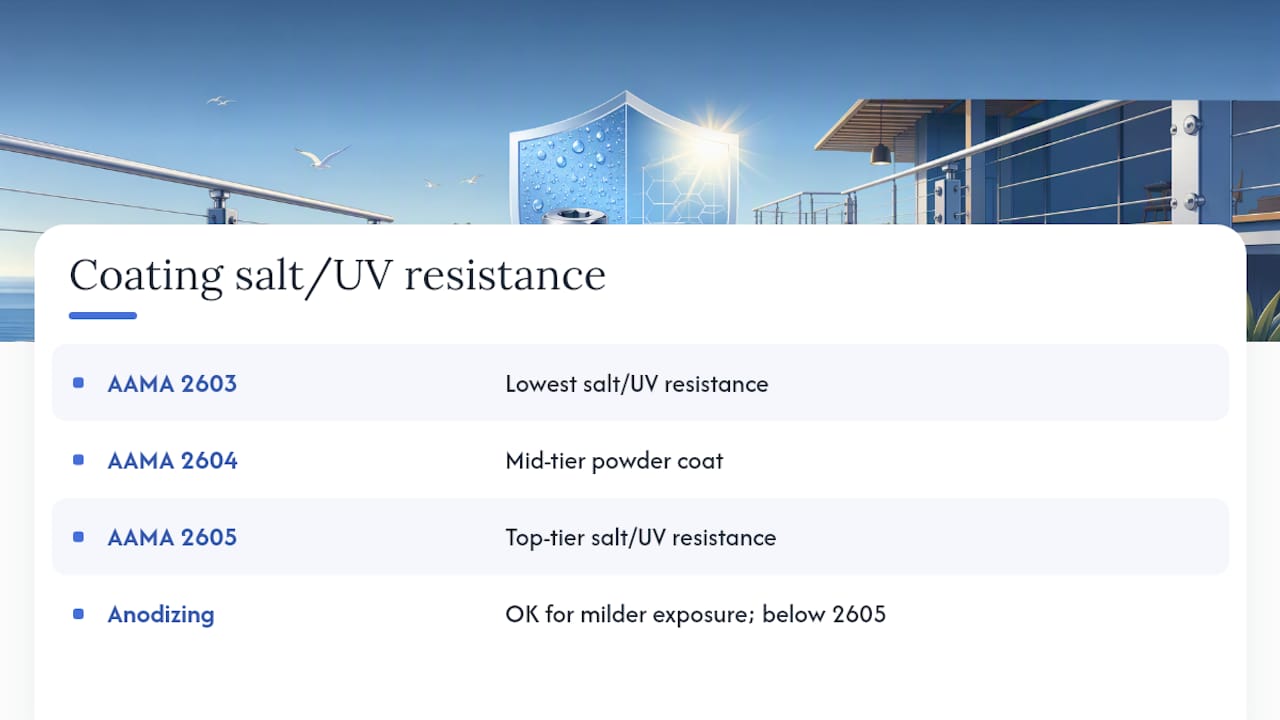
Powder-coated aluminum depends entirely on which AAMA tier you specify. AAMA 2605 outperforms both 2604 and 2603 in salt spray and UV resistance, and it’s the one worth paying extra for on an oceanfront build. Anodizing is a reasonable alternative in milder exposures, but it can’t match a top-tier powder coat once you’re within regular reach of airborne salt.
Glass panels themselves are chemically inert. They don’t rust, pit, or fade. The real risk is rust streaking from fittings that aren’t up to spec, which stains the glass and undercuts the entire point of installing it. Laminated glass adds an extra layer of impact resistance over standard tempered panels, which matters where storm debris is a realistic concern.
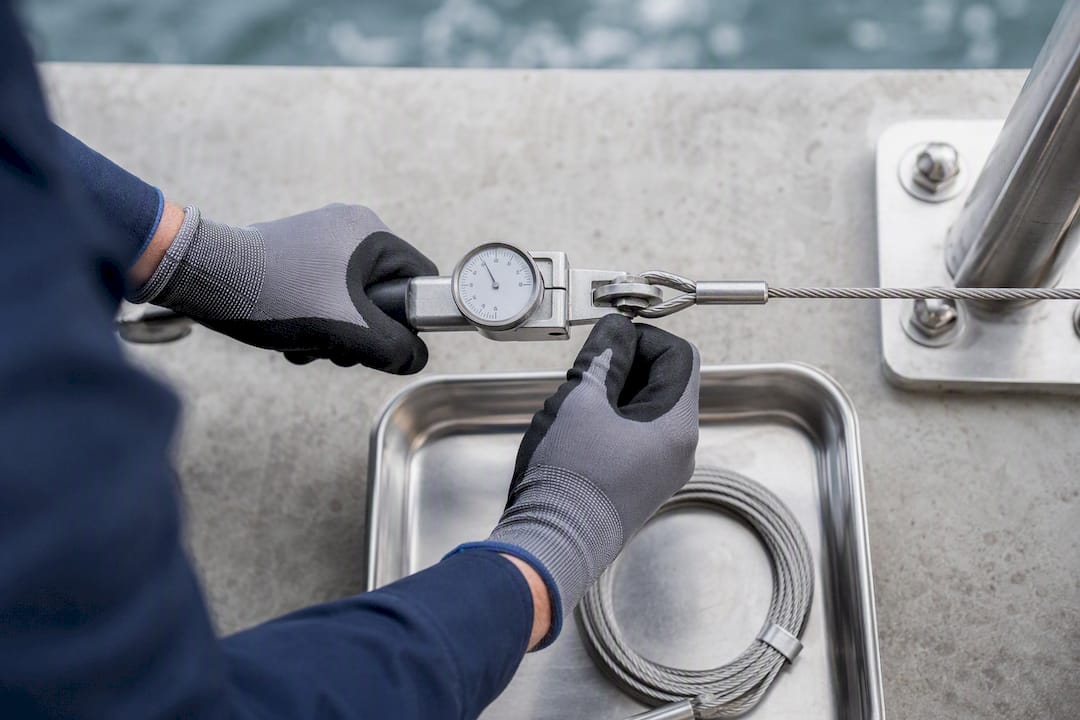
Marine cable systems built on 316 wire and fittings need biannual tension checks, since cable stretches slightly over time and salt accelerates any weak point in a swaged fitting.
Composite and vinyl railings resist rot and corrosion completely but lose some color depth to UV exposure over the years and generally need reinforced backing to meet wind-load requirements on open decks.
A coastal railing rarely fails at the panel or post. It fails at the small hardware pieces that don’t match the alloy of the main structure, which corrode first and take the rest of the system’s appearance down with them.
Which Hardware and Finishes Actually Determine Coastal Performance?
The visible material gets the credit, but the fasteners and connectors do the failing. Mixing metals in a salt environment sets up galvanic corrosion, where one metal sacrifices itself to protect the other, usually the cheaper part you never planned to replace.
- Specify 316 stainless fasteners for every bolt, screw, and bracket in a salt-spray zone. Don’t let 304 or plain zinc-plated hardware sneak in on the “small stuff.”
- Match connector alloys to the panel or post material to avoid galvanic reactions between dissimilar metals.
- Request AAMA 2605 powder coating for oceanfront aluminum and AAMA 2604 for sites set back further inland, where exposure is lighter.
- Ask about electropolishing or passivation on stainless components, both of which improve corrosion resistance at the surface without changing the alloy.
- Verify every quote itemizes spigots, clamps, standoffs, post anchors, and gasket or seal details, not just “hardware included.”
Pro Tip: A coastal glass railing spec sheet that names the alloy and finish tier for every part, not just the visible ones, is the fastest way to catch a downgrade before installation day.
How Often Should You Clean and Inspect Coastal Railings?
Coastal railings need more attention than inland ones, but the routine is simple if you stick to it. Manufacturers recommend regular freshwater rinses specifically because salt residue left to dry accelerates corrosion far faster than salt that gets rinsed off promptly.
- Rinse metal and glass surfaces with fresh water every one to two weeks in high-spray zones, monthly further inland.
- Wipe glass panels down to prevent salt film buildup that dulls the view and etches the surface over time.
- Check cable tension twice a year and re-tension any run that’s gone slack.
- Inspect fasteners for surface rust or pitting, and touch up any coating chips before they spread.
- Check sealants and gaskets around glass fixings, since a failed seal lets moisture sit against the fitting.
Expect 316 stainless and quality aluminum systems to run for decades in coastal exposure with this routine. Composite trims a bit off that range due to UV fade, and warranties across every material tend to carve out exclusions for salt-spray environments, so read that fine print before assuming full coverage. Rinsing and wiping are DIY tasks; tension checks and coating repairs are worth a professional’s eye.
How Do You Choose the Right Railing for Your Coastal Property?
Start with your exposure zone. Properties within roughly 1,500 feet of breaking surf sit in a salt-spray zone that calls for the highest-grade materials and finishes, while a set-back lot near a bay can often get by with a lighter spec.
- Rank your priorities: unobstructed view, wind-load rating, budget, and how much maintenance you’ll actually keep up with.
- Ask installers to name the alloy and grade of every visible and hidden component, not just describe it as “marine grade.”
- Ask for the finish standard in writing (AAMA 2605 versus 2604) and the manufacturer’s warranty terms for coastal exposure specifically.
- Ask how the anchor and backing strategy accounts for wind load on your specific deck or balcony structure.
- Treat “premium hardware” without a named grade as a red flag, and insist the contract spells out material and finish standards, not vague marketing language.
How Does the Glass Railing Store Apply These Coastal Specs?
Glassrailingstore builds around tempered and laminated glass panels paired with marine-grade stainless hardware, the same combination this guide recommends for oceanfront and near-shoreline properties. Fuanne, a contributor to the site’s coastal durability and design resources, has written extensively on translating code and finish requirements into actual purchase specs. The store’s guide to marine-grade stainless grades walks through exactly which alloy to request for a given exposure zone, and its planning support helps buyers match connectors and fasteners so nothing on the order sheet undercuts the panel itself.
Why Hardware Matters As Much As the Visible Material
The most common mistake I see in coastal railing projects isn’t the panel choice. It’s an installer swapping in a cheaper fastener on the theory that “no one will notice.” Someone always notices, usually around year three, when rust streaks bleed down the post. Pull your spec sheet before you order and check the hardware line by line.
— Fuanne
How We Can Help: Coastal-Grade Glass Panels and 316 Hardware
Glassrailingstore is the direct route to the exact spec this guide walks through: tempered glass panels rated for coastal exposure, paired with 316 stainless connectors and fixings built to avoid the rust streaking and galvanic issues that shorten a railing’s life. Every hardware component, from post anchors to caprail connectors, is designed to match rather than mismatch, which is the detail that separates a railing that lasts two decades from one that needs replacing in five.

The 46-inch tempered glass panel is a strong starting point for a coastal deck or balcony rebuild, and pairing it with the right 90-degree connector or wall connector keeps every fitting on the same corrosion-resistant standard this guide recommends. If you’re still sorting out fabrication-level details for a custom metal-and-glass combination, Modern Fence Company’s guide to custom metal railings is a solid companion resource. Start by requesting a quote with the hardware and finish grades specified, so the parts list matches the panel from day one.
Codes and Standards Worth Checking Before You Order
Verify guard height and load rules against your locally adopted IRC/IBC edition, since requirements vary by jurisdiction. Confirm AAMA finish tiers and 316 stainless specs directly with your manufacturer before signing off on a quote.
Sources
- Marine hardware: stainless tubing, fittings and guidance
- Aluminum railing systems for coastal and wet climates: materials, finishes and infill options
- Railings for coastal and humid climates
- 316 stainless steel deck railing — marine