

What Is Anti-Slip Glass? Safety, Standards & Uses
Anti-slip glass is safety glass engineered to increase surface friction, reducing slip and fall risk on walkable surfaces, especially when wet. Known in the industry as slip-resistant glass or anti-skid glass, this specialized product is treated through processes like acid etching or ceramic frit sintering to create measurable grip. You’ll find it in glass floors, stair treads, pool surrounds, terraces, and commercial walkways where standard glass would create a serious hazard. Understanding what is anti-slip glass, how it performs under load and moisture, and which standards certify its safety is the foundation of any smart glass specification decision.
How Does Anti-Slip Glass Work?
Anti-slip glass works by modifying the surface texture of standard glass to increase friction between the glass and a shoe sole or bare foot. Two manufacturing methods dominate the industry, and they produce meaningfully different results.
Acid Etching
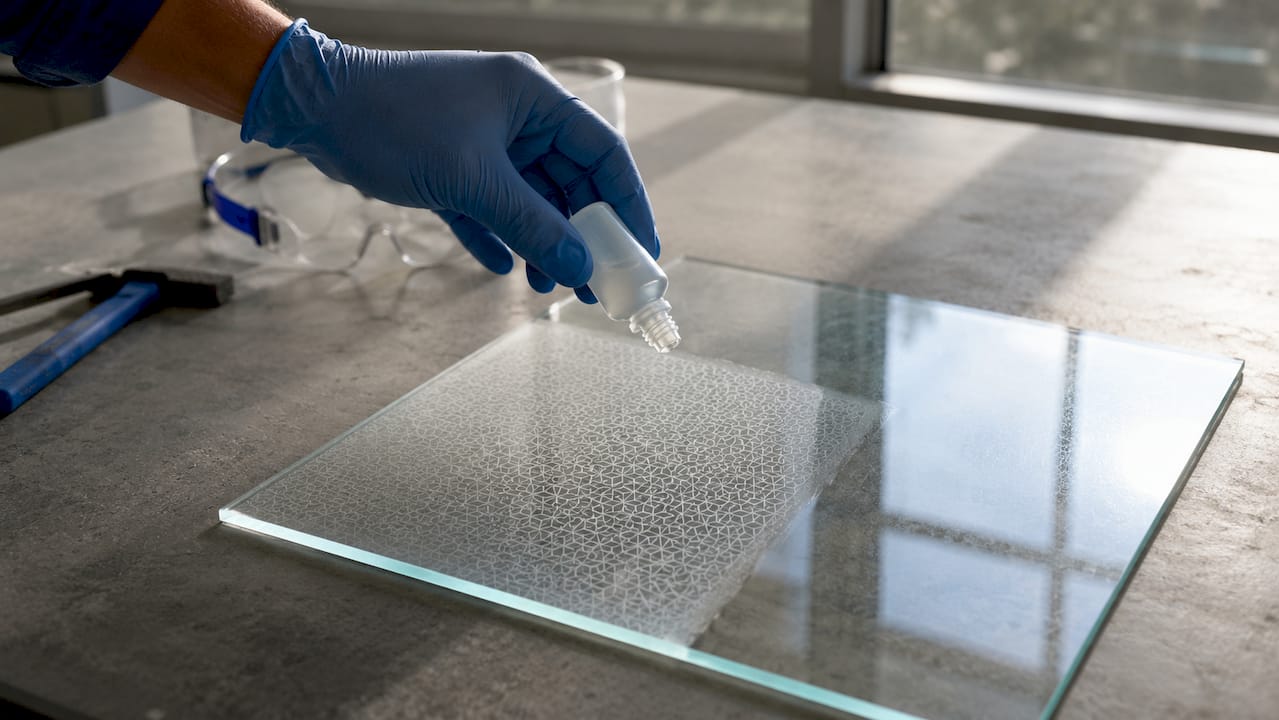
Acid etching exposes the glass surface to hydrofluoric acid, which dissolves the top layer and creates a fine, uniform texture. This process yields an anti-slip rating of approximately 50, which is suitable for most indoor applications with moderate foot traffic. The resulting surface is matte in appearance and transmits light well, making it a popular choice for residential stair treads and interior floors.
Ceramic Frit Sintering
Ceramic frit sintering is the higher-performance option. Ceramic particles sized between 75–710 micrometers are fused directly into the glass surface at high temperature, creating a permanent mechanical texture. This method achieves an anti-slip rating of up to 60, the highest available through standard manufacturing. The tradeoff is light transmission. A ceramic frit dot pattern reduces brightness by approximately 40% compared to acid etching. For outdoor observation decks or pool surrounds where maximum grip matters more than full transparency, that tradeoff is worth making.
Surface Coatings vs. Permanent Treatments
Some products on the market use topical anti-slip coatings rather than structural treatments. These coatings wear off under foot traffic and fail under wet conditions. Only permanent structural treatments like deep acid etching or ceramic frit sintering consistently meet high Pendulum Test Value (PTV) safety standards. This distinction matters enormously when you are specifying glass for a public space or a high-traffic commercial floor.
Pro Tip: Always ask your supplier whether the anti-slip treatment is a permanent structural process or a surface coating. Request the test certificate before purchasing, not after installation.
Slip resistance standards give you an objective way to compare products and verify safety. Two frameworks dominate specifications in the U.S. and international markets.
DIN 51130 Classifications
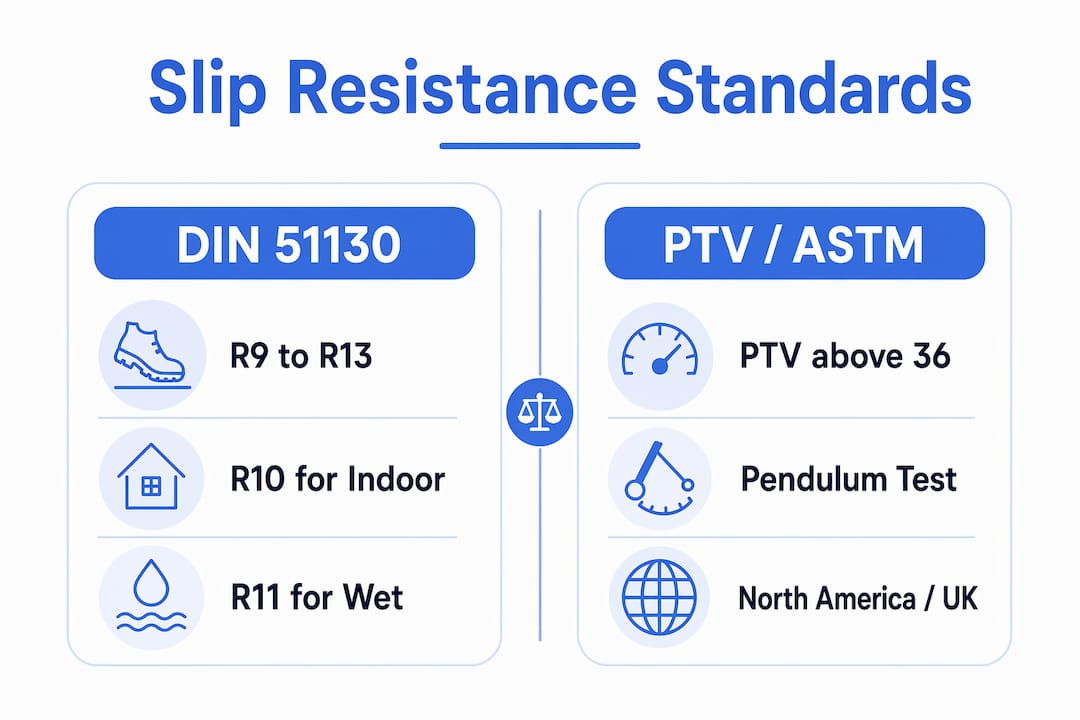
The German standard DIN 51130 classifies slip resistance in categories from R9 to R13. For glass applications, R10 is suitable for indoor low-incline surfaces, while R11 is required for moisture-prone areas like pool decks and wet room floors. R10 covers most residential stair treads and interior glass floors. R11 is the minimum for any outdoor or consistently wet surface. Specifying below the required rating is not just a performance issue. It is a liability issue.
PTV Values and ASTM c1028
The Pendulum Test Value (PTV) is the most widely used metric in North America and the UK. A PTV above 36 indicates a surface is considered safe for pedestrian use in wet conditions. High-performance anti-slip glass variants achieve a static coefficient of friction above 0.45 in wet conditions, which exceeds the threshold set by ASTM C1028. That standard, alongside DIN 51130, is what certified testing labs use to classify products.
The critical point here is that certified testing determines safety, not visual judgment. Some rough-looking glass surfaces do not meet slip safety codes. Some smooth-looking treated surfaces exceed them. You cannot look at a piece of glass and know its PTV. You need the test certificate.
| Standard | Classification | Suitable Application |
|---|---|---|
| DIN 51130 | R10 | Indoor floors, low-incline surfaces |
| DIN 51130 | R11 | Wet areas, pool surrounds, outdoor terraces |
| PTV (Pendulum Test) | Above 36 | Safe for pedestrian use in wet conditions |
| ASTM C1028 | Friction > 0.45 | High-performance wet surface applications |
For anyone navigating building codes for glass railings, understanding these standards is the first step toward a compliant installation.
The advantages of anti-slip glass go well beyond basic safety. Here is where this material earns its place in both residential and commercial design.
- Wet-area safety. Anti-slip glass stair treads and flooring maintain grip in rain, poolside splash zones, and wet room environments where standard glass would be dangerously slick. Transparency with grip is the defining benefit: you get the open, light-filled aesthetic of glass without sacrificing safety.
- Load-bearing capability. Laminated safety glass with appropriate interlayers such as PVB (polyvinyl butyral), EVA (ethylene-vinyl acetate), or Sentry Glass holds together if broken. Laminated glass with correct interlayers is the structural standard for walkable glass floors and stair treads. A single pane of tempered glass alone is not sufficient for flooring applications.
- Natural light preservation. Acid-etched anti-slip glass transmits significant light while diffusing glare. This makes it ideal for glass-floored mezzanines, skywalks, and observation platforms where maintaining a sense of openness is part of the design intent.
- Design flexibility. Ceramic frit patterns can be customized in dot density, color, and layout. Architects use this to create visual interest while meeting slip resistance requirements. A frit pattern on a stair tread can serve as both a safety feature and a design element.
- Commercial and public space compliance. Airports, shopping centers, hotels, and museums increasingly specify anti-slip glass for walkways and feature staircases. The material meets both aesthetic and code requirements in a single product.
For design inspiration on how anti-slip glass performs in real installations, outdoor staircase glass ideas from Glassrailingstore show how style and safety coexist in practice.
Maintenance and Common Misconceptions
Anti-slip glass requires specific care to maintain its performance over time. The surface texture that creates friction is also more prone to trapping dirt, which means cleaning frequency matters.
Non-abrasive cleaners preserve the surface texture and friction rating. Abrasive pads, steel wool, or harsh chemical cleaners degrade the texture over time, reducing the effective PTV of the surface. For commercial installations with daily foot traffic, a scheduled cleaning program using pH-neutral, non-abrasive solutions is the standard practice.
Two misconceptions consistently cause problems in the field.
The first is confusing anti-dirt coatings with anti-slip treatments. Hydrophobic self-cleaning coatings repel water and reduce cleaning frequency, but they do not add friction. A hydrophobic-coated glass surface can remain dangerously slippery when wet. Anti-slip performance requires a mechanical texture, not a chemical coating. These are two separate product categories that are sometimes marketed together in ways that blur the distinction.
The second misconception is that a textured appearance guarantees slip resistance. Surface texture visible to the eye does not always translate to a certified PTV rating. Slip resistance depends on texture depth measured microscopically, not on what you can see or feel with your hand. Always request the test certificate from a recognized lab before specifying any glass for a walkable surface.
Pro Tip: For glass flooring applications, specify laminated glass with a PVB or Sentry Glass interlayer rated for structural use. The interlayer choice directly affects whether the floor holds together safely if a pane cracks under load.
Understanding the role of glass in outdoor safety helps clarify why these distinctions matter in real-world installations.
Anti-slip glass is defined by its certified friction rating, not its appearance, and only permanent structural treatments like acid etching or ceramic frit sintering reliably meet recognized safety standards.
| Point | Details |
|---|---|
| Permanent treatment required | Acid etching and ceramic frit sintering outperform surface coatings in durability and wet-condition safety. |
| Ceramic frit achieves highest rating | Sintered ceramic particles sized 75–710μm deliver an anti-slip rating of 60, the highest available. |
| PTV above 36 is the safety threshold | Any walkable glass surface in a wet area should meet or exceed this certified Pendulum Test Value. |
| Laminated interlayers are structural | PVB, EVA, or Sentry Glass interlayers keep broken walkable glass intact, preventing catastrophic failure. |
| Coatings do not equal anti-slip | Hydrophobic anti-dirt coatings improve cleaning but provide no measurable slip resistance in wet conditions. |
I have reviewed enough glass floor and stair specifications to know that the most common mistake is not ignorance of the standards. It is choosing a product based on how it looks in a showroom sample and assuming the safety rating will follow. It does not.
Designers often prioritize aesthetics over slip resistance ratings, and the result is a beautiful installation that fails its first wet-weather inspection. I have seen this happen with acid-etched glass specified at R9 for an outdoor terrace that required R11. The glass looked right. The rating was wrong.
The other issue I keep seeing is the interlayer problem. Specifying the correct glass thickness and the correct interlayer for a walkable floor is not optional. The lamination layup quality determines whether a cracked floor panel holds together or collapses. Most residential buyers do not know to ask about this, and not all suppliers volunteer the information.
My honest advice: treat the test certificate as a non-negotiable deliverable, the same way you would treat a structural engineer’s stamp. If a supplier cannot produce a certified PTV or DIN 51130 rating for a walkable glass product, that product should not be on your shortlist. The technology for permanent, high-performance anti-slip treatment exists and is widely available. There is no reason to accept an unverified product.
— Fuanne
Safe, Code-Compliant Glass from Glassrailingstore

Glassrailingstore supplies tempered and laminated glass panels built to meet engineering and code requirements for residential and commercial installations. Every product in the catalog is designed with structural safety in mind, from the glass thickness to the hardware specifications. If you are planning a deck, balcony, staircase, or pool fence and need glass that performs under real-world conditions, the engineering-tested glass railing products at Glassrailingstore give you a verified starting point. The team also provides quotes and planning support, so you can confirm compliance before you order rather than after installation. Explore the full product range or request a consultation directly on the site.
FAQs
1. What is anti-slip glass made of?
Anti-slip glass is standard float or tempered glass that has been surface-treated through acid etching or ceramic frit sintering to increase friction. For walkable applications, it is typically laminated with a PVB, EVA, or Sentry Glass interlayer to maintain structural integrity if broken.
2. Is anti-slip glass safe for wet outdoor areas?
Yes, provided it carries a certified DIN 51130 R11 rating or a PTV above 36 for wet conditions. Always verify the test certificate rather than relying on the product’s visual texture or the supplier’s description.
3. How is anti-slip glass different from regular tempered glass?
Regular tempered glass has a smooth surface that becomes dangerously slick when wet. Anti-slip glass has a mechanically altered surface texture that creates measurable friction, making it safe for floors, stair treads, and pool surrounds.
4. Does anti-slip glass require special maintenance?
Anti-slip glass should be cleaned with non-abrasive, pH-neutral cleaners. Abrasive cleaning products degrade the surface texture over time and reduce the effective slip resistance rating of the glass.
5. Can anti-slip coatings replace structural anti-slip glass?
No. Topical anti-slip coatings wear off under foot traffic and fail in wet conditions. Only permanent structural treatments like deep acid etching or ceramic frit sintering consistently meet certified PTV safety standards for walkable surfaces.
Recommended
- The Role of Glass in Outdoor Safety Explained – The Glass Railing Store
- Balcony Glass Systems Explained: Safety, Design, and Compliance – The Glass Railing Store
- Tempered glass advantages: enhance safety and design outdoors – The Glass Railing Store
- Choosing safe and stylish glass thickness for railings – The Glass Railing Store