

How to Select Railing Suppliers for Any Project
Selecting the right railing supplier is the single most consequential decision you make before a deck, balcony, or staircase project breaks ground. The wrong vendor delivers substandard materials, obscures costs in vague quotes, and leaves you exposed to code violations and liability. The right one provides certified products, transparent pricing, and documentation that protects you from start to finish. This guide covers every criterion you need, from insurance verification and reference checks to material comparisons and contract specifics, so you can choose railing providers with confidence whether you are a homeowner or a commercial contractor.
How to select railing suppliers: the quality criteria that matter most
The best railing suppliers are defined by precision and outcome quality, not by marketing claims or the lowest bid. Before you commit to any vendor, you need to verify several non-negotiable benchmarks.
Material standards and certifications are the foundation. Top railing manufacturers work with tempered safety glass, marine-grade stainless steel, powder-coated aluminum, and certified composite materials. Each material carries specific load and impact ratings that must meet local building codes for glass railing. A supplier who cannot produce documentation for their materials’ specifications is not a supplier worth hiring.
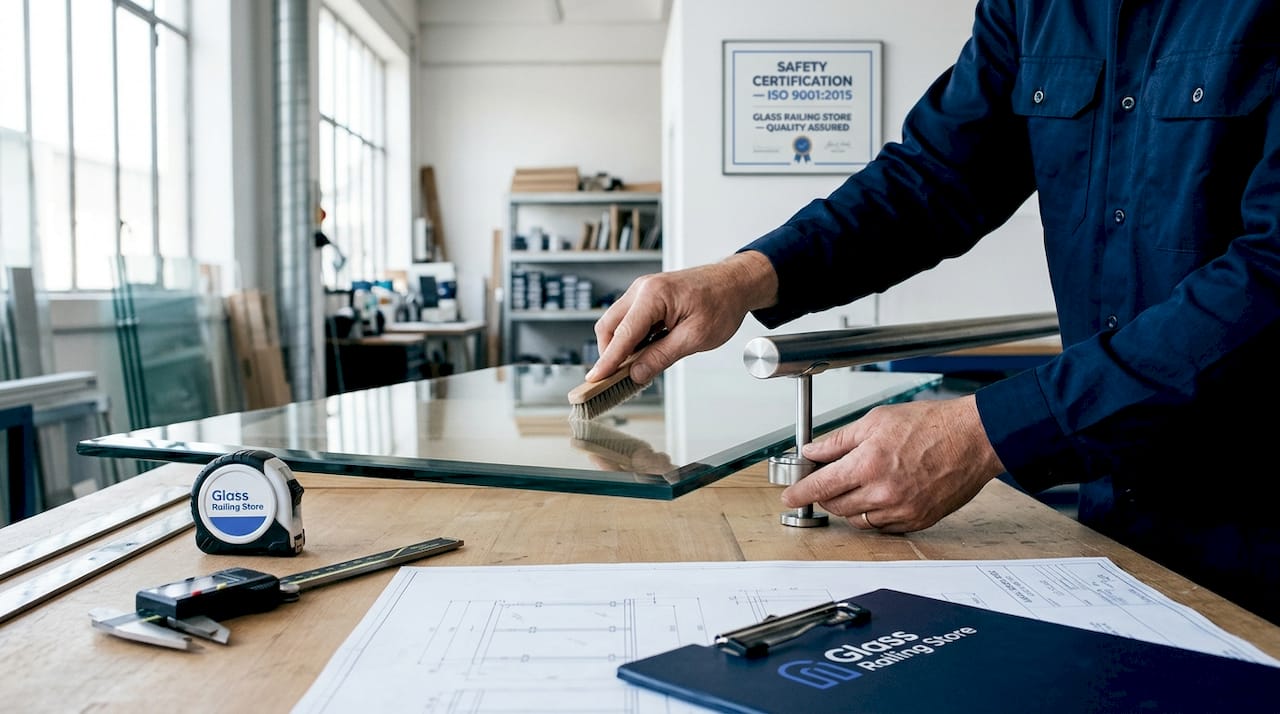
Code compliance and permits separate professional vendors from fly-by-night operators. Any reputable provider will know your jurisdiction’s requirements for baluster spacing, top rail height, and load capacity. Local lumberyards and contractor-focused supply stores typically offer better material selection and staff who understand regional code requirements than big-box retailers. That local knowledge is worth paying for.
Insurance and licensing are non-negotiable. Professional railing installers must carry at least $1 million liability coverage and workers’ compensation if they employ a crew. This protects you from financial exposure if a worker is injured on your property or if a railing fails after installation. Always request certificates of insurance in writing before signing anything.
Key quality benchmarks to verify before hiring any railing vendor:
- Written proof of $1 million minimum liability insurance and workers’ compensation
- State or provincial contractor license number, verifiable through your local licensing board
- Product certifications or test reports for materials used (tempered glass, aluminum alloy grade, composite brand)
- Warranty terms in writing, covering both materials and workmanship
- Demonstrated familiarity with your local building code and permit process
Pro Tip: Ask the supplier to name the specific building code section that governs your project. A knowledgeable vendor answers immediately. A vendor who hesitates or deflects is telling you something important.
How do you get and evaluate transparent quotes from railing vendors?
Pricing transparency is the clearest signal of a supplier’s integrity. Detailed, line-by-line quotes that itemize materials, labor, permits, and disposal fees are the industry standard for reputable vendors. A lump-sum quote that bundles everything into one number hides inflated margins and makes it impossible to compare vendors accurately.
Follow this process when requesting and evaluating quotes from railing supply companies:
-
Request itemized estimates from at least three vendors. Each quote should break out material costs by product line, labor by task, permit fees, and any disposal or cleanup charges.
-
Cross-reference pricing with market benchmarks. Resources like HomeAdvisor publish regional cost ranges for railing installation. Use these to flag quotes that are suspiciously low or unusually high.
-
Verify brand and model numbers in the contract. Contracts specifying brand and model numbers protect you against material substitution. A contract that says “composite railing” without naming the manufacturer gives the supplier room to downgrade materials after you sign.
-
Confirm the payment schedule. The standard practice is a deposit between 10 and 30%, progress payments tied to project milestones, and a final payment only after inspection. Any supplier demanding full payment upfront is a red flag.
- Get everything signed. A verbal agreement or email thread is not a contract. A signed document with scope, timeline, materials, and payment terms is the only protection you have if a dispute arises.
Pro Tip: When comparing quotes, build a simple spreadsheet with each line item side by side. Differences in permit fees or disposal costs often reveal which vendor is being thorough and which is padding margins elsewhere.
The table below shows the typical cost components you should expect to see in any residential or commercial railing quote:
| Cost component | What it covers | Red flag if missing |
|---|---|---|
| Materials | Product brand, model, quantity, unit price | Vague descriptions like “glass panels” |
| Labor | Installation hours, crew size, rate | Bundled into a single total |
| Permits | Local building permit fees | Omitted entirely |
| Disposal | Removal of old railing, debris cleanup | Not mentioned for replacement projects |
| Warranty | Duration, coverage scope | Absent or verbal only |
What steps should you take to vet railing suppliers before hiring?
Vetting railing providers goes beyond reading Google reviews. Cross-referencing at least three sources, including online reviews, Better Business Bureau ratings, and direct references from recent jobs, gives you a reliable picture of a supplier’s actual performance. Calling references directly is more reliable than relying on a static list the supplier hands you.
Here is a structured vetting checklist for evaluating railing supply companies:
-
Check the Better Business Bureau profile. Look for complaint history, resolution patterns, and how long the business has been registered. A company with unresolved complaints or a short operating history warrants extra scrutiny.
-
Call at least three recent customers directly. Ask specifically about timeline adherence, material quality on delivery, and how the supplier handled any problems. A supplier’s behavior when things go wrong tells you more than their behavior when everything goes smoothly.
-
Verify a physical business address and local phone number. Suppliers who operate only through a website or a mobile number with no verifiable location are higher risk. A legitimate business has a traceable physical presence.
-
Watch for red flags in the sales process. Pressure for full upfront payment, reluctance to pull permits, and suspiciously low bids are the three most common warning signs of an unreliable or noncompliant vendor.
-
Confirm insurance and bonding in writing. Request the actual certificate of insurance, not just a verbal assurance. Call the insurance provider to verify the policy is active and covers your project type.
- Review their portfolio for comparable projects. A supplier who specializes in residential wood railings may not be the right choice for a commercial glass balustrade system. Match their demonstrated expertise to your specific project scope.
Understanding contractor engagement timing also matters. Bringing a railing supplier into your project planning early, rather than after structural work is complete, gives them the information they need to quote accurately and source materials without delays.
How do railing materials compare across supplier specialties?
Popular railing materials include glass, aluminum, composite, and stainless steel, each with distinct durability profiles, maintenance requirements, and aesthetic outcomes. Matching your project’s needs to a supplier’s material specialty directly affects both pricing and service quality.
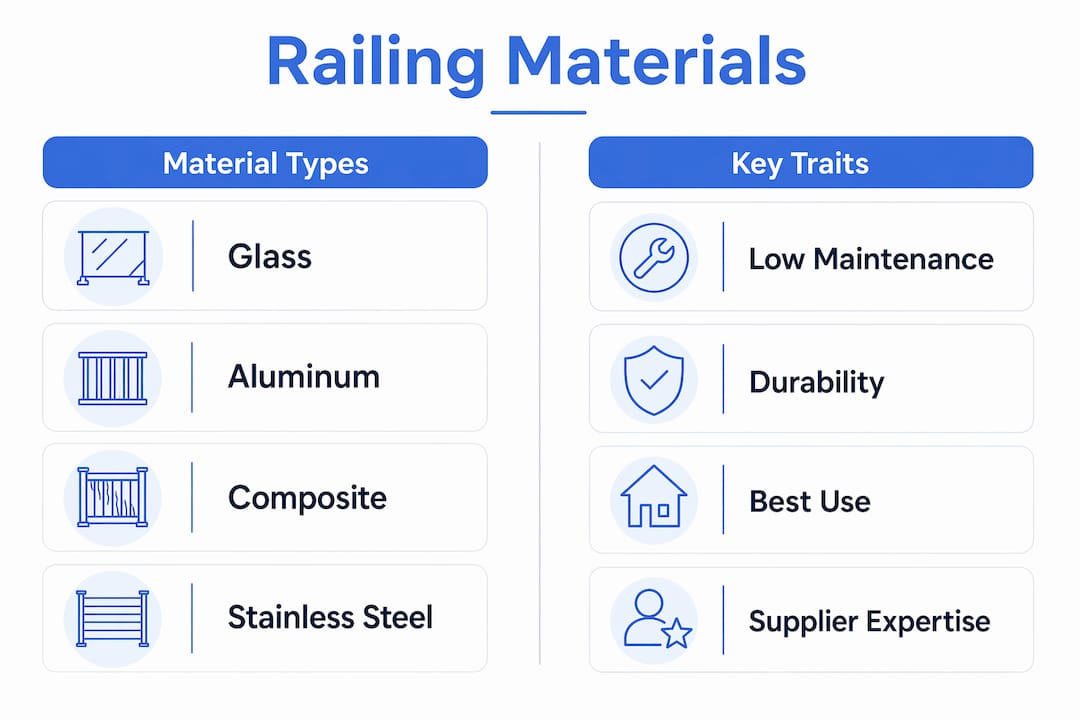
| Material | Durability | Maintenance | Best use case | Supplier assurance to request |
|---|---|---|---|---|
| Tempered glass | Very high | Low (periodic cleaning) | Decks, balconies, pool fences | Engineering test reports, IBC compliance |
| Powder-coated aluminum | High | Very low | Commercial, coastal environments | Alloy grade, coating thickness spec |
| Composite | Moderate to high | Low | Residential decks | Brand name, warranty period |
| Stainless steel | Very high | Low to moderate | Modern interiors, marine settings | Grade (304 vs. 316), finish spec |
Glass railing systems, particularly frameless designs using tempered safety glass and marine-grade stainless steel hardware, have become the dominant choice for premium residential and commercial projects. The reason is straightforward: they preserve sightlines, require minimal upkeep, and meet stringent load requirements when properly engineered. Suppliers who specialize in glass systems should be able to provide engineering test documentation and reference specific building code sections, such as IBC Section 2407, that govern glass balustrade installations.
Aluminum and composite suppliers tend to be stronger in regional markets where wood-alternative decking is common. Stainless steel specialists often serve commercial architects and high-end residential designers. Knowing a supplier’s core material focus helps you assess whether their expertise genuinely matches your project or whether they are stretching outside their lane. For glass-specific guidance on choosing the right glass thickness for your railing system, the engineering specifications matter as much as the supplier’s reputation.
Key takeaways
Selecting reliable railing suppliers requires verifying insurance, demanding itemized quotes, checking references directly, and matching supplier material expertise to your specific project.
| Point | Details |
|---|---|
| Verify insurance first | Confirm $1 million liability coverage and workers’ compensation before any other step. |
| Demand itemized quotes | Line-by-line pricing with brand names protects against substitution and hidden costs. |
| Call references directly | Speaking to recent customers reveals reliability and problem-handling better than reviews alone. |
| Match material expertise | Choose suppliers whose core specialty aligns with your project’s material requirements. |
| Watch for red flags | Full upfront payment demands and permit reluctance signal noncompliant or unreliable vendors. |
What I’ve learned about choosing railing suppliers after years in the industry
The single biggest mistake I see buyers make is treating supplier selection as a price comparison exercise. They collect three quotes, pick the middle one, and assume they have done their due diligence. They have not. Price tells you almost nothing about a supplier’s reliability, their knowledge of local code, or their behavior when a shipment arrives damaged or a measurement is off.
Transparency in communication and detailed documentation is what separates reputable companies from vendors who disappear after deposit. The suppliers I trust are the ones who send unsolicited updates, flag potential code issues before they become problems, and put every material specification in writing without being asked. That behavior does not cost them anything. It just reflects how they operate.
The reference check step is where most buyers cut corners, and it is the step that matters most. A supplier can manufacture a polished website, a stack of five-star reviews, and a convincing sales pitch. They cannot manufacture three real customers who will take your call and tell you the project went exactly as promised. Make those calls. Ask uncomfortable questions. Ask what went wrong and how the supplier responded. That answer is the one that counts.
One more thing: avoid the common glass railing installation mistakes that stem from choosing a supplier who lacks product-specific expertise. A vendor who sells glass railings but cannot explain the difference between 1/2-inch and 3/8-inch tempered glass in terms of load performance is not the right partner for a code-critical installation.
— Fuanne
How Glassrailingstore supports your railing supplier search
Glassrailingstore takes the guesswork out of finding reliable railing providers by combining certified products with transparent purchasing resources. Every glass panel and hardware component on the platform meets tempered safety glass standards, and the site’s engineering testing documentation gives you the compliance evidence your contractor or building inspector will ask for. Glassrailingstore also publishes detailed building code resources so you can verify your project requirements before you order. For projects requiring professional installation, the certified installer network connects you with vetted professionals. Need pricing for your specific project? Request an itemized glass railing quote directly through the site and get the line-by-line detail this article recommends.
FAQs
1. What insurance should a railing supplier carry?
Any professional railing installer or supplier should carry at least $1 million in general liability insurance and workers’ compensation coverage for all employees. Always request the actual certificate of insurance and verify it is current before signing a contract.
2. How many quotes should I get from railing vendors?
Get at least three itemized quotes from separate railing supply companies. This gives you enough data to identify market-rate pricing, spot outliers, and compare material specifications side by side.
3. What are the biggest red flags when evaluating railing suppliers?
The clearest warning signs are demands for full upfront payment, reluctance to pull permits, no verifiable physical address, and quotes that lack brand names or model numbers. Any one of these signals a vendor who may not deliver on their promises.
4. Does railing material type affect which supplier I should choose?
Yes. Suppliers typically specialize in one or two material categories. A vendor with deep expertise in tempered glass systems will provide better engineering documentation and code guidance for a glass balustrade than a general railing contractor whose primary work is aluminum or composite.
5. What should a railing contract include?
A signed railing contract should specify the exact brand and model of all materials, a line-by-line cost breakdown, a project timeline, a payment schedule tied to milestones, warranty terms, and permit responsibilities. Vague contracts without product specifics leave you exposed to material substitution.