

Glass Railing Kit Contents Explained for 2026 Builds
A glass railing kit is defined as a pre-engineered set of components including tempered or laminated glass panels, structural post mounts, handrails, clamps or channels, and installation accessories required to build a code-compliant safety barrier. Understanding glass railing kit contents explained in full detail saves you from costly mid-project surprises, whether you are a homeowner tackling a deck renovation or a contractor managing a commercial balcony installation. Brands like CR Laurence and Feeney supply individual components, but a complete kit bundles everything into one coordinated system. Getting the parts right from the start is the difference between a railing that passes inspection and one that fails it.
What are the main components of a glass railing kit?
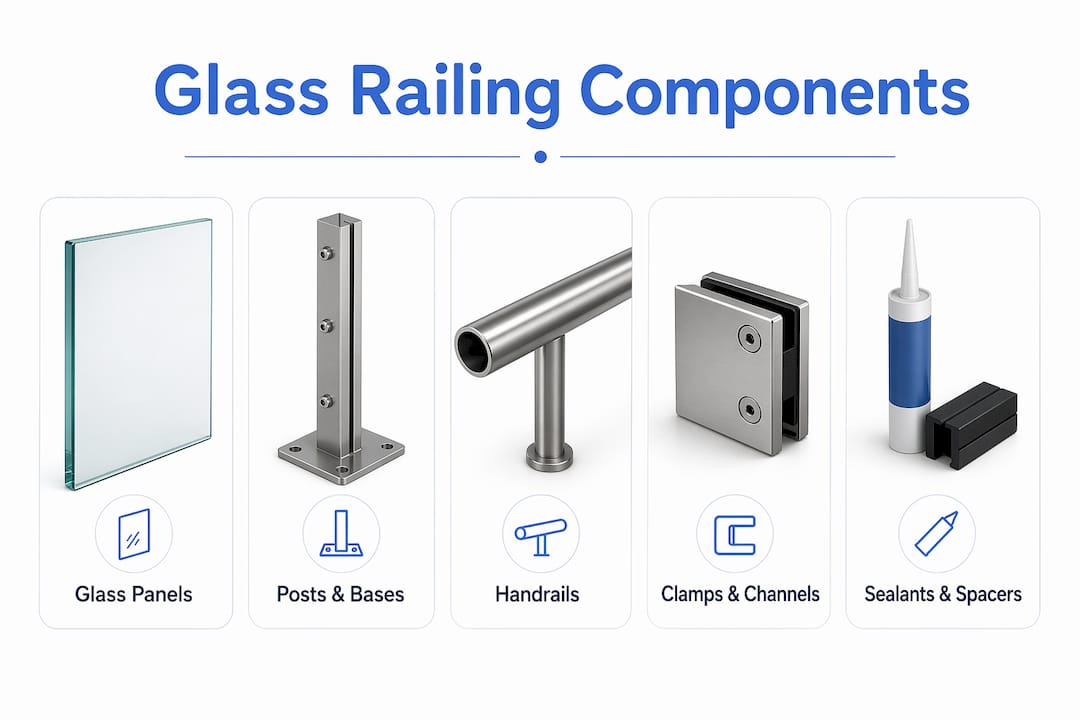
A complete glass railing kit contains six core component categories. Each plays a specific structural or safety role, and missing any one of them creates a gap in both function and code compliance.
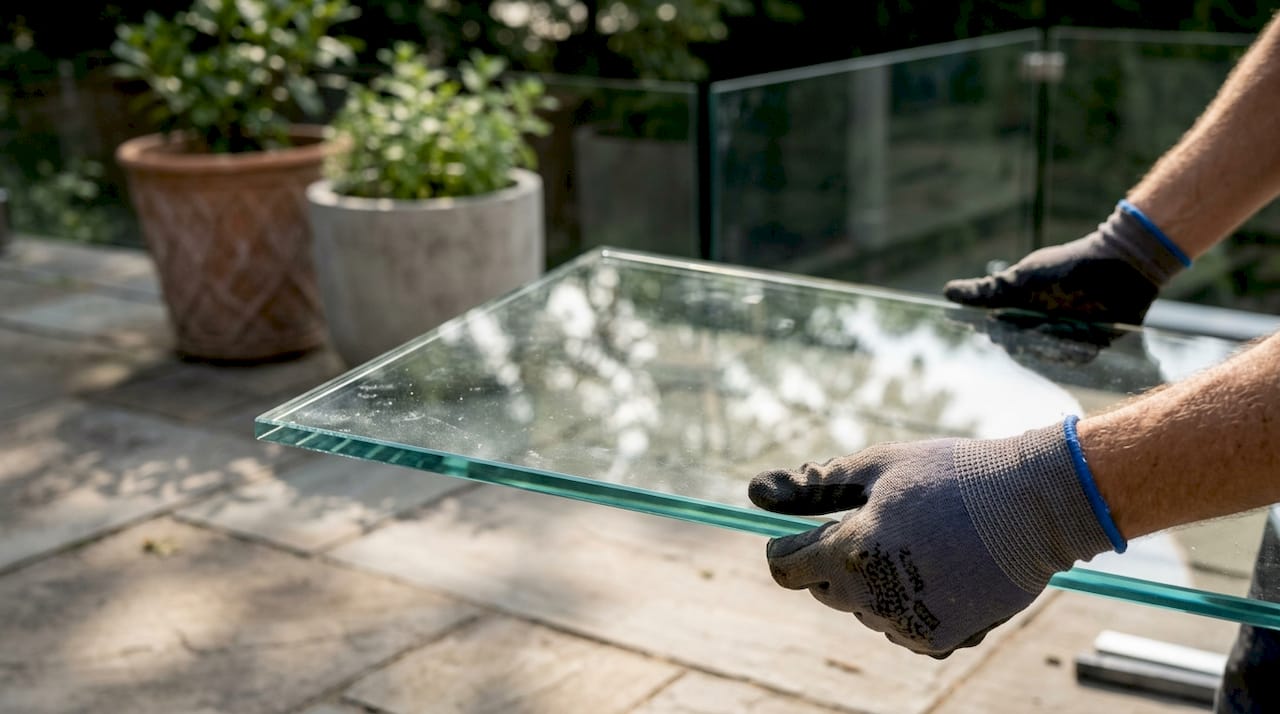
Glass panels are the most visible component. Tempered glass is the standard choice for most residential applications because it shatters into small, blunt fragments rather than sharp shards. Laminated glass goes further: it bonds two or more glass plies with an interlayer, so the panel holds together after breakage. Laminated glass maintains barrier integrity after impact, unlike monolithic tempered glass, which can fully fragment and fall. That distinction matters most on elevated decks or stairways where a failed panel creates an immediate fall hazard. Standard panel thicknesses for residential railings run from 3/8 inch to 1/2 inch, depending on post spacing and load requirements.
Posts and mounting bases anchor the system to the structure. Surface mount posts bolt to the top of a deck or floor. Side mount posts attach to the face of a joist or rim board. Embedded posts set into concrete or a structural sleeve. Each type suits a different substrate and load path.
Handrails and connectors run along the top of the system. Most kits include a cap rail in aluminum or stainless steel, along with wall connectors and 90-degree connectors for corners and wall terminations. The handrail ties the panels together and provides the graspable surface required by code on stairs.
Clamps, channels, and fixing hardware secure the glass to the posts or base rail. Clamps grip the glass edge with rubber-lined jaws. Channels are U-shaped metal base rails that the glass slides into, held by wedges or structural silicone.
A complete made-to-measure kit also includes spacer blocks, silicone sealant, fixings, and detailed production sheets that specify bracket heights and positions precisely. Those production sheets remove guesswork from the installation process.
| Component | Material | Primary function |
|---|---|---|
| Glass panels | Tempered or laminated glass | Safety barrier and visual transparency |
| Posts and bases | Stainless steel or aluminum | Structural support and load transfer |
| Handrails | Aluminum or stainless steel | Graspable top rail for code compliance |
| Clamps or channels | Stainless steel | Glass retention and alignment |
| Spacer blocks and gaskets | EPDM rubber | Vibration damping and glass protection |
| Silicone sealant | Structural silicone | Weatherproofing and secondary retention |
Pro Tip: Always check that the rubber gaskets or EPDM pads are included in your kit. Installers who skip them and let metal clamps contact glass directly create stress points that can crack panels weeks after installation.
How do glass railing kit components ensure safety and meet building codes?
Glass railing safety features are built into every component, not just the glass itself. The system works as a unit, and each part must meet specific standards for the whole assembly to pass inspection.
The most cited dimensional rule is the 100mm sphere rule: no opening in a glass balustrade may allow a 100mm sphere to pass through. This prevents child entrapment between panels or between a panel and a post. Panel spacing and clamp placement must both account for this limit.
Glass thickness and type requirements come from codes like ASTM E2353, the International Building Code (IBC), and ANSI Z97.1. The Chicago building code, for example, requires laminated glass in guards or top rails, with multiple glass plies tested for post-breakage retention. That requirement reflects a broader shift in 2026 code updates toward laminated glass as the preferred material in high-risk locations.
Handrails deserve special attention. Stairs require both a guard and a graspable handrail, and glass panel edges do not qualify as graspable surfaces under most codes. Metal handrails must be mounted to the glass panels or to adjacent walls, aligned with code-required grip zones and extensions at the top and bottom of each stair run.
“A safe glass railing is an integrated system of glass, mounting hardware, and substrate. Each must work in harmony to meet safety and load requirements.” — Guardrail and Balustrade Glass: Core Code Decisions
Substrate anchoring is the most underestimated safety factor. Glass railing hardware must anchor into substrates capable of transferring design loads, including concrete, structural steel, or structural timber. Inadequate fixings or wrong anchors risk system failure even when the glass itself is correctly specified. Review the building codes for glass railings before you finalize your substrate plan.
Key safety compliance checkpoints for any kit:
- Glass type: laminated preferred for drops over 600mm without a secondary handrail
- Panel spacing: no gap exceeds 100mm
- Handrail: graspable metal rail required on all stair applications
- Fixings: anchors rated for the structural substrate in use
- Post spacing: matches the glass panel’s load span rating
What are the different mounting systems in glass railing kits?
Mounting systems are the structural backbone of any glass railing assembly. The two primary systems are clamped glass and channel-based (embedded) glass, and each has a distinct installation profile.
Clamped systems use stainless steel clips that grip the glass panel from the side or bottom edge. The clips bolt to posts or a base plate. This system is fast to install and easy to adjust during alignment. The trade-off is that each clamp requires precise torque. Over-tightening creates point stress on the glass edge, which can cause delayed cracking. Under-tightening allows panel movement under load.
Channel systems set the glass into a continuous U-shaped metal base rail. The glass is held by wedges or structural silicone injected into the channel. Channels offer continuous support along the glass edge, which distributes load more evenly than discrete clamps. The installation is more complex because the channel must be perfectly level before the glass goes in. Adjustments after the glass is seated are difficult.
| System | Installation complexity | Load distribution | Adjustability |
|---|---|---|---|
| Clamped | Low to moderate | Point loads at clamps | High before final torque |
| Channel (embedded) | Moderate to high | Continuous along edge | Low after glass is set |
Hardware material matters for outdoor applications. Marine-grade 316 stainless steel resists salt air and moisture far better than 304 stainless or aluminum. Coastal decks and pool fences should always specify 316 stainless hardware. Aluminum is lighter and works well for interior or sheltered applications where corrosion is not a concern.
Pro Tip: Before ordering a kit, probe your deck framing or concrete slab to confirm the substrate can handle the anchor loads your chosen mounting system requires. A structure reinforcement guide can help you identify weak points before installation begins.
What tools and accessories come with a glass railing kit?
A well-specified kit includes more than just glass and hardware. The installation accessories determine how accurately and safely the system goes together.
Standard installation kits include the following tools and accessories:
- Cordless drill with masonry and wood bits for anchor holes
- Allen keys (hex keys) for tightening clamp bolts and connector screws
- Spirit level (minimum 48 inches) for post and rail alignment
- Tape measure and pencil for marking bracket positions
- Masking tape to protect glass edges during handling and marking
- Silicone gun and structural silicone for channel systems and weatherproofing joints
- Spacer blocks to maintain consistent panel gaps during installation
- Safety gloves and goggles for glass handling
Production sheets are the most underrated item in any kit. These documents specify exact bracket heights, post positions, and panel orientations for your specific run length and configuration. Following them precisely is what separates a clean installation from one that requires rework. Suction cup lifters are not always included but are strongly recommended for panels larger than 24 inches wide. A full glass railing installation walkthrough covers how each tool integrates into the assembly sequence.
Using laminated glass ensures that broken panels remain in place long enough for safe replacement, a critical safety feature that affects how you handle and store panels on site. Always keep panels vertical during storage and transport to prevent edge chipping.
Key Takeaways
A glass railing kit is only as safe as its weakest component, making full knowledge of every part, from the glass type to the anchor fixings, non-negotiable before installation begins.
| Point | Details |
|---|---|
| Glass type determines safety | Laminated glass holds together after breakage; tempered glass alone can fully fragment and fall. |
| Mounting system affects complexity | Channel systems distribute load better; clamped systems are easier to adjust before final torque. |
| Substrate must match the hardware | Anchors rated for concrete, steel, or structural timber are required to transfer design loads safely. |
| Handrails are code-required on stairs | Glass panel edges are not graspable; a separate metal handrail is mandatory on all stair runs. |
| Production sheets prevent errors | Manufacturer documentation specifies exact bracket positions and heights, removing installation guesswork. |
What I have learned from specifying glass railing kits
The biggest mistake I see is treating a glass railing kit like a furniture flat-pack. People assume the parts are interchangeable and the instructions are optional. They are not. Every component in a quality kit is specified for a particular load path, and swapping in a cheaper clamp or skipping a gasket creates a failure point that may not show up for months.
The laminated versus tempered debate is where I see the most confusion. Tempered glass is fine for many applications, but on any elevated run where a broken panel would leave a gap over a drop, laminated is the only responsible choice. The post-breakage retention requirement under ASTM E2353 exists precisely because a panel that shatters and falls is not a barrier. It is a hazard.
Aesthetics drive a lot of kit selection decisions, and that is not wrong. Frameless systems look cleaner than framed ones. But frameless systems require at least three panels or laminated glass with tested plies to meet certain codes, and that requirement catches people off guard when they are mid-order. Know your code requirements before you fall in love with a particular look.
The substrate conversation is the one I wish more buyers had before purchasing. I have seen beautiful kits installed on decks with rotted rim joists or undersized concrete anchors. The glass and hardware were perfect. The structure was not. A railing system is only as strong as what it is bolted to.
— Fuanne
Glassrailingstore kits: tested components, clear compliance
Glassrailingstore offers pre-engineered glass railing kits built around tempered and laminated glass panels, marine-grade 316 stainless steel hardware, and connectors tested for structural performance. Every kit is designed to align with current building codes, so you are not piecing together compliance from separate sources.

The engineering testing documentation behind each kit gives contractors and homeowners confidence that the system performs under real load conditions, not just catalog specifications. For projects where code compliance is a priority, the building code resources on the site map requirements by application type. If you need a specific panel size, the 46-inch tempered glass panel is a popular starting point for deck and balcony builds. Glassrailingstore also offers free shipping on orders over $3,000 and direct support for project planning.
FAQ
What glass type is best for a railing kit?
Laminated glass is the preferred choice for most railing applications because it holds together after breakage, maintaining the barrier. Tempered glass alone can fully fragment, which creates a fall hazard on elevated installations.
Does a glass railing kit include a handrail?
Most complete kits include a cap rail or handrail component, but glass panel edges do not qualify as graspable handrails under building codes. A separate metal handrail is required on all stair applications.
What is the 100mm sphere rule for glass railings?
The 100mm sphere rule requires that no opening in a glass balustrade allows a 100mm sphere to pass through. This standard prevents child entrapment and governs panel spacing and clamp placement throughout the system.
Can I install a glass railing kit myself?
Yes, with the right tools and by following the manufacturer’s production sheets precisely. Clamped systems are more DIY-friendly than channel systems, which require a perfectly level base rail before the glass is set.
What substrate do glass railing fixings require?
Glass railing hardware must anchor into concrete, structural steel, or structural timber capable of transferring the system’s design loads. Inadequate substrates risk system failure regardless of how well the glass and hardware are specified.
Recommended
- Structure Reinforcement for Glass Railings: 2026 Guide – The Glass Railing Store
- Glass Railing Support Systems: What You Need to Know – The Glass Railing Store
- Glass Railing Installation Guide – The Glass Railing Store
- Essential Glass Railing Tools for Builders and Homeowners – The Glass Railing Store