

Tempered glass advantages: enhance safety and design outdoors
Most people hear “glass railing” and picture something that looks beautiful right up until it doesn’t. The assumption that glass is fragile, risky, and high-maintenance has kept many homeowners and developers from choosing what is actually one of the most resilient and elegant railing options available. Tempered glass rewrites that story completely, combining engineered strength, safety-first breakage behavior, and striking visual clarity that no wood or metal railing can match. This guide breaks down everything you need to know, from how tempered glass is made to how you can install and maintain it for decades of outdoor performance.
Table of Contents
- What is tempered glass? Key properties explained
- Strength and safety: Why it matters for outdoor railings
- Aesthetic advantages: Modern design and visibility
- Maintenance, longevity, and weather resistance
- Application tips: Choosing and installing tempered glass railings
- Our take: Why tempered glass railings are the smarter investment
- Explore tempered glass railing options
- Frequently asked questions
Key Takeaways
| Point | Details |
|---|---|
| Superior safety | Tempered glass railings offer unmatched strength and safe breakage, ideal for outdoor spaces. |
| Modern aesthetics | Glass railings create clean sightlines and elevate the look of decks, balconies, and patios. |
| Low maintenance | Tempered glass resists weather and wear, remaining easy to clean and durable year-round. |
| Customizable solutions | Tempered glass panels can be tailored to fit unique outdoor designs and site requirements. |
What is tempered glass? Key properties explained
Tempered glass is not ordinary window glass. It goes through a specific manufacturing process that fundamentally changes its physical properties. Glass panels are heated in a furnace to roughly 1,200 degrees Fahrenheit, then blasted with rapid jets of cold air. This heating and cooling cycle, called “quenching,” creates powerful internal compression on the surface and tension in the core. The result is a panel that behaves completely differently from standard glass under stress.
Four times stronger than standard glass, tempered glass owes that strength entirely to this thermal process. You can push, pull, and flex a tempered panel far more than you could ever flex a regular pane of the same size and thickness.
The safety story is equally important. When tempered glass does break under extreme force, it does not shatter into long, jagged shards that can cut and puncture. Instead, the entire panel fractures into small, relatively blunt pebble-like pieces. That breakage pattern is built directly into the glass by the internal stress the quenching process creates.
Here is a quick breakdown of what makes tempered glass stand apart:
- Thermal strength: Handles temperature swings from below freezing to intense summer heat without cracking
- Impact resistance: Absorbs far more lateral force than standard glass before failing
- Safe breakage: Fractures into small, rounded fragments rather than dangerous shards
- Rigidity: Holds firm under wind loads and physical pressure common on open decks and balconies
- Compliance ready: Meets the building codes for glass railings set at both state and national levels
“Tempered glass is made by heating and rapidly cooling, making it four times stronger than standard glass.” This is why building codes across the United States require tempered or laminated safety glass for any railing application.
Understanding these core properties is what separates homeowners who make confident glass railing decisions from those who hesitate. Once you know how it works, the choice becomes much easier.
Strength and safety: Why it matters for outdoor railings
With tempered glass’s properties in mind, let’s dig into why its strength and safety matter so much outdoors. Outdoor railings face punishment that indoor structures rarely do. Wind gusts, seasonal temperature shifts, rain, UV exposure, and the occasional hard impact from furniture or people leaning against the rail are all real daily stresses. Standard glass would not survive this environment without regular replacement.
Here is a direct comparison between tempered glass and standard glass when used for outdoor railings:
| Feature | Tempered glass | Standard glass |
|---|---|---|
| Impact resistance | 4x stronger | Baseline |
| Breakage safety | Small blunt pebbles | Long, sharp shards |
| Weather tolerance | High, handles extremes | Low to moderate |
| Code compliance | Meets safety standards | Does not qualify |
| Longevity outdoors | 20 to 30+ years | Significantly shorter |
| Maintenance needs | Very low | Moderate to high |
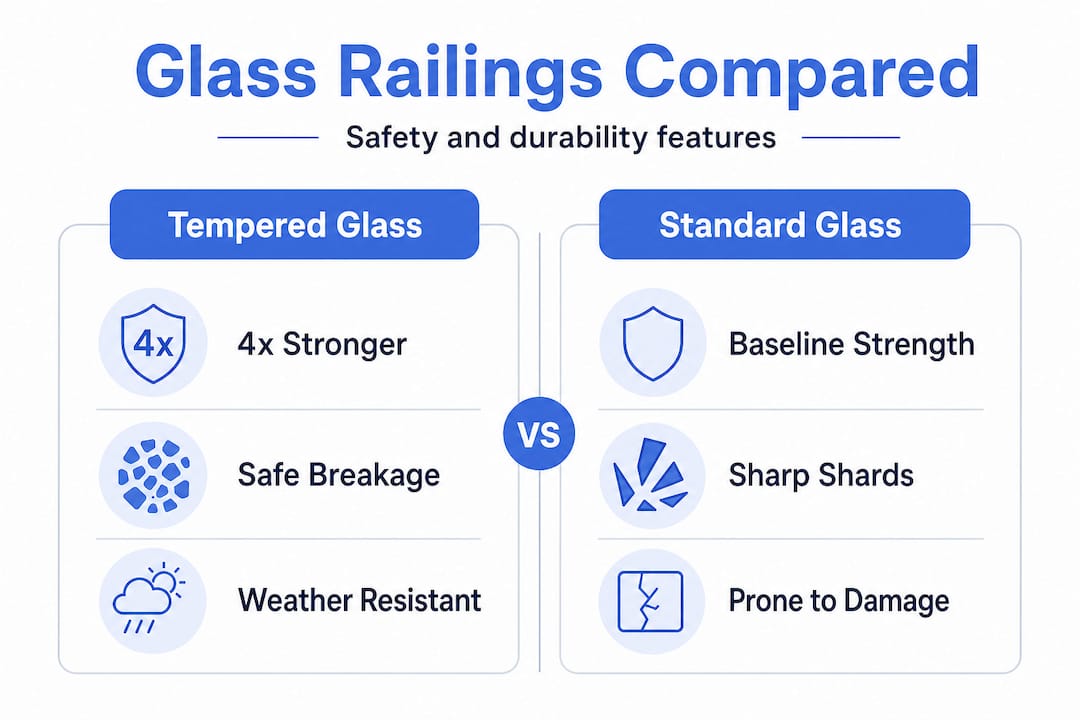
Designed to meet rigorous safety codes, tempered glass is the legally required choice for residential and commercial railing applications in most jurisdictions. If you are building or renovating in Ohio, for example, the Ohio glass railing standards outline specific requirements for panel thickness, height, and load capacity that tempered glass is purpose-built to satisfy.
Here is a numbered breakdown of the key safety advantages for outdoor use:
- Load resistance: Tempered glass railings are engineered to handle the lateral force of people leaning against them, typically 200 pounds of force per lineal foot in most codes.
- Wind performance: Panels rated for outdoor installation are tested against wind loads, which is critical for elevated decks and rooftop terraces.
- Thermal cycling: Unlike metal, glass does not expand and contract dramatically with temperature changes, reducing the risk of structural fatigue over years.
- UV stability: Glass does not degrade or become brittle from sun exposure the way some plastics or composites do.
- Non-corrosive surface: The glass itself will not rust, rot, or oxidize regardless of coastal salt air, humidity, or moisture.
Pro Tip: When specifying a tempered glass railing for a deck more than 30 inches above grade, always confirm the required minimum thickness with your local building department. Most jurisdictions require at least 3/8 inch tempered glass for these applications, and some high-traffic commercial spaces call for 1/2 inch panels.
These performance advantages are not theoretical. Every point above translates directly into a safer, more reliable railing for your family, your guests, and your property.
Aesthetic advantages: Modern design and visibility
Tempered glass isn’t just about strength, its aesthetic impact sets it apart from every other railing material. Wood railings interrupt your view. Metal balusters break up the sightline with vertical lines every few inches. Glass eliminates all of that. A well-installed glass railing feels like the boundary simply disappears, leaving you with an unobstructed connection to the landscape, the water, or the yard below.

Tempered glass allows unobstructed views and creates a contemporary, clean look that works equally well in high-end luxury builds and practical renovation projects. This is not a niche design trend. It is a mainstream shift that architects, contractors, and property developers have embraced because it adds genuine perceived value to any space.
Here is how glass railing finishes and options stack up against homeowner needs:
| Finish or style option | Best suited for | Design effect |
|---|---|---|
| Clear tempered glass | Open views, modern homes | Maximum transparency |
| Low-iron (ultra-clear) glass | Coastal or bright outdoor spaces | Zero green tint, crystal clarity |
| Bronze or gray tinted glass | Privacy, sun control | Subtle color, reduced glare |
| Frosted or acid-etched glass | Pool fences, privacy screens | Diffused light, soft appearance |
| Custom cut panels | Non-standard deck shapes | Perfect fit for any geometry |
The aesthetic flexibility of tempered glass panels is one reason they work across such a wide range of projects. Consider these applications:
- Elevated decks and balconies: Clear glass preserves the view that made the property valuable in the first place
- Pool surrounds: Frameless glass fencing gives parents a clear line of sight to the water while meeting pool safety codes
- Rooftop terraces: Glass railings let wind pass with minimal resistance while keeping the panoramic view intact
- Interior staircases: A glass panel stair railing opens up tight spaces by removing the visual weight of solid balusters
The minimalist look also ages well. Trends come and go, but clean lines and transparency never look dated. That is a significant advantage when you are making a decision that will affect your home’s appearance for the next 20 years.
Maintenance, longevity, and weather resistance
Beyond its look, tempered glass also offers lasting value for homeowners. One of the most common concerns people have about glass railings is that they will be a constant cleaning burden. The reality is the opposite. Glass is one of the lowest-maintenance railing surfaces available.
Tempered glass resists scratches and withstands temperature changes, making it genuinely suited to year-round outdoor installations in climates ranging from Minnesota winters to Florida summers. The glass surface itself will not degrade from weather exposure. What you are really maintaining is the cleanliness of the panel, not the structural integrity of the material.
Here is what a solid maintenance routine looks like:
- Monthly cleaning: A simple wipe-down with warm water and a mild dish soap removes most fingerprints, pollen, and light grime
- Annual deep clean: Use a non-abrasive glass cleaner and a soft microfiber cloth to remove mineral deposits from hard water or rain
- Hardware check: Inspect the stainless steel mounting hardware, clamps, and standoffs annually for any signs of corrosion, particularly in coastal areas
- Sealant review: If your panels use a channel or base shoe system, check the rubber gaskets every two to three years and replace them if they show cracking
Compare this to wood railings, which need sanding, staining, and sealing every year or two, or metal railings that require painting and rust treatment. Glass simply needs to be kept clean.
Pro Tip: Apply a water-repellent glass treatment, similar to products used on car windshields, to your outdoor tempered glass panels. This causes water to bead and run off rather than dry in streaks, cutting your cleaning time in half and keeping panels looking clear between washes.
When properly installed with marine-grade stainless steel hardware, a tempered glass railing system can realistically last 25 to 30 years without needing replacement. That kind of longevity significantly changes the math when comparing upfront costs to lifetime ownership expenses.
Application tips: Choosing and installing tempered glass railings
To help you make the most of tempered glass, here are some practical steps for application. Getting the details right from the start is what separates a railing that looks great on day one from one that looks great for decades.
Follow these steps to select the right panels for your project:
- Measure the run and height accurately. Most residential code requires a minimum railing height of 36 inches for decks up to 30 inches above grade, and 42 inches for higher decks. Measure twice before ordering.
- Select the appropriate thickness. Standard residential applications typically use 3/8 inch tempered glass. High-traffic areas or commercial installations often require 1/2 inch panels.
- Choose your mounting system. Options include frameless base shoe channels, standoff clamps, and post-mounted systems. Each has different structural requirements and visual profiles.
- Verify local code requirements. Check your municipality’s version of the International Building Code, including any state-specific amendments, before finalizing your design.
- Order custom panels for non-standard dimensions. Most decks, balconies, and stairs have at least one run that does not fit a standard size. Custom glass railing solutions are available to fit those exact dimensions without compromise.
Additional considerations before you begin installation:
- Always confirm the structural integrity of your deck framing before adding any railing system. Glass railings transfer lateral loads directly into the frame.
- Use only hardware rated for exterior use, specifically marine-grade 316 stainless steel, to prevent corrosion in moisture-rich environments.
- If you are unsure about any step, connect with certified glass railing installers who can ensure your system is both safe and code-compliant from day one.
Working with certified professionals is not a sign that the project is too complex for you. It is a recognition that glass railing installation involves precise torque specifications, proper shimming, and safety checks that protect your investment and your family.
Our take: Why tempered glass railings are the smarter investment
Here is something most articles won’t tell you. The biggest obstacle to choosing tempered glass railings is not the price. It is the lingering, unfounded belief that glass belongs indoors and behind picture frames, not on an elevated deck with kids and weather and real life happening around it.
We have worked with hundreds of homeowners who initially hesitated because of that perception. Nearly all of them, once they understood the engineering and saw the installations in person, could not believe they had considered anything else. The moment you lean against a properly installed tempered glass railing and feel zero flex, zero wobble, and absolute solidity, the “glass is fragile” myth simply evaporates.
The investment argument also deserves a more honest look. Yes, tempered glass railings typically cost more upfront than basic wood or aluminum systems. But factor in the zero repainting costs, zero rot replacement, zero rust treatment, and the genuine boost to property value that comes from premium materials, and the math shifts dramatically. Real estate agents consistently report that frameless glass railings are a visible upgrade that buyers notice and respond to.
We also think the safety case is undersold. When you choose custom tempered glass railing panels with proper certification and professional installation, you are choosing a system that was designed from the start to fail safely if it ever fails at all. That is a fundamentally different level of engineering than a wooden post that rots from the inside or a metal rail that corrodes at the base without visible warning.
The smarter investment is not always the cheapest option on day one. It is the one that keeps performing, keeps looking great, and keeps your household safe for the next three decades.
Explore tempered glass railing options
Ready to upgrade your outdoor space? The right materials and support can make the entire process straightforward, from measuring your deck to selecting the perfect panel thickness and mounting system.

At Glass Railing Store, you will find a complete selection of custom tempered glass railings designed for real outdoor conditions, backed by detailed product specifications, installation guides, and responsive customer support. Whether you are planning a DIY weekend project or a full commercial development, you can request a quote, get expert sizing advice, and find certified installers in your area to handle every detail. Free shipping is available on orders over $3,000, making premium glass railings even more accessible for larger projects.
FAQs
1. Is tempered glass safe for outdoor railings?
Yes, tempered glass is engineered to be far stronger and safer than ordinary glass, and it meets rigorous safety codes required for both residential and commercial outdoor railing applications in the United States.
2. How is tempered glass different from regular glass in railings?
Tempered glass is four times stronger than standard glass, shatters into small blunt fragments instead of sharp shards, and handles weather extremes and impact loads that would destroy ordinary glass panels.
3. What maintenance does tempered glass require?
Tempered glass railings are low-maintenance because they resist scratches and temperature changes, requiring only periodic cleaning with soap and water plus annual hardware inspections to stay in excellent condition.
4. Can tempered glass railings be customized for different spaces?
Absolutely. Tempered glass panels are available in a wide range of sizes, thicknesses, and finishes, and certified installers can ensure every custom configuration meets the safety and design standards specific to your project.
Recommended
- Why glass barriers beat wood and metal for outdoor safety – The Glass Railing Store
- Glass railing durability: Build it right, build it to last – The Glass Railing Store
- 46" Height Tempered Glass Panel for Glass Railing – The Glass Railing Store
- 39.6" Height Tempered Glass Panel – The Glass Railing Store