

How to Select Balcony Glass: A Safety-First Guide
Balcony glass is a structural safety barrier, not just a decorative feature. Knowing how to select balcony glass correctly means weighing glass type, thickness, safety certification, and installation method together. Get any one of these wrong and you risk code violations, hardware failure, or worse. This guide covers every factor that matters in 2026, from ASTM compliance and tempered versus laminated options to frameless mounting systems and coastal weather demands.
What Types of Glass Are Best for Balcony Installations?
Tempered glass and laminated glass are the two primary options for balcony railings. Each serves a different purpose, and the best installations often combine both.
Tempered glass is produced by heating standard glass and cooling it rapidly. This process makes it 4–5 times stronger than annealed glass and gives it thermal shock resistance up to 160°C. When it breaks, it shatters into small, blunt cubes rather than sharp shards. That break pattern reduces injury risk, which is why building codes across the U.S. require tempered glass in balcony applications.
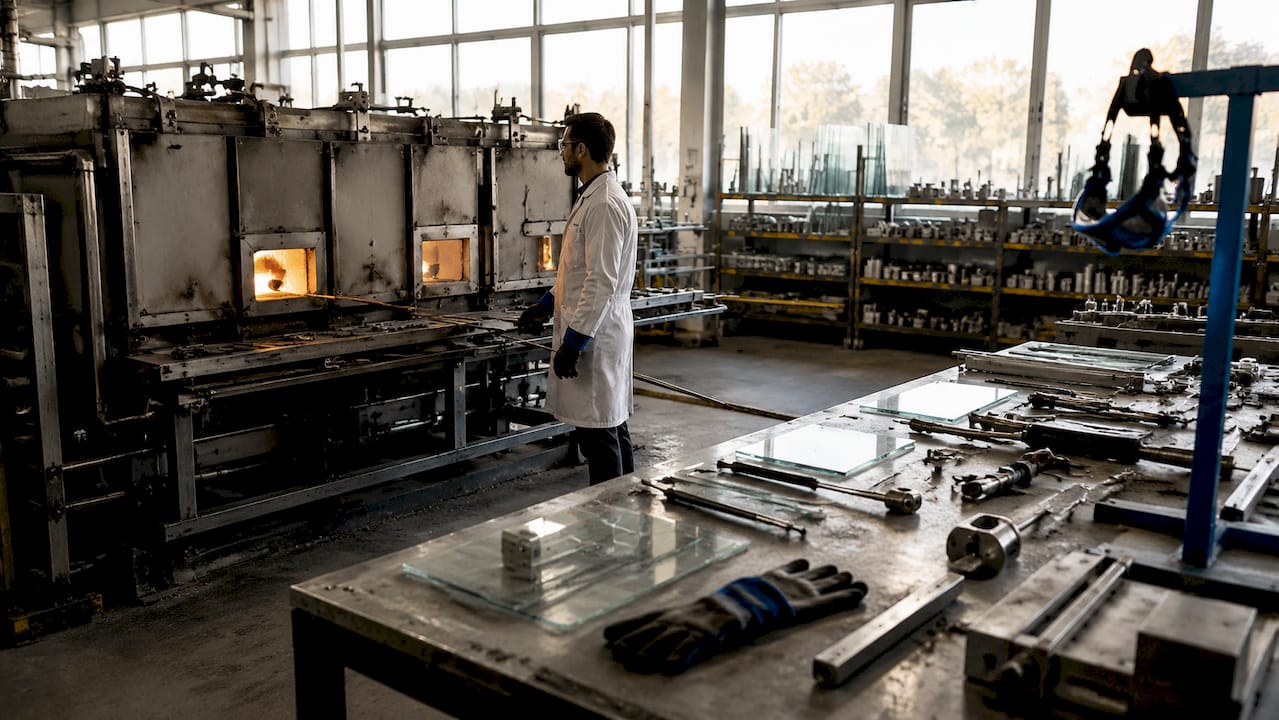
Laminated glass bonds two or more glass plies together with an interlayer, typically PVB (polyvinyl butyral) or SGP (SentryGlas Plus). When laminated glass breaks, the interlayer holds shards together, preventing panels from falling out entirely. This is critical for high-rise balconies and high-traffic areas where a falling panel creates a serious hazard below.
The most important distinction is between heat-strengthened and fully tempered glass within laminated assemblies. Heat-strengthened laminated glass breaks into large interlocking fragments that stay bonded to the interlayer, maintaining the barrier function after impact. Fully tempered glass, by contrast, shatters into small dice and loses structural integrity immediately. Industry professionals call this the “wet blanket” effect: heat-strengthened laminated glass maintains load capacity after breakage, while fully tempered glass does not. For most balcony balustrades, heat-strengthened laminated glass is the preferred specification.
Annealed glass is never used alone in balcony balustrades. It produces large, razor-sharp fragments when broken. It is only permitted as an inner ply within a laminated panel assembly.
Pro Tip: Ask your supplier for the glass certification documentation before ordering. A reputable supplier provides ASTM or EN 12150 test reports with every panel.
How Thick Should Balcony Glass Be?
Glass thickness is one of the most misunderstood decisions in balcony glass selection. Thicker glass resists deflection and load better, but the right thickness depends on your specific application.
Residential balcony glass ranges from 10mm to 19mm depending on exposure, height, and mounting system. The table below maps common applications to recommended thickness ranges.
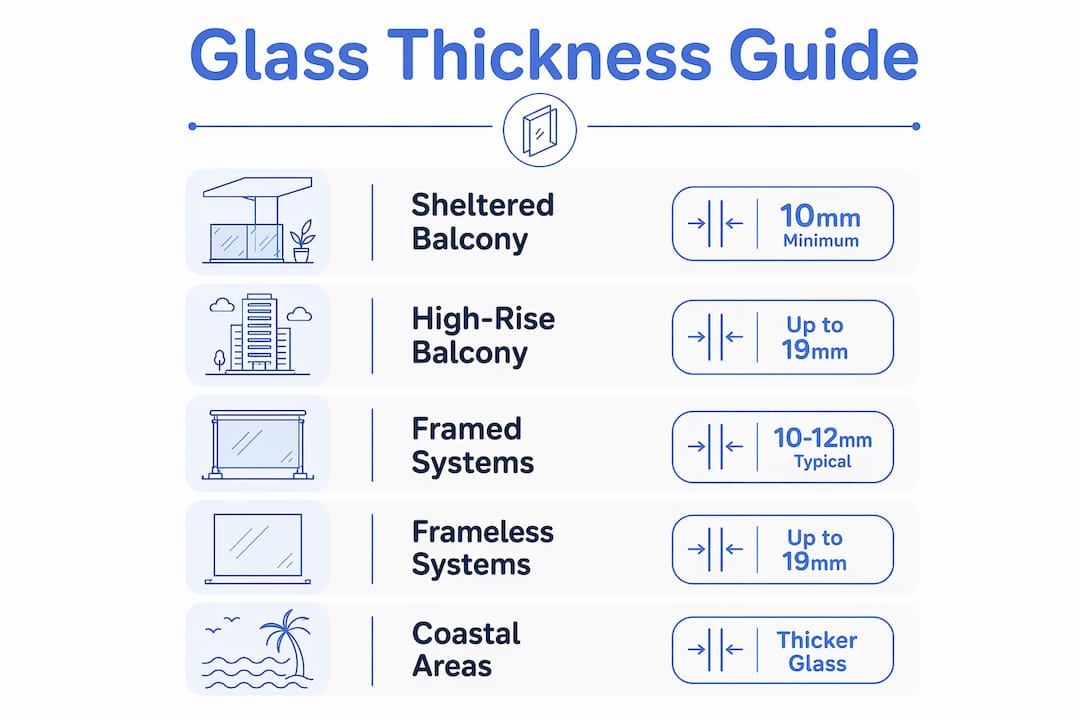
| Application | Recommended thickness | Notes |
|---|---|---|
| Sheltered residential balcony | 10mm | Minimum for framed systems only |
| Standard residential deck or balcony | 12mm | Most common residential spec |
| Mid-rise or high-traffic areas | 15mm–17.5mm | Increased load and wind exposure |
| Fully frameless high-rise installation | 19mm | Glass carries full structural load |
Deflection control is as important as break strength. A glass panel can pass load tests but still flex enough under pressure to cause user discomfort or hardware failure. Thicker panels deflect less under lateral force, which matters on exposed balconies where wind loads are significant.
Coastal and high-rise locations demand the thicker end of the range. Coastal balconies face salt spray, high humidity, and sustained wind pressure that accelerate wear on both glass and hardware. A 12mm panel that performs well in a sheltered suburban setting may be inadequate on a beachfront property.
Railing height also affects panel size and therefore thickness. The International Building Code (IBC) requires a minimum 36-inch railing height for decks under 30 inches above grade and 42 inches for higher decks. Taller panels carry more wind load and need proportionally thicker glass to control deflection.
Pro Tip: Never specify thickness based on aesthetics alone. Have a structural engineer confirm the minimum thickness for your specific height, wind zone, and mounting system before ordering.
What Safety Standards Apply to Balcony Glass?
Balcony glass must meet specific load, glazing, and certification requirements before installation. Skipping certification is not a cost-saving measure. It is a liability.
The core load requirement for residential balconies in the U.S. is that glass railings withstand a 225-pound horizontal load. This simulates the force of a person leaning or falling against the railing. Panels that do not meet this threshold fail code inspection and must be replaced.
Key standards and code references include:
- ASTM C1048 covers heat-treated glass specifications, including heat-strengthened and fully tempered classifications.
- ASTM C1172 covers laminated architectural flat glass.
- EN 12150 is the European standard for thermally toughened glass, referenced in some American commercial projects.
- IBC Section 2407 governs glass in handrail and guardrail systems, including balcony applications.
- Local building codes often add requirements on top of IBC minimums, particularly in high-wind or seismic zones.
You can review the full U.S. glass railing code requirements to confirm what applies to your specific project location.
Balcony balustrades must resist multiple simultaneous loads, including wind, impact, and concentrated point loads. Treating glass barriers as critical structural elements is not optional. It is the baseline for any compliant installation.
Engineer-stamped drawings are required for permit applications in most jurisdictions. Your glass supplier should provide certified panel specifications. Your structural engineer converts those specs into stamped drawings your building department will accept. Do not skip this step on any elevated balcony project.
How Does Installation Method Affect Glass Selection?
The mounting system you choose directly determines how thick your glass needs to be and how it performs over time.
Frameless systems, which use spigots or base channels to hold glass panels without any surrounding frame, require the thickest panels available. Frameless installations need glass up to 19mm because the glass itself carries the full structural load. There is no aluminum or steel frame sharing the force. The glass is the structure.
| System type | Typical glass thickness | Load distribution |
|---|---|---|
| Framed (aluminum or steel) | 10mm–12mm | Frame carries most load |
| Semi-frameless (post-supported) | 12mm–15mm | Posts and glass share load |
| Fully frameless (spigot or channel) | 15mm–19mm | Glass carries full load |
Framed systems allow thinner glass because the aluminum or steel frame absorbs and distributes lateral force. This makes framed systems more forgiving on cost, but they interrupt sightlines. Frameless systems preserve unobstructed views but demand precise engineering and thicker panels.
Edge finishing matters more than most homeowners expect. Polished or beveled edges on frameless panels reduce stress concentration at contact points with hardware. Rough or unfinished edges create micro-fractures that propagate under load over time. Always specify polished edges for frameless installations.
Coastal environments require marine-grade stainless steel hardware alongside the glass itself. Standard hardware corrodes quickly in salt air, loosening connections and creating movement in the panel. That movement accelerates glass fatigue at the mounting points.
Pro Tip: For coastal or poolside balconies, specify 316-grade stainless steel hardware. Grade 304 is common but corrodes faster in salt environments. The upgrade cost is small compared to hardware replacement.
What Are Common Mistakes When Choosing Balcony Glass?
Most balcony glass failures trace back to a small set of avoidable errors. Knowing them in advance saves money and prevents safety incidents.
- Using under-thickness glass. Specifying 10mm glass for a frameless high-rise installation because it looks similar to 19mm glass is a dangerous shortcut. Thickness is structural, not cosmetic.
- Modifying tempered glass after production. All cutting and drilling must happen before tempering. Any attempt to cut, drill, or grind tempered glass causes immediate shattering. Measure precisely before the glass goes into production.
- Skipping laminated glass where required. In high-rise or high-traffic locations, a broken tempered panel that falls is a serious hazard. Laminated glass holds the broken panel in place. Use it wherever a falling panel creates risk to people below.
- Ignoring local wind and environmental loads. A glass spec that meets minimum IBC requirements may still be inadequate for a high-wind coastal zone. Check local amendments to the building code and consult a structural engineer.
- Choosing hardware based on appearance alone. Stainless steel hardware looks similar regardless of grade. The difference between 304 and 316 grade is invisible to the eye but significant in a salt or chlorine environment.
- Not verifying supplier certification. Not every supplier provides certified, tested panels. Always request the ASTM or EN test documentation before purchase. Glassrailingstore provides certified tempered and laminated panels with full compliance documentation.
Engaging a structural engineer for any elevated balcony project is the single most effective way to avoid these mistakes. The cost of an engineering review is a fraction of the cost of replacing non-compliant glass after a failed inspection.
Key Takeaways
Selecting the right balcony glass requires matching glass type, thickness, and mounting system to your specific location, height, and safety code requirements.
| Point | Details |
|---|---|
| Glass type determines safety behavior | Heat-strengthened laminated glass maintains barrier function after breakage; fully tempered does not. |
| Thickness follows the mounting system | Frameless systems require up to 19mm; framed systems can use 10mm–12mm panels. |
| Load compliance is non-negotiable | Residential balcony glass must withstand a 225-pound horizontal load per U.S. building codes. |
| Coastal environments need upgraded specs | Use laminated glass and 316-grade stainless steel hardware in salt air or high-wind zones. |
| Measure before tempering | All cuts and holes must be finalized before the glass is tempered. Post-tempering modification causes shattering. |
Why I always recommend laminated glass for balconies
After years of working with glass railing systems, the question I hear most often is whether tempered glass alone is good enough for a balcony. My answer is almost always no, and here is why.
Fully tempered glass meets the minimum code in many jurisdictions. But meeting the minimum and building something genuinely safe are not always the same thing. When fully tempered glass breaks, it disintegrates. The panel is gone. On a ground-level deck, that is inconvenient. On a third-floor balcony, it is a falling hazard for anyone below.
Laminated heat-strengthened glass costs more. The difference is real and worth every dollar. A broken laminated panel stays in place. It holds the barrier until you can replace it. That is not a theoretical benefit. It is the reason professional engineers specify laminated glass for elevated applications even when local code does not require it.
The other thing I have learned is that installation precision matters as much as material choice. A perfectly specified 17.5mm laminated panel installed with loose hardware or unpolished edges will fail before a well-installed 12mm panel in the same application. Get the glass right, then get the installation right. Both matter.
For anyone starting a balcony project, I recommend reviewing the glass railing building codes for your state before you finalize any spec. Local amendments can change the minimum requirements significantly.
— Fuanne
Get Certified Balcony Glass from Glassrailingstore
Glassrailingstore supplies certified tempered and laminated glass panels for residential and commercial balcony installations across the U.S. Every panel meets ASTM safety standards, and the team provides full compliance documentation for permit applications.
For projects that require engineering sign-off, Glassrailingstore offers glass railing engineering testing services to verify your installation meets local building codes. The product range covers standard residential sizes through high-rise frameless specifications, including a 46-inch tempered glass panel built for code-compliant balcony railings. Free shipping applies to orders over $3,000, and the team provides quotes and planning support for both DIY and contractor projects.
FAQs
1. What is the safest glass type for a balcony?
Heat-strengthened laminated glass is the safest option for balcony railings. It maintains the barrier function after breakage by holding shards together with the interlayer, unlike fully tempered glass, which disintegrates on impact.
2. How thick does balcony glass need to be?
Thickness ranges from 10mm for sheltered framed systems to 19mm for fully frameless high-rise installations. The correct thickness depends on your mounting system, railing height, and local wind load requirements.
3. Does balcony glass need to meet a specific load standard?
Yes. U.S. building codes require residential balcony glass railings to withstand a minimum 225-pound horizontal load. IBC Section 2407 governs glass guardrail systems, and local codes may add further requirements.
4. Can you cut or drill tempered glass on site?
No. All cutting, drilling, and edge finishing must be completed before the glass is tempered. Attempting to modify tempered glass after production causes it to shatter immediately.
5. What hardware should I use for a coastal balcony?
Use 316-grade marine stainless steel hardware for any coastal or poolside balcony. Grade 304 stainless corrodes faster in salt air and chlorine environments, which loosens connections and shortens the system’s service life.
Recommended
- How to Plan Balcony Railing: a Homeowner’s Guide – The Glass Railing Store
- Outdoor Staircase Glass Ideas That Combine Style and Safety – The Glass Railing Store
- Glass Balustrade Feature List: What Homeowners Need to Know – The Glass Railing Store
- The Role of Glass in Outdoor Safety Explained – The Glass Railing Store