

Best Glass.trex.com Alternatives for Decks and Railings
Cable railing, mixed material systems, metal railings, and wood railings are the top alternatives to glass railing options for U.S. homeowners and contractors. Each one brings a different trade-off between cost, upkeep, and visual impact.
Here is a quick look at what each option delivers:
- Cable railing: Open views with airflow and minimal maintenance. Preferred in hot or coastal climates where solid glass panels trap heat.
- Mixed material railings: Composite posts paired with metal or cable infills. Modern mixed-material trends favor these for balancing style with lower upkeep.
- Metal railings: Aluminum and steel options offer durability and weather resistance at a lower price point than glass.
- Wood railings: Traditional warmth and privacy, though they demand more maintenance than any other material on this list.
Glassrailingstore carries premium tempered glass panels and hardware for homeowners who still want the glass look, but understanding all your options first leads to better decisions.
Table of Contents
- What are the building code requirements for residential railings?
- How do glass railing alternatives compare on maintenance and durability?
- How does glass compare to its alternatives across key decision factors?
- Key Takeaways
- Glassrailingstore gives you the glass option done right
How Do Glass Railing Alternatives Compare on Maintenance and Durability?
Every railing material must meet the same baseline safety rules, regardless of what it looks like. U.S. residential deck railing height requirements typically run 36 to 42 inches, depending on deck height above grade. The International Residential Code (IRC) sets the national floor, but local jurisdictions often layer additional requirements on top.
Load resistance is the other non-negotiable. Railings must withstand lateral and vertical forces to protect occupants, and that standard applies whether you install cable, glass, aluminum, or wood. Skipping a permit or ignoring local amendments is where DIY projects get expensive fast.
Pro Tip: Pull your local permit before ordering materials. Some municipalities require engineered drawings for frameless glass systems, which adds lead time.
How Do Glass Railing Alternatives Compare on Maintenance and Durability?
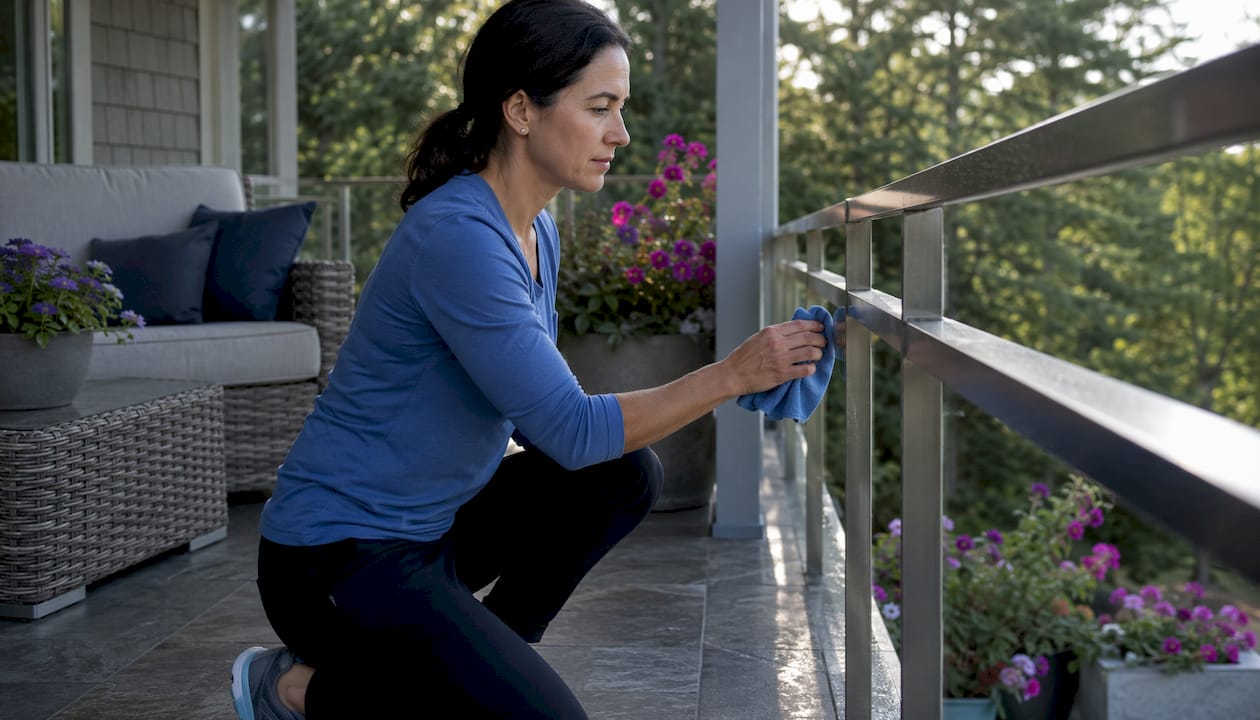
Glass railings require weekly cleaning to stay looking sharp. Fingerprints, water spots, and pollen show up fast on transparent panels, especially in high-traffic areas. Cable and metal railings need far less attention, typically an annual wipe-down and occasional hardware inspection.
Solid glass panels also create a greenhouse effect in direct sun, trapping heat on the deck surface. Cable and spaced picket systems let air move freely, keeping outdoor spaces cooler in summer. For homeowners in Florida, Texas, or Arizona, that difference is felt every afternoon.
Tempered glass and marine-grade stainless steel hardware hold up well against UV exposure and salt air when properly specified. The weak point is not the glass itself but the cleaning commitment required to keep it presentable. Modern mixed-material systems combining composite posts with metal infills have gained traction precisely because they sidestep that problem.
| Material | Aesthetic appeal | Maintenance | Weather resistance | Cost range | Code compliance |
|---|---|---|---|---|---|
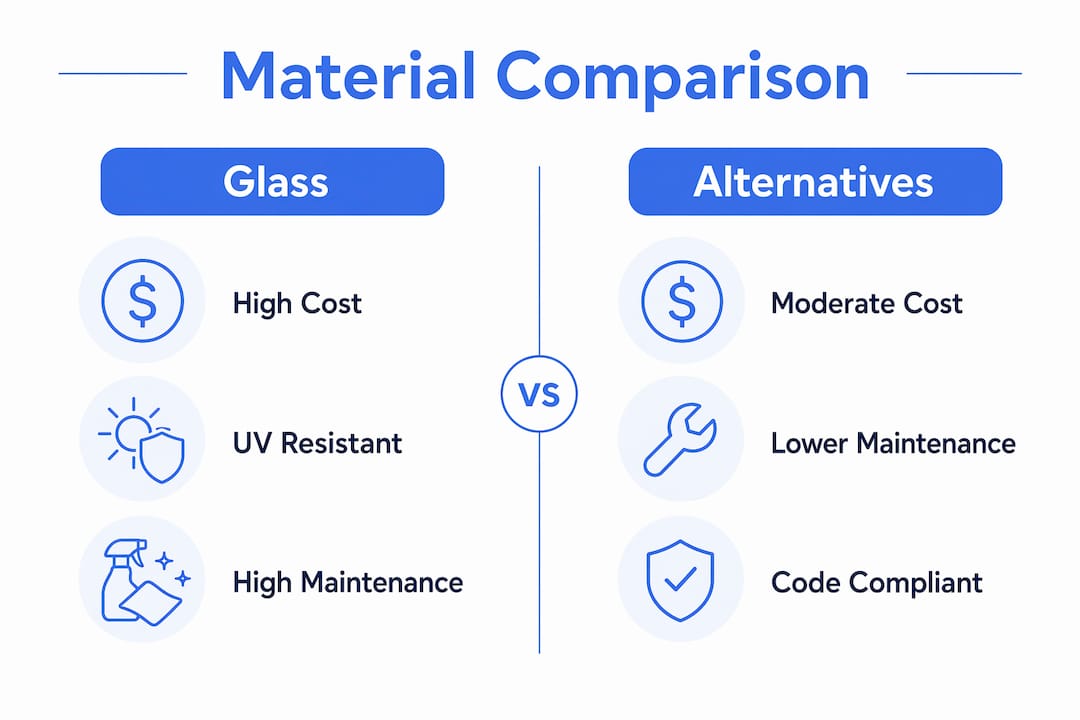
| Glass (tempered) | Maximum light, modern | Weekly cleaning | Excellent with proper hardware | High | Yes, with safety glass |
| Cable railing | Open, contemporary | Low | Excellent (316 SS near salt air) | Moderate | Yes |
| Mixed material | Versatile, current | Low to moderate | Very good | Moderate | Yes |
| Aluminum/metal | Clean, minimal | Low | Excellent | Low to moderate | Yes |
| Wood | Warm, traditional | High (staining, sealing) | Fair to good | Low to moderate | Yes |
How Does Glass Compare to Its Alternatives Across Key Decision Factors?
Glass railings sit at the premium end of the cost and complexity spectrum. Installation of frameless systems demands precision: panels must be cut and set exactly right to avoid stress fractures, and most homeowners hire professionals for that reason. Frameless glass systems need precision for safety, while framed channel systems offer more installation forgiveness. Cable railings, by contrast, are generally the most DIY-friendly option on the market.
Cost of ownership goes beyond the purchase price. Glass railings carry higher labor and materials costs plus ongoing cleaning demands compared to cable or metal alternatives. A homeowner who travels frequently or simply dislikes cleaning windows will find that gap grows over time.
Privacy is the other honest conversation. Glass is transparent by design. Tinted panels help, but they do not replicate the visual screen that wood or composite provides. Balancing aesthetic goals with practical limits like budget, climate, and privacy is the real work of choosing a railing system.
| Factor | Glass | Cable | Mixed material | Metal | Wood |
|---|---|---|---|---|---|
| Initial cost | High | Moderate | Moderate | Low to moderate | Low to moderate |
| Ongoing cost | Moderate (cleaning) | Low | Low | Low | High (refinishing) |
| DIY suitability | Low (frameless) / Moderate (framed) | High | Moderate | Moderate | Moderate |
| Privacy | Low | Low | Low to moderate | Low to moderate | High |
| View preservation | Excellent | Very good | Good | Moderate | Low |
| Typical install time | Few days | Few days | Few days | Few days | Few days |
Key Takeaways
Cable, mixed material, metal, and wood railings each offer a practical path to code-compliant safety without the cleaning demands or cost of a full glass system.
| Point | Details |
|---|---|
| Code compliance applies to all materials | U.S. residential railings must meet 36 to 42 inch height and load resistance standards regardless of material. |
| Glass demands weekly upkeep | Fingerprints and water spots require weekly cleaning to maintain a clear look, unlike cable or metal alternatives. |
| Climate affects the right choice | Solid glass panels trap heat outdoors; cable and open systems allow airflow, making them better for hot climates. |
| Installation complexity varies | Frameless glass requires professional precision; cable railings are the most DIY-friendly option available. |
| Glassrailingstore for glass systems | Glassrailingstore offers tempered glass panels, marine-grade hardware, and installation guides for homeowners who choose glass. |
Glassrailingstore Gives You the Glass Option Done Right
If you have weighed the alternatives and glass still fits your project, the difference between a frustrating install and a clean finished result comes down to component quality. Glassrailingstore stocks 46-inch tempered glass panels built for outdoor exposure, paired with marine-grade stainless steel connectors and caprail hardware designed to meet residential code requirements. Every product ships with detailed installation resources, and the team provides quotes and planning support for both DIY homeowners and professional contractors.

Free shipping applies on orders over $3,000, which covers most full deck or balcony projects. Whether you are replacing an existing system or starting fresh, browse the full selection at Glassrailingstore and request a quote to get exact pricing for your layout.
Recommended
- Top 5 deckshoppe.com Glass Railing Alternatives 2026 – The Glass Railing Store
- Top 6 Igrailing.com Glass Railing Alternatives 2026 – The Glass Railing Store
- Top 4 Invisirail.com Glass Railing Alternatives 2026 – The Glass Railing Store
- Top 5 rftransparent.ca Glass Railing Alternatives 2026 – The Glass Railing Store