

Glass Railings: Your Competitive Market Advantage Guide
Glass railings deliver a measurable competitive edge in the U.S. property and construction markets, and the numbers back that up. The glass railing segment holds approximately 18.8% of the global railing market in 2025 and is growing faster than any other railing category, at a projected CAGR of 8.3% through 2034. For property professionals and developers, that trajectory signals where buyer demand and premium margins are heading.
The glass railing competitive market advantage operates across several distinct dimensions:
- Aesthetic differentiation: Frameless and semi-frameless systems create unobstructed sightlines that wood, aluminum, and cable alternatives simply cannot replicate.
- Safety and code compliance: Modern tempered and laminated glass meets IBC and EN 1337 load-bearing standards, removing a historic barrier to specification.
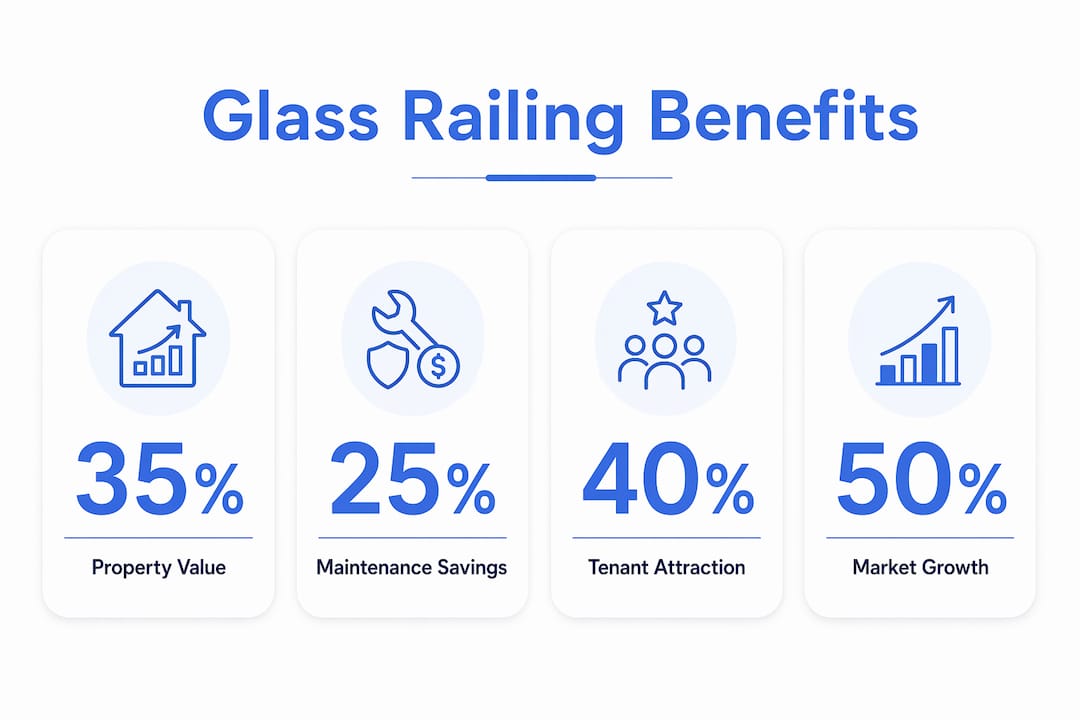
- Property value uplift: Installations can increase home values by 3.5%–15% depending on market and quality.
- Premium pricing power: Average selling prices run $500–$2,000 per linear foot, far above aluminum alternatives at $80–$250.
- Low lifecycle cost: Minimal maintenance needs reduce long-term ownership costs compared to painted wood or powder-coated metal.
- Market trend alignment: Sustainability, smart glass technology, and modular systems are all converging on glass as the preferred premium material.
Glassrailingstore has built its product line around exactly these advantages, supplying tempered safety glass panels, marine-grade stainless steel hardware, and full system components to contractors, architects, and property owners across the country.
1. How Glass Railings Give You an Aesthetic Edge Over Every Other Material
The visual case for glass railings is not subtle. Where aluminum pickets or wood balusters interrupt a view every few inches, a frameless glass panel disappears into the background, letting the architecture or the landscape do the work. On an oceanfront deck, a high-rise balcony, or a luxury hotel atrium, that unobstructed sightline is the entire point.
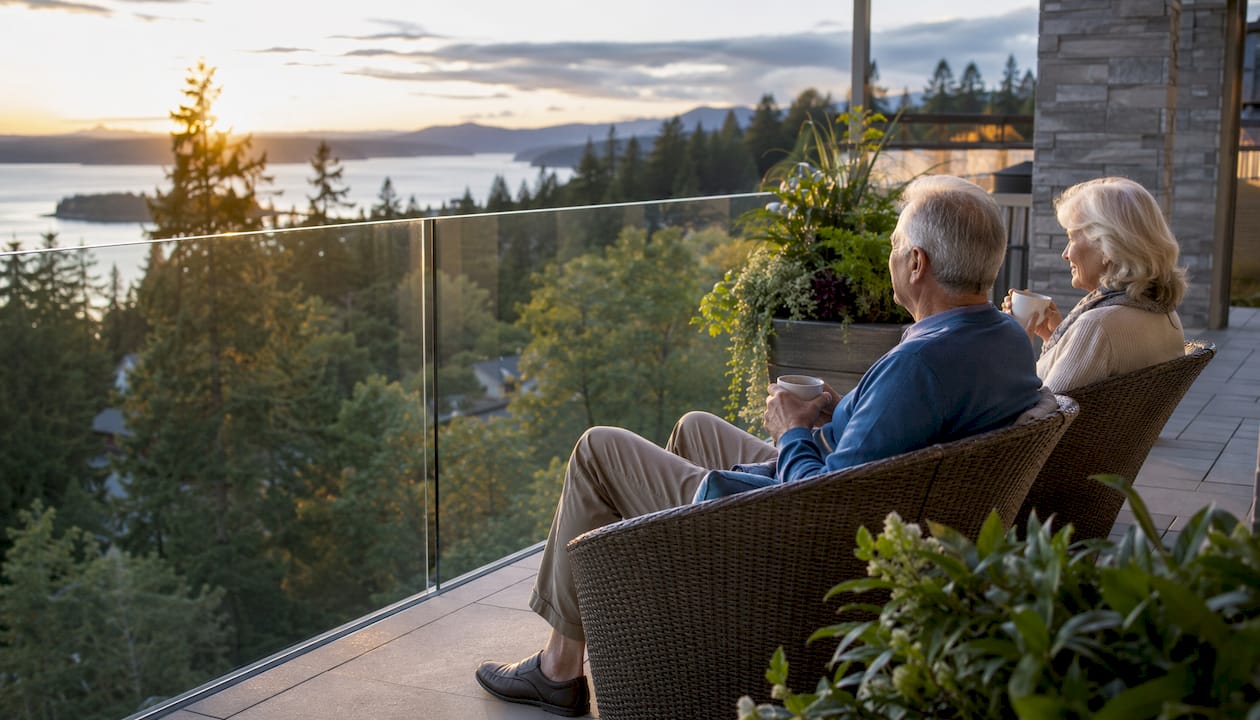
Beyond the view itself, glass creates a perception of space that no opaque material can match. Light passes through rather than stopping at the railing plane, which makes rooms feel larger and outdoor areas feel more connected to their surroundings. Architects working on smaller urban balconies use this effect deliberately, specifying frameless systems to avoid visually shrinking an already tight footprint.
Key aesthetic advantages worth specifying:
- Frameless systems with no visible posts or top rails for a fully transparent look
- Semi-frameless designs that pair glass panels with slim stainless steel posts for a structured but open feel
- Compatibility with mixed material combinations such as wood caprails, stone bases, or metal accents
- Tinted, frosted, and etched glass options for privacy without sacrificing light
- Clean lines that age well and do not go out of style the way decorative ironwork or vinyl can
The luxury residential market has made frameless glass the default specification for premium decks and balconies, and that preference is spreading into mid-market renovations as buyers increasingly recognize the look from high-end listings. For a developer or contractor, offering glass railings is now a way to signal quality before a buyer ever steps inside.
Pro Tip: Specify the glass railing system before finalizing deck or balcony dimensions. Frameless systems require precise post spacing and substrate planning. Retrofitting them into a structure designed for wood or aluminum posts adds cost and often compromises the clean look that makes glass worth specifying in the first place.
2. Why Safety and Durability Make Glass Railings a Stronger Long-Term Investment
The old objection to glass railings was structural. Early installations used annealed glass that could shatter unpredictably, and that reputation lingered long after the technology moved on. Today’s tempered and laminated safety glass has resolved those concerns entirely, and the compliance record now supports specification in demanding commercial and residential applications.
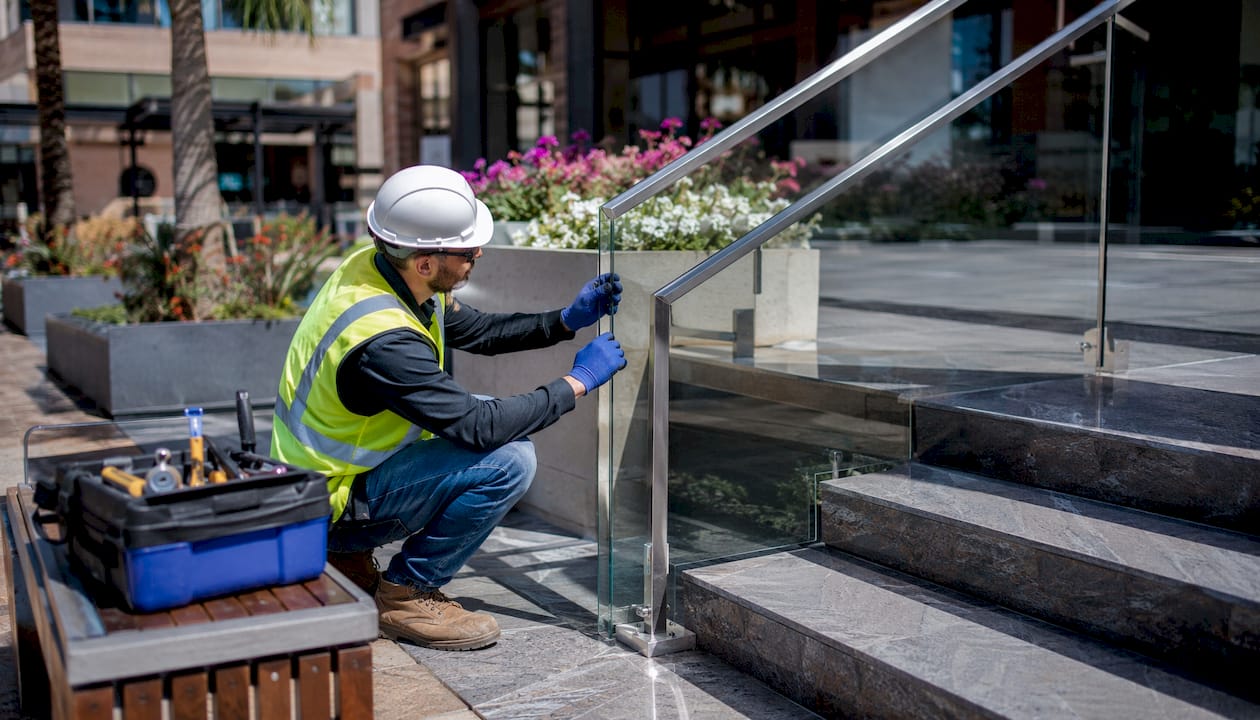
Tempered glass is roughly four times stronger than standard glass of the same thickness. When it does break, it fractures into small, blunt fragments rather than sharp shards, which is the defining safety characteristic that building codes require. Laminated glass adds a polymer interlayer that holds fragments in place even after breakage, a critical feature for overhead or high-traffic applications. Both types meet IBC load-bearing requirements and EN 1337 standards, giving architects and developers the documentation they need for permit approval and liability management.
Material and durability advantages that affect total cost of ownership:
- Tempered glass resists thermal stress, UV exposure, and surface scratching better than most polymer alternatives
- Marine-grade stainless steel hardware resists salt air corrosion, making glass systems the right call for coastal installations where aluminum fittings can pit within a few seasons
- No painting, staining, or sealing cycles, unlike wood railings that require annual or biennial maintenance
- Low-maintenance glass railings reduce long-term replacement and repair costs compared to alternatives, improving lifecycle ROI
- Glass does not rot, warp, or attract insects, eliminating failure modes that shorten the service life of organic materials
For commercial property managers, the maintenance savings alone often justify the higher upfront cost within a few years. A wood railing on a restaurant patio or hotel terrace needs refinishing every couple of seasons. A glass system with stainless hardware needs periodic cleaning and an occasional hardware check.
3. What Glass Railings Actually Do to Property Values
The ROI case for glass railings is well-documented at the property level. Studies show that glass railing installations increase home values by 3.5%–15%, with the higher end of that range appearing in competitive coastal and urban markets where unobstructed views are a primary purchase driver.
Put that in concrete terms. On a $800,000 home, a 5% value uplift from a glass railing installation on the primary deck or balcony represents $40,000 in added resale value. A full frameless system for a mid-size deck might cost $15,000–$25,000 installed, which means the return can exceed the investment before accounting for the faster sale timeline that premium finishes typically generate.
Market insight: Glass railings command average selling prices of $500–$2,000 per linear foot, compared to $80–$250 for aluminum alternatives. That price gap reflects not just material cost but the premium buyers assign to the finished look and the lifestyle signal it sends.
The curb appeal effect is harder to quantify but real. Listings with frameless glass railings photograph better, attract more online views, and tend to generate stronger first-impression responses at showings. In a market where buyers scroll through dozens of listings before scheduling a visit, the visual distinction of a glass railing on a deck or staircase can be the detail that gets the click.
For commercial properties, the calculus shifts toward tenant attraction and lease rates. A restaurant with a glass-railed terrace, a hotel with glass balcony systems, or an office building with glass stair railings in the lobby all signal a quality of finish that supports premium positioning. The glass panel segment is projected to reach $12.88 billion by 2030, driven largely by exactly this dynamic in commercial and luxury residential construction.
Market Trends and Innovations Shaping the Competitive Edge in Glass Railings
The glass railing market is not standing still. Several converging trends are creating new differentiation opportunities for suppliers, contractors, and developers who move early.
Current market growth by segment
| Segment | 2025 market share | Projected CAGR (through 2034) | Average price per linear foot |
|---|---|---|---|
| Glass railings | 18.8% | 8.3% | $500–$2,000 |
| Aluminum railings | 18.8% | 8.3% | $80–$250 |
| Composite railings | — | — | Varies |
Sources: Railing Market Research Report 2034; Grand View Research
Glass is the fastest-growing segment despite starting from a smaller base, and its revenue growth outpaces volume growth because of the price premium it commands. That combination of unit growth and price strength is what makes the segment attractive for suppliers and installers who want to move up-market.
Key growth drivers and innovations to watch:
- Self-cleaning glass coatings that use photocatalytic technology to break down organic matter, reducing cleaning frequency on exterior installations
- Modular mounting systems that simplify installation and reduce on-site labor time, a meaningful cost advantage as skilled trades remain expensive
- BIM-ready product libraries that let architects specify glass railing systems directly in Revit or ArchiCAD, reducing coordination errors and speeding up the design-to-permit timeline
- AI-based safety monitoring integrated into commercial installations to detect structural anomalies or unauthorized access
- Eco-friendly glass-metal combinations that qualify for LEED credits, opening doors to green building projects where sustainability documentation is a contract requirement
- Sustainable frameless systems using recycled glass content and low-VOC hardware finishes
The sustainability and smart technology convergence is particularly significant. Green building initiatives are no longer a niche consideration. LEED certification influences procurement decisions on a growing share of commercial projects, and glass railing suppliers who can provide environmental product declarations and recycled content documentation are winning specifications that commodity metal railing suppliers cannot touch.
Geography matters too. The glass railing market is highly localized because shipping costs for heavy glass panels are substantial, and building code requirements vary by state and municipality. Suppliers with regional distribution or local fabrication partnerships hold a real cost and service advantage over national distributors shipping from a single warehouse. For contractors, working with a supplier who understands local code requirements and can deliver without freight damage is a competitive differentiator in itself.
5. How to Maximize Your Competitive Advantage When Specifying or Selling Glass Railings
The professionals who extract the most value from glass railings share one habit: they get the system into the design early. Specifying frameless glass railings during the architectural planning phase, rather than treating them as a finish-stage substitution, avoids the costly retrofits that erode margins and frustrate clients.
When a glass railing system is designed in from the start, the substrate, post spacing, and structural connections are all sized correctly. The result is a cleaner installation, a better-looking finished product, and a project that comes in on budget. When glass is retrofitted into a structure designed for wood or aluminum, something usually has to give, whether that is the post layout, the caprail height, or the structural blocking behind the deck boards.
Pro Tip: Present glass railing as a system, not just a panel. Clients who see only the glass price often balk at the cost. Clients who understand they are buying a complete system, including tempered panels, marine-grade hardware, connectors, and caprail, with a 20-plus-year service life and near-zero maintenance, make a different calculation. The system value framing consistently supports better margins than selling glass panels as a commodity.
Digital tools are changing how glass railing projects get sold and specified. E-commerce platforms with detailed product libraries, configuration tools, and installation guides let contractors and architects move from concept to quote without a sales call. Glassrailingstore’s online catalog includes product specifications, installation resources, and quote support that compress the sales cycle and reduce the friction that used to make glass railing projects harder to close than simpler alternatives.
For contractors targeting the commercial market, early engagement with the design team is the highest-leverage activity. Architects who specify a glass railing system by name in the construction documents effectively lock in the supplier before the project goes to bid. Building those relationships, and making sure your product is in the architect’s BIM library, is how regional suppliers compete against national distributors on commercial projects.
The design trends driving 2025 and 2026 specifications point consistently toward transparency, minimalism, and material quality. Buyers at every price point are seeing frameless glass in luxury listings, hotel lobbies, and restaurant terraces, and they are asking for it by name. That pull-through demand makes glass railings easier to sell than they were five years ago, but it also means the market is getting more competitive. The suppliers and contractors who win are the ones who can deliver quality, documentation, and service, not just the lowest panel price.
6. Glassrailingstore Gives You the System, the Hardware, and the Support to Compete at the Top
Contractors and developers who want to compete in the premium glass railing segment need more than good panels. They need a supplier who stocks the complete system, ships reliably, and can support a project from quote to installation.
Glassrailingstore is built for exactly that. The platform carries 46" tempered glass panels engineered for residential and commercial applications, alongside the full hardware ecosystem: 90-degree connectors, wall connectors, square caprail straight connectors, and caprail corner connectors that give every installation a finished, professional look. Free shipping on orders over $3,000 makes the economics work on larger projects, and wholesale pricing keeps margins intact for contractors who are buying at volume.
The difference between a glass railing that photographs beautifully and one that looks slightly off usually comes down to hardware quality and connector precision. Glassrailingstore’s marine-grade stainless steel components are specified for exterior durability, which matters on coastal decks and rooftop terraces where inferior hardware corrodes within a season or two.
Ready to price your next project? Get a frameless glass railing quote directly through the site, with expert support to help you specify the right system for your application and budget.
Key Takeaways
Glass railings deliver a measurable competitive market advantage through premium pricing power, property value uplift, safety compliance, and alignment with the fastest-growing segment in the U.S. railing market.
| Point | Details |
|---|---|
| Market growth leadership | Glass railings are growing at a CAGR of 8.3% through 2034, the fastest rate of any railing segment. |
| Property value ROI | Installations increase home values by 3.5%–15%, often exceeding the cost of the system on resale. |
| Premium pricing power | Glass commands $500–$2,000 per linear foot versus $80–$250 for aluminum, supporting stronger margins. |
| Specify early for best results | Incorporating frameless glass during design avoids costly retrofits and delivers cleaner, on-budget installations. |
| Glassrailingstore | Supplies complete tempered glass panel and marine-grade hardware systems with wholesale pricing and free shipping over $3,000. |
Recommended
- Glass Railings vs. Traditional Railings – Choosing the Best Option – The Glass Railing Store
- Why Architects Choose Glass Railings: Expert Insights And Trends – The Glass Railing Store
- Glass Railing Buyer Appeal Factors: 2026 Guide – The Glass Railing Store
- Comprehensive Guide to Frameless Glass Railings – The Glass Railing Store