

Glass Balustrade Feature List: What Homeowners Need to Know
A glass balustrade feature list details the essential attributes that determine safety, durability, and visual appeal in any outdoor railing system. Whether you are finishing a deck, balcony, staircase, or pool fence, the features you choose define how the system performs for decades. Glass balustrades, the industry term for transparent panel railing barriers, combine structural glass with engineered fixing hardware to create barriers that meet building codes while preserving sightlines. This guide breaks down every feature category you need to evaluate before purchasing or specifying a system, from glass type and thickness to fixing methods, design options, and maintenance requirements.
1. Glass type: the foundation of your balustrade feature list
The glass type you select is the single most consequential decision in any balustrade project. Three types dominate the market: tempered (toughened), laminated, and heat-strengthened glass, and each performs differently under load and after breakage.
Tempered glass is the most common starting point. It is processed to break into small, blunt fragments rather than sharp shards, which reduces injury risk. The critical limitation is that tempered glass provides no post-breakage strength, meaning the panel can no longer function as a barrier once broken. For balconies and staircases where fall prevention is the primary goal, that gap in performance matters.
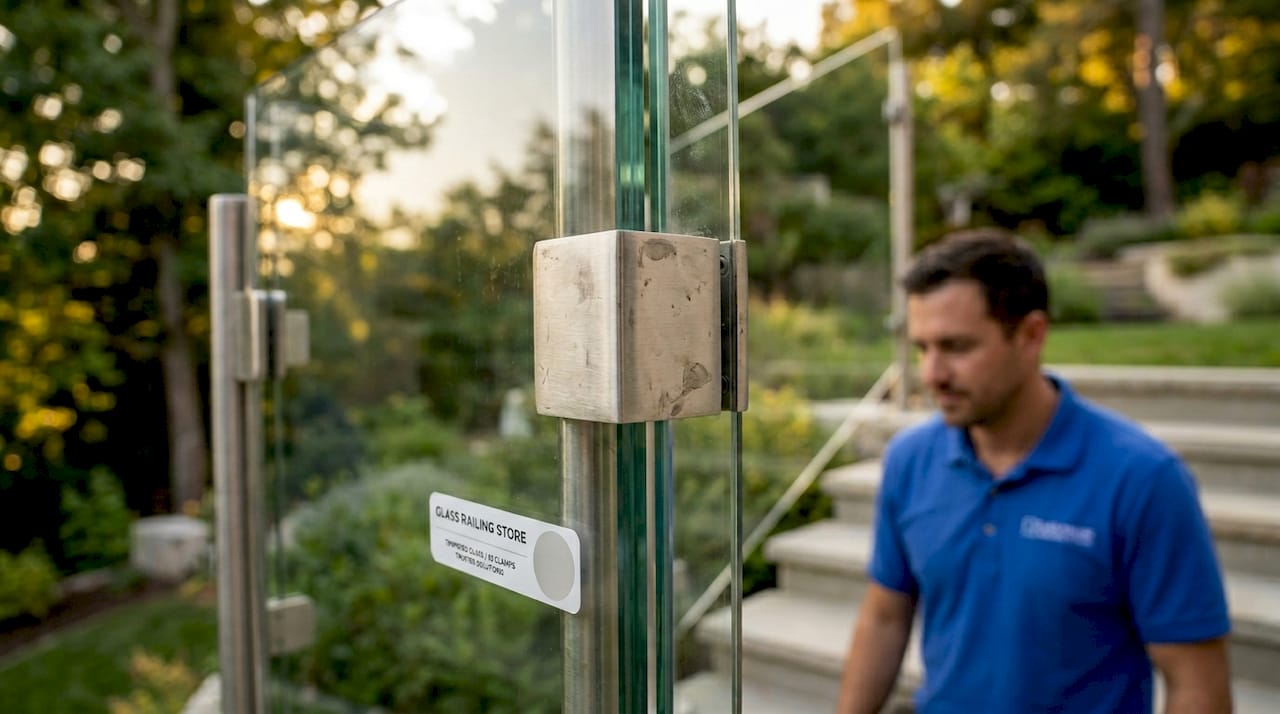
Laminated glass solves that problem. Two or more glass plies are bonded with a PVB (polyvinyl butyral) or ionomer interlayer. When the glass breaks, the interlayer holds the fragments in place. Ionomer interlayers offer superior shear coupling and residual strength compared to standard PVB, making them the preferred choice for commercial or high-load residential applications. Structural balustrades, where the glass itself carries the load without a top rail, require laminated glass with significant post-breakage load capacity.
Heat-strengthened glass sits between annealed and fully tempered in terms of strength and break pattern. It is rarely used as the sole ply in a balustrade but appears as the outer layer in some laminated configurations.
- Tempered glass: best for framed systems with secondary structural support
- Laminated glass with PVB: standard for most residential structural balustrades
- Laminated glass with ionomer: preferred for high-load, commercial, or corner installations
- Heat-strengthened laminated: used in specialty configurations requiring controlled break patterns
Pro Tip: If your balustrade is on a balcony above the ground floor, specify laminated glass regardless of what local minimums allow. The post-breakage barrier function is worth the modest cost difference.
2. Glass thickness by application and height
Glass thickness is not a single number. It scales with building height, system design, wind load exposure, and whether the panel is at a corner or a straight run.
Balcony glass thickness varies by building height: 12 mm toughened for low-rise structures, 13.52 mm laminated for mid-rise, and 17.52 mm laminated for high-rise and corner structures. Corner panels face biaxial loading and require the thicker specification even at lower heights. The minimum for stair balustrades is 10 mm tempered or laminated, with 12 mm recommended for added safety in most states.
Frameless systems demand more from the glass because there is no perimeter frame sharing the load. Frameless glass balustrades require thicker laminated glass due to cantilevered loads that framed systems distribute through the frame itself. Structural balustrades without a top rail push requirements to 17.5 to 25.5 mm laminated to maintain barrier function after breakage.
| Application | Recommended thickness | Glass type |
|---|---|---|
| Stair balustrade (low-rise) | 10 to 12 mm | Tempered or laminated |
| Balcony, low-rise | 12 mm | Toughened (tempered) |
| Balcony, mid-rise | 13.52 mm | Laminated |
| Balcony, high-rise or corner | 17.52 mm | Laminated |
| Structural (no top rail) | 17.5 to 25.5 mm | Laminated with ionomer |
You can explore safe glass thickness options for residential and commercial applications through Glassrailingstore’s thickness guide, which maps specifications to common project types.
Pro Tip: Thicker glass costs more upfront but reduces deflection under wind load, which means less hardware stress and fewer long-term maintenance issues. Treat thickness as a structural investment, not an aesthetic upgrade.
3. Fixing methods and support systems
Engineers treat glass balustrades as load-bearing systems where fixing design is as critical as glass selection. The three primary fixing approaches each carry distinct structural and aesthetic implications.
Base channel systems use a U-shaped aluminum or stainless steel channel anchored to the substrate. The glass panel sits inside the channel and is secured with wedges or structural silicone. Base channels must be sized properly to resist bending moments from horizontal loads at handrail height. Undersized channels cause deflection and rotation in the glass panel, which accelerates seal failure and can crack the glass at the fixing point.
Point-fixed (bolted) systems use discrete stainless steel fittings drilled through the glass at specific locations. These systems require precision engineering because the load transfers through a small contact area. They deliver a clean, minimal look but demand higher-grade glass and professional installation.
Clamp systems grip the glass at the base or along the edge without penetrating the panel. They are faster to install and easier to replace individual panels, making them popular for residential decks.
- Base channel: highest structural capacity, best for frameless and structural systems
- Point-fixed: premium aesthetic, requires engineered glass and certified installation
- Clamp systems: practical for residential decks, easier panel replacement, lower load capacity
A common installation failure is incorrect wedging inside base channels. Improper wedging causes excessive bending and rotation in glass panels, leading to premature damage that is often misattributed to glass quality. The glass railing support systems guide from Glassrailingstore explains how to evaluate channel sizing for your specific load conditions.
4. Modern design options and aesthetic features
The glass railing design options available today go well beyond clear panels in a metal frame. Design choices affect privacy, UV exposure, acoustic performance, and how the system integrates with your home’s architecture.
Frameless vs. framed systems represent the primary design fork. Frameless systems use thicker glass and minimal hardware for a near-invisible barrier that maximizes views. Framed systems use aluminum or stainless steel perimeter profiles that add visual structure and allow thinner glass. The unobstructed views that frameless systems provide are a primary reason homeowners choose glass over timber or metal balustrading.
Beyond the frame choice, you have several functional and aesthetic options:
- Tinted glass: reduces glare and solar heat gain on west-facing balconies, adds privacy without blocking light entirely
- Frosted or acid-etched glass: provides full privacy for ground-level applications or bathroom-adjacent balconies
- Low-iron (ultra-clear) glass: eliminates the green tint present in standard float glass, preferred for high-end residential projects
- Acoustic laminated glass: uses a specialized interlayer that dampens sound transmission, useful for balconies facing busy roads
- Hydrophobic coatings: cause water to bead and run off, significantly reducing cleaning frequency in rainy climates
Top rail profiles in stainless steel, aluminum, or timber cap the system and define the overall visual tone. Square caprail profiles read as modern and architectural. Round profiles feel more traditional. The hardware finish, whether brushed, polished, or powder-coated, should match or complement your exterior fixtures.
Pro Tip: Match your balustrade profile to your window frames and door hardware. A brushed stainless system against black-framed windows creates visual tension. Consistency across exterior metalwork makes the whole facade read as intentional.
5. Safety features and building code compliance
Safety features of glass balustrades are defined by both material performance and regulatory compliance. Building codes in the United States set minimum requirements for height, load capacity, and glass specification, and these vary by state.
The balcony glass systems compliance guide from Glassrailingstore covers the primary requirements across jurisdictions. At the federal level, the International Building Code (IBC) and International Residential Code (IRC) set baseline standards. States like Georgia and Oregon layer additional requirements on top. Glassrailingstore publishes state-specific resources, including the Georgia building code for glass railing and the Oregon glass railing code guide, which are worth reviewing before specifying any system.
Post-breakage performance is a safety feature that most homeowners overlook. Balustrade design requires considering post-breakage performance to maintain barrier function until the panel is replaced. A tempered-only panel that shatters leaves an open gap. A laminated panel holds its position and continues to prevent falls, which is why structural applications mandate laminated glass.
6. Installation tips and maintenance considerations
Proper installation determines whether a correctly specified system performs as designed. Certification matters here. Licensed glaziers and structural engineers should be involved in any balustrade that carries a structural load, particularly frameless systems and high-rise applications.
Common installation mistakes to avoid:
- Undersized base channels that cannot resist the design bending moment
- Improper wedge placement that creates point stress on the glass edge
- Missing or inadequate sealant between the glass and channel, allowing water ingress
- Skipping the engineer’s sign-off on point-fixed systems
- Using non-marine-grade hardware in coastal environments
Regular cleaning and hardware inspection are necessary to maintain both appearance and structural integrity, especially in coastal environments prone to salt corrosion. Glass shows smudges, salt deposits, and water spots more readily than timber or metal balustrading. A monthly rinse with fresh water and a quarterly clean with a mild detergent keeps the glass clear and reduces mineral buildup.
Fixings and seals need annual inspection. Look for signs of corrosion on hardware, cracking or shrinkage in silicone seals, and any movement in the base channel. Coastal installations may need inspection every six months. Glassrailingstore’s warranty and no-rust promise covers marine-grade stainless steel hardware against corrosion, which reduces long-term maintenance risk for coastal properties.
Key takeaways
Glass balustrade performance depends on matching glass type, thickness, and fixing method to the specific structural and environmental demands of each installation.
| Point | Details |
|---|---|
| Glass type drives safety | Laminated glass maintains barrier function after breakage; tempered glass does not. |
| Thickness scales with height | Use 12 mm for low-rise, 13.52 mm for mid-rise, and 17.52 mm or above for high-rise and corners. |
| Fixing design is structural | Undersized or improperly wedged base channels cause glass rotation and premature failure. |
| Design options are functional | Tinted, frosted, and coated glass affect privacy, heat gain, and maintenance frequency. |
| Compliance is non-negotiable | State building codes set minimum glass specs and load requirements that vary by jurisdiction. |
What I’ve learned specifying glass balustrades across dozens of projects
After reviewing hundreds of glass balustrade installations, the pattern that stands out most is not about glass quality. It is about fixing design. Homeowners spend considerable time selecting the right glass type and finish, then accept whatever base channel the installer has on the truck. That mismatch is where most long-term problems originate.
The second thing I would push back on is the assumption that frameless always means better. Frameless systems are genuinely beautiful, and the unobstructed view they create is hard to replicate. But they demand thicker glass, more precise installation, and more rigorous engineering review. On a second-floor balcony with a coastal exposure, a well-specified semi-frameless system with a stainless top rail often outperforms a frameless system that was installed without an engineer’s review.
The third observation is about post-breakage thinking. Most homeowners never ask what happens if the glass breaks. The answer to that question should drive the specification, not the price per square foot. If the panel is above grade and a fall would cause serious injury, laminated glass with an ionomer interlayer is the correct answer regardless of what the minimum code allows. Minimum compliance and optimal safety are not the same thing.
Invest in the engineering review. It costs a fraction of the glass and hardware, and it is the only way to know that the system you are installing will perform as specified under real-world loads.
— Fuanne
How Glassrailingstore supports your glass balustrade project
Glassrailingstore carries tempered and laminated glass panels sized for standard residential heights, including 46-inch tempered panels for deck and balcony applications and 60-inch panels for taller configurations. Every product is backed by engineering testing documentation that confirms load-bearing capacity and code compliance. The site also publishes a full building codes resource covering IBC, IRC, and state-specific requirements so you can specify with confidence. Whether you are a homeowner planning a DIY deck railing or a developer specifying a multi-story balcony system, Glassrailingstore provides the products, documentation, and support to get the installation right the first time.
FAQs
1. What glass type is best for a balcony balustrade?
Laminated glass is the best choice for balcony balustrades because it maintains its barrier function after breakage, preventing falls until the panel is replaced. Tempered glass breaks into fragments and provides no post-breakage structural support.
2. How thick should glass be for a second-floor balcony?
A second-floor balcony typically qualifies as mid-rise, requiring at least 13.52 mm laminated glass. Corner panels at the same height should use 17.52 mm laminated glass due to the additional biaxial loading they experience.
3. What is the difference between frameless and framed glass balustrades?
Frameless systems use thicker laminated glass without a perimeter frame, relying entirely on the glass and base fixings for structural support. Framed systems distribute load through aluminum or stainless steel profiles, allowing thinner glass and faster installation.
4. How often should glass balustrades be cleaned and inspected?
Glass should be rinsed monthly and cleaned with mild detergent quarterly to prevent mineral and salt buildup. Hardware and seals should be inspected annually, or every six months in coastal environments where corrosion risk is higher.
5. Do glass balustrades need to meet building codes?
Yes. In the United States, glass balustrades must comply with the IBC or IRC at minimum, plus any additional state or local requirements. Code requirements cover minimum glass thickness, panel height, load capacity, and fixing specifications.
Recommended
- What Is Postless Glass Railing: a Homeowner’s Guide – The Glass Railing Store
- Glass Railing Support Systems: What You Need to Know – The Glass Railing Store
- Glass railing durability: Build it right, build it to last – The Glass Railing Store
- Glass Railings and Their Role in Unobstructed Views – The Glass Railing Store